

HPE Networking 720H Series Hospitality Access Points: технические характеристики и документация
|
Have feedback on QuickSpecs? We're listening | |
|
HPE Networking 720H Series Hospitality Access Points QuickSpecs
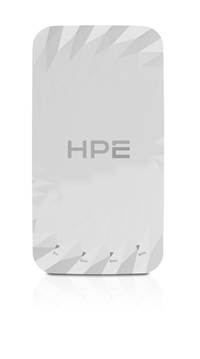
High-performance Wi-Fi 7 access points with wired connectivity HPE Networking 720H Series Hospitality Access Points deliver seamless, secure, high performance wireless connectivity to mission-critical hospitality and small branch/office work environments. Leveraging the Wi-Fi 7 standard, the 720H series helps meet increasing demands of bandwidth-hungry video, growing numbers of client and IoT devices, and cloud services growth.
In addition, the 720H series includes the HPE first ever dual platform AP supporting both HPE Aruba Networking Central and HPE Mist on the same hardware, enabling enterprises to upgrade to Wi-Fi 7 with confidence while leveraging the AI-powered management and self-driving network capabilities of HPE Networking. |
|
|
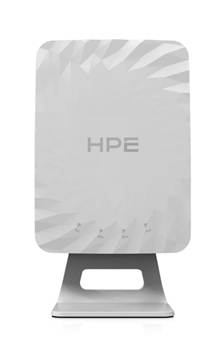
The flexible compact form factor of the 720H series includes multigigabit and gigabit ports, PoE support, and integrated BLE and Zigbee, providing a range of connectivity options ideal for venues such as hotels, residence halls, and small offices.
The 720H series consists of three different models, each offering distinct features and capabilities designed to address the full spectrum of hospitality use cases-allowing customers to choose the product that best fits their specific needs for functionality and affordability
| |
|
| |
|
|
|
|
HPE Networking 720H Series Hospitality Access Points
| |
|
| |
|
Key Features - Ideal for hospitality, multi-dwelling units (MDUs), healthcare clinics, retail, classrooms, and satellite offices - Three different AP models allow customers to choose based on features, capabilities, and budget - The AP-723H dual platform access point can leverage either HPE Aruba Networking Central or HPE Mist for simplicity and flexibility and to create a self-driving network. - Slim design to fit into existing wall plate mounts for the hospitality environments. - IoT-ready with Bluetooth 5.4* and Zigbee support featuring built-in dual concurrent BLE/Zigbee radios - Multiple wired ports provide low-latency, high-performance connectivity for a variety of in-room or on-site internet-enabled devices - Dual PoE-out support allows the AP to directly power IoT devices, eliminating the need for additional power outlets or extra cabling. - Latest Wi-Fi 7 technology with the high-end platform coming with three 2x2 MIMO radios provide comprehensive triband coverage across 2.4 GHz, 5 GHz, and 6 GHz for up to 9.3 Gbps maximum aggregate data rate Notes: *Upgradeable to BLE 6 with future software update | |
|
| |
|
Use Cases Hospitality Delivering exceptional hotel guest or student residence hall experiences requires seamless Wi-Fi connectivity that is always on. The 720H series can support hundreds of guest and student devices simultaneously without impacting Wi-Fi quality and optimizes the connection to the best available AP regardless of where the device is carried so users can roam without impact to performance. Critical applications can be prioritized so they can perform at their peak, without impacting the guest or staff experience. Desktop or wall mount configurations provide deployment flexibility with wired ports and integrated BLE 5.4* and 802.15.4 (Zigbee) supporting a range of IoT devices. Notes: *Upgradeable to BLE 6 with future software update
Small branch and remote work With the 720H series managed by HPE Aruba Networking Central, IT can remotely deploy and centrally manage secure network connectivity for hundreds or even thousands of small/branch office employees to deliver an in-office experience-without need for a gateway. Remote workers can connect wireless clients (laptops, smartphones, tablets) as well as wired clients, such as VoIP phones, and access mission-critical applications using platform-dependent Ethernet configurations with multi-gigabit uplinks and multiple dedicated downlink ports. |
|
|
|
WI-FI 7 for faster speeds, more capacity The 720H series access points are designed to take advantage of 802.11be standard Wi-Fi 7 and the 6 GHz band, which translates into far greater speeds, wider channels for multigigabit traffic, and less interference. Its two 2x2 multiple-input and multiple-output (MIMO) radios deliver a maximum combined data rate of up to 9.3 Gbps.
|
|
720H Series Peak Data Rates | |||
|
AP Model |
Max Channel Bandwidth per Band |
Peak Data Rate per Band (Gbps) |
Total Peak Data Rate (Gbps) |
|
AP-721H |
2.4 GHz: Up to 20 MHz 5 GHz: Up to 80 MHz |
2.4 GHz: 0.34 5 GHz: 1.44 |
1.8 |
|
AP-721H |
2.4 GHz: Up to 20 MHz 6 GHz: Up to 160 MHz |
2.4 GHz: 0.34 6 GHz: 2.88 |
3.2 |
|
AP-723H |
2.4 GHz: Up to 20 MHz 5 GHz: Up to 80 MHz 6 GHz: Up to 160 MHz |
2.4 GHz: 0.34 5 GHz: 1.44 6 GHz: 2.88 |
4.7 |
|
AP-725H |
2.4 GHz: Up to 40 MHz 5 GHz: Up to 160 MHz 6 GHz: Up to 320 MHz |
2.4 GHz: 0.69 5 GHz: 2.88 6 GHz: 5.76 |
9.3 |
|
|
|
Advantages of 6 GHz Wi-Fi 7 provides up to 1200 MHz in the 6 GHz band for higher throughput and improved application performance. With up to three 320 MHz channels and seven 160 MHz channels, Wi-Fi 7 can better support low-latency, bandwidth-hungry applications such as high-definition video and augmented reality and virtual reality applications. The 720H series provides flexible coverage across any three or two bands (2.4 GHz, 5 GHz, and 6 GHz) to help ensure that legacy devices are supported.
Device class support The 720H series are part of the low power indoor (LPI) device class. This fixed indoor-only class uses lower power levels and does not require an Automated Frequency Coordination service (AFC), which is required for all outdoor and select indoor access points that transmit/operate at standard power.
Notes: *Upgradeable to BLE 6 with future software update Extends the benefits of Wi-Fi 6 The 720H series are based on the 802.11be (Wi-Fi 7) standard, which means that all its performance, efficiency and security enhancements are also available on the 6 GHz band. Wi-Fi 7 features such as multilink operation (MLO) for channel aggregation across different bands and failover, 4096 QAM (4K QAM) modulation, and spectrum puncturing to avoid interference or incumbent users of the 6 GHz band, are fully supported on the HPE Networking Wi-Fi 7 access points as well.
Advantages of OFDMA This capability allows HPE Aruba Networking access points to handle multiple 802.11ax capable customer on each channel simultaneously, regardless of device or traffic type. Channel utilization is optimized by handling each transaction through smaller subcarriers or resource units (RUs), which means that customers are sharing a channel and not competing for airtime and bandwidth. |
|
|
|
Multi radio architecture The 720H series offers a flexible Wi-Fi 7 architecture with support for all three Wi-Fi bands-2.4 GHz, 5 GHz, and 6 GHz-to deliver faster speeds, wider channels, and significantly less interference. The AP-723H and AP-725H feature a tri-radio, tri-band design that maximizes capacity and enables simultaneous use of multiple spectrum bands, ideal for dense environments and high-performance applications. The AP-721H uses a dual-radio, tri-band architecture, allowing either radio to dynamically operate in the 2.4 GHz and 5 GHz or 2.4 GHz and 6 GHz Wi-Fi bands, providing flexibility and affordability. Together, these platforms ensure that small offices, home offices, and distributed workspaces can meet growing demand from bandwidth-intensive video, rising device counts, IoT adoption, and cloud-based services. |
|
|
|
Simplified deployment and operations HPE Networking access points can operate as stand-alone access points or with a gateway for greater scalability, security, and manageability. Access points can be deployed using zero touch provisioning-without on-site technical expertise-for ease of implementation in branches or small office locations. HPE Networking access points can be managed using cloud-based or on-premises solutions for any campus, branch, or small office work environment.
In addition, the 720H series includes the first-ever dual platform access point of HPE, the AP-723H, which supports both HPE Aruba Networking Central and HPE Mist on the same hardware, enabling enterprises to upgrade to Wi-Fi 7 with confidence while leveraging the AI-powered management and self-driving network capabilities of HPE Networking:
Both HPE Aruba Central and HPE Mist bring AI-native automation to network operations, enabling networks that can detect, diagnose, and resolve issues in real time without human intervention. Central to this approach is a differentiated architecture powered by microservices, autonomous agents, and an advanced agentic mesh, designed to move beyond insight-driven operations to true autonomy, and proactively resolve issues before they impact revenue, operations, or brand reputation. |
|
|
|
Versatile installation options The 720H series can be deployed as a wall-mounted unit or on a desktop. For desktop deployments, the 720H series includes optional desk stands that can be purchased separately and used as remote desk-mount APs. |
|
|
|
Key Wi-Fi features* Wi-Fi 7 for faster speeds, more capacity The 720H series are fully Wi-Fi 7 CERTIFIED® to meet all the requirements for Wi-Fi 7 (802.11be) for greater performance and efficiency, including multilink operation (MLO), OFDMA, multiuser (MU)-MIMO, and Target Wake Time (TWT) to extend the battery life of devices.
Customer optimization HPE Aruba Networking patented AI-powered ClientMatch technology helps eliminate sticky customer issues by steering a customer to the access point where it receives the best radio signal. HPE Aruba Networking ClientMatch steers traffic from the noisy 2.4 GHz band to the preferred 5 GHz or 6 GHz band depending on customer capabilities. HPE Aruba Networking ClientMatch also dynamically steers traffic to load balance access points to improve the user experience.
Radio frequency optimization ML-based radio frequency (RF) optimization known as HPE Aruba Networking AirMatch dynamically adjusts resources such as power to optimize coverage and help eliminate coverage gaps.
HPE Aruba Networking Advanced Cellular Coexistence Unique HPE Aruba Networking Advanced Cellular Coexistence (ACC) uses built-in filtering to automatically reduce the impact of interference from cellular networks, distributed antenna systems (DAS), and commercial small-cell or femtocell equipment.
Self-locating access points Indoor location shouldn't require guesswork or costly or complex overlay technologies. HPE Aruba Networking Wi-Fi 6, 6E, and Wi-Fi 7 access points help organizations leverage their wireless investment to deliver indoor location - everywhere.
As part of HPE Aruba Networking indoor location solutions, they serve as reference points for client devices and other technologies that use fine-time measurement and Bluetooth. This makes it easier and faster to develop location-aware services to support use cases such as wayfinding, asset tracking, and proximity marketing.
Open Locate, an emerging standard that allows access points to share their location over the air and through cloud-based application programming interfaces (APIs), enables mobile devices to locate themselves and applications to support network analytics.
IoT ready The 720H series includes an integrated Bluetooth 5.4* and 802.15.4 radio for Zigbee support to simplify deploying and managing IoT-based location services, asset tracking services, security solutions, and IoT sensors. There is also a USB port extension to provide IoT connectivity to a wider range of devices. These IoT capabilities allow organizations to leverage our access points as an IoT transport, which helps eliminate the need for an overlay infrastructure and additional IT resources and can accelerate IoT initiatives. In addition, TWT establishes a schedule for when customers need to communicate with an access point. This helps improve customer power savings and reduces airtime contention with other customers, which is ideal for IoT. The Advanced IoT Coexistence (AIC) feature uses built-in filtering to allow Wi-Fi and BLE/Zigbee radios to operate at maximum capacity without the impact of interference.
Intelligent Power Monitoring (IPM) For better insights into energy consumption, our access points continuously monitor and report hardware energy usage. Unlike other vendors' access points, our access points can also be configured to enable or disable capabilities based on available PoE power - ideal when wired switches have exhausted their power budget. Enterprises can deploy Wi-Fi 7 access points and update switching and power at a later if needed based on their actual usage.
- *Upgradeable to BLE 6 with future software update - *Features enabled by either HPE Aruba Networking Central or HPE Mist require applicable HPE Aruba Networking Central and HPE Mist subscriptions. |
|
|
|
Key Security Features AI Customer Insights ML-based classification of all customers through customer insights uses deep packet inspection to provide additional context and behavioral information that help ensure devices are receiving proper policy enforcement and continuous monitoring for rogue devices.
User and Device Authentication Cloud-native network access control (NAC) provided by HPE Aruba Networking Central further simplifies how IT controls network access while providing a frictionless experience for end users. Global policy automation and orchestration enable IT to define and maintain global policies at scale with ease, using UI-driven, intuitive workflows that automatically translate security intent into policy design and map user roles for employees, contractors, guests, and devices to their proper access privileges.
Intrusion Detection HPE Aruba Networking Central utilizes the Rogue AP Intrusion Detection Service (RAPIDS) to identify and resolve issues caused by rogue access points and customers. Wired and wireless data is automatically correlated to identify potential threats, thereby strengthening network security and improving incident response processes by reducing false positives.
Web Content Filtering Web content classification (WebCC) classifies websites by content category and rates them by reputation and risk score, enabling IT to block malicious sites to help prevent phishing, distributed denial of service (DDoS), botnets, and other common attacks.
WPA3 and Enhanced Open As part of Wi-Fi 6E (802.11ax), WPA3 ensures stronger encryption and authentication while Enhanced Open offers protection for users connecting to open networks by automatically encrypting each session to protect user passwords and data on guest networks. In addition, MPSK enables simpler passkey management for WPA2 devices - should the Wi-Fi password on one device or device type change, no additional changes are needed for other devices.
WPA2-MPSK MPSK enables simpler passkey management for WPA2 devices: if the Wi-Fi password on one device or device type changes, no additional changes are needed on other devices (requires HPE Aruba Networking ClearPass Policy Manager).
VPN Tunnels This access point series can be used to establish a secure SSL/IPSec VPN tunnel to a HPE Aruba Networking gateway or mobility controller that is acting as a VPN concentrator.
Trusted Platform Module For enhanced device assurance, all HPE Aruba Networking APs include a built-in TPM for secure storage of credentials, keys, and boot code.
Simple and Secure Access To improve security and ease management, IT can centrally configure and automatically enforce role-based policies that define appropriate access privileges for employees, guests, contractors, and other user groups - regardless of where users connect, on wired or WLAN networks. Dynamic segmentation eliminates the time-consuming, error-prone task of managing complex, static VLANs, ACLs, and subnets by dynamically assigning policies and keeping traffic secure and separated. |
|
|
|
The following services are available for the AP-723H only Wi-Fi Cloud Services Juniper Wi-Fi Assurance For IT and NOC teams - Predictable and measurable Wi-Fi - SLE support - WLAN policy fabric for role-based access - Customizable guest Wi-Fi portal - Radio resource management (RRM), driven by AI
Marvis AI Assistant For IT help desk teams - AI-native virtual network assistant - Natural language processing interface - Anomaly detection - Client SLE visibility and enforcement - Data science-driven root cause analysis
Bluetooth cloud services Juniper Asset Visibility For process and resource improvement teams - Identification of assets by name and location visibility - Zonal/room accuracy for third-party tags - Historical analytics for asset tags - Telemetry for asset tags (temperature, motion, and other data) - Application programming interfaces (APIs) for viewing assets and analytics
Analytics cloud services Juniper Premium Analytics For network teams - Baseline analytics features come included with Juniper Wi-Fi Assurance, Juniper User Engagement, and Juniper Asset Visibility subscriptions - End-to-end network visibility - Orchestrated networking and application performance queries - Simplified network transparency for business teams - Baseline analytics features come included with Juniper Wi-Fi Assurance, Juniper User Engagement, and Juniper Asset Visibility subscriptions - Customer segmentation and reporting based on visitor telemetry - Customized dwell and third-party reporting for traffic and trend analysis - Correlated customer-guest traffic and trend analysis |
|
|
|
Build To Order: BTO is a standalone unit with no integration. BTO products that ship standalone are not part of a CTO or Rack-Shippable solution.
| ||
|
BTO Models* |
| |
|
HPE Networking 720H Series Hospitality Access Points |
| |
|
HPE Aruba Networking SKUs |
| |
|
Description |
SKU | |
|
HPE Networking AP-721H (RW) 2-radio 2x2 802.11be Wi-Fi 7 1+1 ETH Hospitality AP |
S6Q67A | |
|
HPE Networking AP-721H (RW1) 2-radio 2x2 802.11be Wi-Fi 7 1+1 ETH Hospitality AP |
S6Q68A | |
|
HPE Networking AP-721H (US) 2-radio 2x2 802.11be Wi-Fi 7 1+1 ETH Hospitality AP |
S6Q70A | |
|
HPE Networking AP-721H (EG) 2-radio 2x2 802.11be Wi-Fi 7 1+1 ETH Hospitality AP |
S6Q74A | |
|
HPE Networking AP-721H (ID) 2-radio 2x2 802.11be Wi-Fi 7 1+1 ETH Hospitality AP |
S6Q75A | |
|
HPE Networking AP-723H (RW) 3-radio 2x2 802.11be Wi-Fi 7 1+2 ETH Dual Platform Hospitality AP |
S6Q76A | |
|
HPE Networking AP-723H (RW1) 3-radio 2x2 802.11be Wi-Fi 7 1+2 ETH Dual Platform Hospitality AP |
S6Q78A | |
|
HPE Networking AP-723H (US) 3-radio 2x2 802.11be Wi-Fi 7 1+2 ETH Dual Platform Hospitality AP |
S6Q80A | |
|
HPE Networking AP-723H (EG) 3-radio 2x2 802.11be Wi-Fi 7 1+2 ETH Dual Platform Hospitality AP |
S6Q85A | |
|
HPE Networking AP-723H (ID) 3-radio 2x2 802.11be Wi-Fi 7 1+2 ETH Dual Platform Hospitality AP |
S6Q86A | |
|
HPE Networking AP-725H (RW) 3-radio 2x2 802.11be Wi-Fi 7 1+4 ETH Hospitality AP |
S6Q89A | |
|
HPE Networking AP-725H (RW1) 3-radio 2x2 802.11be Wi-Fi 7 1+4 ETH Hospitality AP |
S6Q91A | |
|
HPE Networking AP-725H (US) 3-radio 2x2 802.11be Wi-Fi 7 1+4 ETH Hospitality AP |
S6Q93A | |
|
HPE Networking AP-725H (EG) 3-radio 2x2 802.11be Wi-Fi 7 1+4 ETH Hospitality AP |
S6Q98A | |
|
HPE Networking AP-725H (ID) 3-radio 2x2 802.11be Wi-Fi 7 1+4 ETH Hospitality AP |
S6Q99A | |
|
|
| |
|
HPE Juniper Networking SKUs |
| |
|
HPE Networking AP-723H (RW) 3-Radio 2x2 802.11be Wi-Fi 7 1+2 ETH Dual Platform Hospitality AP |
AP723H-RW | |
|
HPE Networking AP-723H (RW1) 3-Radio 2x2 802.11be Wi-Fi 7 1+2 ETH Dual Platform Hospitality AP |
AP723H-RW1 | |
|
HPE Networking AP-723H (US) 3-Radio 2x2 802.11be Wi-Fi 7 1+2 ETH Dual Platform Hospitality AP |
AP723H-US | |
|
HPE Networking AP-723H (EG) 3-Radio 2x2 802.11be Wi-Fi 7 1+2 ETH Dual Platform Hospitality AP |
AP723H-EG | |
|
HPE Networking AP-723H (ID) 3-Radio 2x2 802.11be Wi-Fi 7 1+2 ETH Dual Platform Hospitality AP |
AP723H-ID | |
|
|
| |
|
HPE Networking 720H Series Hospitality Access Points 10-Pack Eco-Friendly |
| |
|
HPE Aruba Networking SKUs |
| |
|
HPE Networking AP-721H (RW10) 2-radio 2x2 802.11be Wi-Fi 7 1+1 ETH 10-pack Hospitality AP |
S6Q69A | |
|
HPE Networking AP-721H (US10) 2-radio 2x2 802.11be Wi-Fi 7 1+1 ETH 10-pack Hospitality AP |
S6Q71A | |
|
HPE Networking AP-723H (RW10) 3-radio 2x2 802.11be Wi-Fi 7 1+2 ETH 10pk Dual Platform Hospitality AP |
S6Q79A | |
|
HPE Networking AP-723H (US10) 3-radio 2x2 802.11be Wi-Fi 7 1+2 ETH 10pk Dual Platform Hospitality AP |
S6Q82A | |
|
HPE Networking AP-725H (RW10) 3-radio 2x2 802.11be Wi-Fi 7 1+4 ETH 10-pack Hospitality AP |
S6Q92A | |
|
HPE Networking AP-725H (US10) 3-radio 2x2 802.11be Wi-Fi 7 1+4 ETH 10-pack Hospitality AP |
S6Q95A | |
|
|
| |
|
HPE Juniper Networking SKUs |
| |
|
HPE Networking AP-723H (RW10) 3-Radio 2x2 802.11be Wi-Fi 7 1+2 ETH 10pk Dual Platform Hospitality AP |
AP723H-RW10 | |
|
HPE Networking AP-723H (US10) 3-Radio 2x2 802.11be Wi-Fi 7 1+2 ETH 10pk Dual Platform Hospitality AP |
AP723H-US10 | |
|
|
| |
|
| ||
|
HPE Networking 720H Series Hospitality Access Points TAA |
| |
|
HPE Aruba Networking SKUs |
| |
|
HPE Networking AP-723H (RWF1) 3-radio 2x2 802.11be Wi-Fi 7 1+2 ETH TAA Dual Platform Hospitality AP |
S6Q77A | |
|
HPE Networking AP-723H (USF1) 3-radio 2x2 802.11be Wi-Fi 7 1+2 ETH TAA Dual Platform Hospitality AP |
S6Q81A | |
|
HPE Networking AP-725H (RWF1) 3-radio 2x2 802.11be Wi-Fi 7 1+4 ETH TAA Hospitality AP |
S6Q90A | |
|
HPE Networking AP-725H (USF1) 3-radio 2x2 802.11be Wi-Fi 7 1+4 ETH TAA Hospitality AP |
S6Q94A | |
|
|
| |
|
HPE Juniper Networking SKUs |
| |
|
HPE Networking AP-723H (USF1) 3-Radio 2x2 802.11be Wi-Fi 7 1+2 ETH TAA Dual Platform Hospitality AP |
AP723H-USF1 | |
|
|
| |
|
| ||
|
Mount Accessories |
| |
|
Mount Kits for 720H Series |
| |
|
HPE Aruba Networking SKU |
| |
|
HPE Aruba Networking AP-600H-MNT1 Single Hang Wall-Box Mount Kit |
S0J42A | |
|
HPE Aruba Networking AP-600H-MNT2 Dual Hang Wall-Box Mount Kit |
S0J43A | |
|
Notes: Metal mount bracket, for wall and (dual-gang wiring) wall-box |
| |
|
HPE Networking Hospitality Access Point Small Desk Mount Kit |
S6R02A | |
|
HPE Networking Hospitality Access Point Large Desk Mount Kit |
S6R03A | |
|
|
| |
|
HPE Juniper Networking SKU |
| |
|
HPE Aruba Networking AP-600H-MNT1 Single Hang Wall-Box Mount Kit |
AP600H-MNT1 | |
|
HPE Aruba Networking AP-600H-MNT2 Dual Hang Wall-Box Mount Kit |
AP600H-MNT2 | |
|
Notes: Metal mount bracket, for wall and (dual-gang wiring) wall-box |
| |
|
HPE Networking Hospitality Access Point Small Desk Mount Kit |
APBR-DS2 | |
|
HPE Networking Hospitality Access Point Large Desk Mount Kit |
N/A | |
|
Notes: While all AP-723H access points can be ordered through either HPE Aruba Networking and HPE Juniper Networking ordering systems, the product is the same regardless of the ordering system used. | ||
|
| ||
|
| ||
|
Power Options |
|
|
Description |
SKU |
|
Power Options |
|
|
HPE Aruba Networking AP-AC2-48C 48V/50W AC/DC Desktop Style Power Adapter with 1.35/3.5mm Connector |
R3K01A |
|
HPE Aruba Networking AP-POE-AFGE 1-Port GbE 802.3af 15.4W Midspan Injector |
R6P68A |
|
HPE Aruba Networking AP-POE-ATSR 1-Port Smart Rate 802.3at 30W Midspan Injector |
R6P67A |
|
HPE Aruba Networking AP-POE-BT10 1-port 10G 60W Midspan 802.3bt PoE Injector |
S3J26A |
|
|
|
|
AC Power Cord |
|
|
HPE Aruba Networking PC-AC-ARG 250V/10A 1.8m C13 to IRAM 2073 (AR) AC Power Cord |
JW113A |
|
HPE Aruba Networking PC-AC-AUS 250V/10A 1.8m C13 to AS3112 (AU) AC Power Cord |
JW114A |
|
HPE Aruba Networking PC-AC-BR 250V/10A 1.8m C13 to NBR 14136 (BR) AC Power Cord |
JW115A |
|
HPE Aruba Networking PC-AC-CHN 250V/10A 1.8m C13 to GB2099 (CH) AC Power Cord |
JW116A |
|
HPE Aruba Networking PC-AC-DEN 250V/10A 1.8m C13 to AFSNIT 107-2-D1 (DK) AC Power Cord |
JW117A |
|
HPE Aruba Networking PC-AC-EC 250V/10A 1.8m C13 to CEE7/7 (EU) AC Power Cord |
JW118A |
|
HPE Aruba Networking PC-AC-IN 250V/6A 1.8m C13 to IS1293 (IN) AC Power Cord |
JW119A |
|
HPE Aruba Networking PC-AC-IL 250V/10A 1.8m C13 to SI32 (IL) AC Power Cord |
JW120A |
|
HPE Aruba Networking PC-AC-IT 250V/10A 1.8m C13 to CEI 23-50 (IT) AC Power Cord |
JW121A |
|
HPE Aruba Networking PC-AC-JPN 125V/12A 1.8m C13 to JISC 8303 (JP) AC Power Cord |
JW122A |
|
HPE Aruba Networking PC-AC-KOR 250V/7A 1.8m C13 to KSC 8305 (KR) AC Power Cord |
JW123A |
|
HPE Aruba Networking PC-AC-NA 125V/10A 1.8m C13 to NEMA 5-15P (NA) AC Power Cord |
JW124A |
|
HPE Aruba Networking PC-AC-SWI 220V/10A 1.8m C13 to SEV 1011 (SW) AC Power Cord |
JW125A |
|
HPE Aruba Networking PC-AC-TH 250V/10A 1.8m C13 to TIS 166-2549 (TH) AC Power Cord |
S0P44A |
|
HPE Aruba Networking PC-AC-TW 125V/7A 1.8m C13 to CNS 10917 (TW) AC Power Cord |
JW126A |
|
HPE Aruba Networking PC-AC-UK 250V/10A 1.8m C13 to BS1363 (UK) AC Power Cord |
JW127A |
|
HPE Aruba Networking PC-AC-ZA 250V/10A 1.8m C13 to SANS 164-1 (ZA) AC Power Cord |
JW128A |
|
|
|
|
| |
|
Accessories |
|
|
Other Accessories |
|
|
HPE Aruba Networking AP-CBL-SERU Micro-USB TTL3.3V to USB2.0 AP Console Adapter Cable |
JY728A |
|
HPE Aruba Networking AP-MOD-SERU Micro-USB TTL3.3V to RJ45 RS232 AP Console Adapter Module |
R6Q99A |
|
HPE Aruba Networking AP-CBL-ETH10 10-pk Short Ethernet Cable |
JW072A |
|
HPE Aruba Networking AP-MC-SFP Media Converter Module for WLAN Access Points |
R8F89A |
|
HPE Aruba Networking USB LTE Modem for Access Points and Gateways |
R8F34A |
|
HPE Aruba Networking USB Extender Cable Kit |
R8G76A |
|
|
|
|
| |
|
Specifications |
|
Hardware Variants - AP-725H: High-end Wi-Fi 7 Hospitality AP with 1x5GbE uplink, 4x 1GbE downlink, PSE, and USB - AP-723H: Mid-range Wi-Fi 7 Hospitality AP with 1x2.5GbE uplink, 2x 1GbE downlink, and USB - AP-721H: Low-end Wi-Fi 7 Hospitality AP with 1x1GbE uplink, 1x 1GbE downlink
Wi-Fi Radio Specifications - Access point type:
- 2.4 GHz radio:
- 5 GHz radio:
- 6 GHz radio:
- Up to 512 associated customer devices per radio, and up to 16 BSSIDs per radio - Supported frequency bands (country-specific restrictions apply):
- Available bands and channels: Dependent on configured regulatory domain (country) - DFS optimizes the use of available RF spectrum in the 5 GHz band - Supported radio technologies: - 802.11b: Direct-sequence spread-spectrum (DSSS) - 802.11a/g/n/ac: Orthogonal frequency-division multiplexing (OFDM) - 802.11ax/be: Orthogonal frequency-division multiple access (OFDMA) with up to 37 resource units - Supported modulation types:
- 802.11n high throughput (HT) support: HT20/40 - 802.11ac very high throughput (VHT) support: VHT20/40/80/160 - 802.11ax high efficiency (HE) support: HE20/40/80/160 - 802.11be extreme high throughput (EHT) support: EHT20/40/80/160/320 - Supported data rates (Mbps):
- 802.11ax (2.4 GHz): 3.6 to 574 (MCS0 to MCS11, NSS = 1 to 2, HE20 to HE40) - 802.11ax (5 GHz): 3.6 to 2,402 (MCS0 to MCS11, NSS = 1 to 2, HE20 to HE160) - 802.11ax (6 GHz): 3.6 to 4,804 (MCS0 to MCS13, NSS = 1 to 2, HE20 to HE320) - 802.11n/ac packet aggregation: A-MPDU, A-MSDU - Transmit power: Configurable in increments of 0.5 dBm* - Maximum (aggregate, conducted total) transmit power (limited by local regulatory requirements): Per radio/band (2.4 GHz / 5 GHz / 6 GHz): +21 dBm (18 dBm per chain) Notes: Conducted transmit power levels exclude antenna gain. For total (EIRP) transmit power, add antenna gain - Minimum configurable transmit power is 10 dBm (conducted, per chain) - Advanced Cellular Coexistence (ACC) helps minimize the impact of interference from cellular networks MRC for improved receiver performance - CDD/CSD for improved downlink RF performance - STBC for increased range and improved reception - LDPC for high-efficiency error correction and increased throughput - Transmit beamforming (TxBF) for increased signal reliability and range - 802.11ax TWT to support low-power customer devices - 802.11mc fine timing measurement (FTM) for precision distance ranging Notes: *Only when AP is in HPE Aruba Central mode
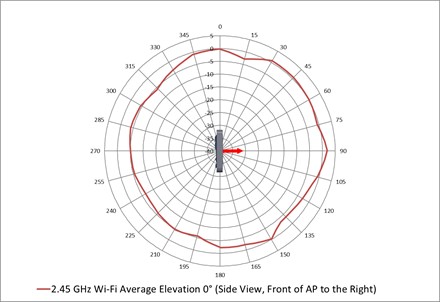
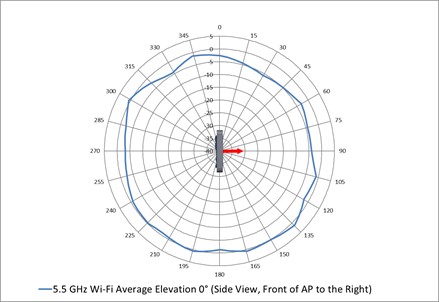
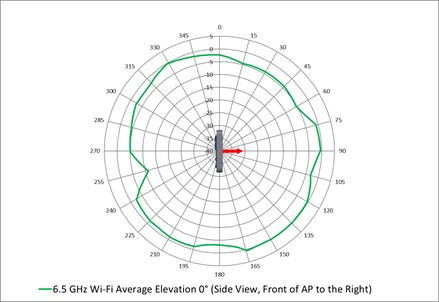
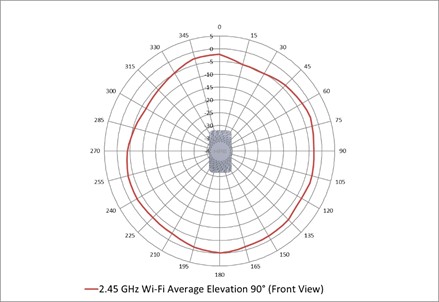
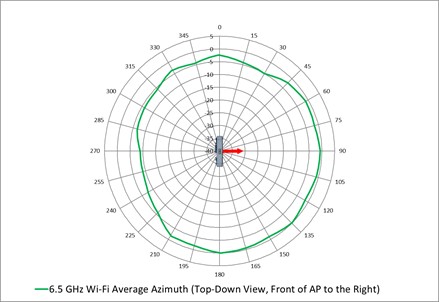
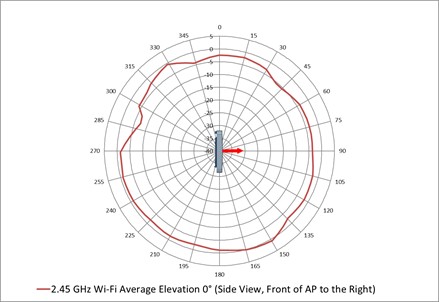
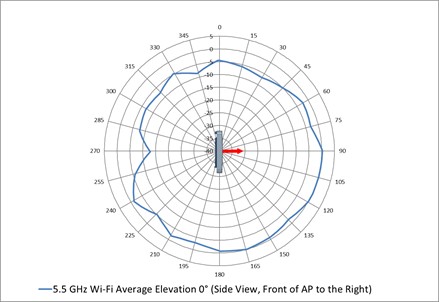
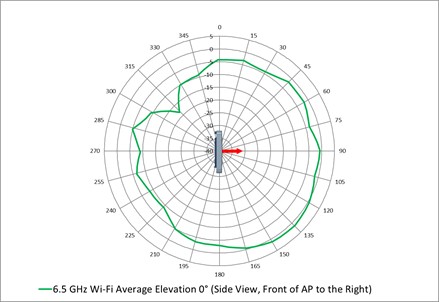
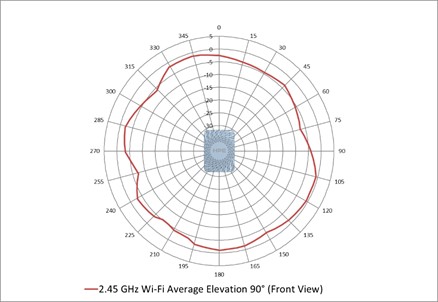
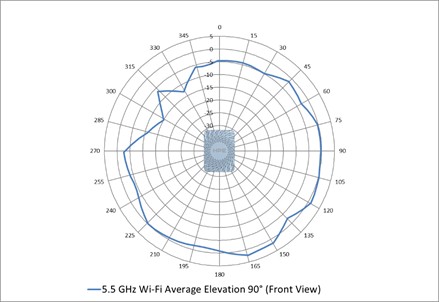
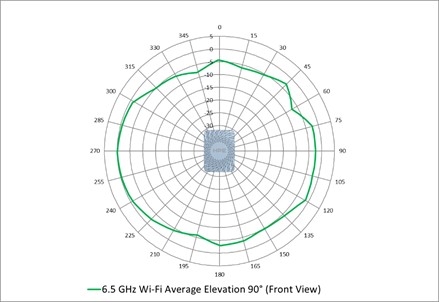
Wi-Fi Antennas - AP-725H/AP-723H: Integrated directional antennas for 2x2 MIMO with a peak antenna gain of 3.8 dBi in 2.4 GHz, 5.1 dBi in 5 GHz, and 3.7 dBi in 6 GHz. The built-in antennas are optimized for vertical wall or desk-mounted orientation of the access point.
- AP-721H: Integrated directional antennas for 2x2 MIMO with a peak antenna gain of 3.2 dBi in 2.4 GHz, 5.1 dBi in 5 GHz, and 4.5 dBi in 6 GHz. The built-in antennas are optimized for vertical wall or desk-mounted orientation of the access point.
Other Interfaces and Features AP-725H - Uplink (E0): Ethernet wired network port (RJ-45)
- Downlink (E1-E4): Ethernet wired network ports (RJ-45)
- DC power interface
- USB 2.0 host interface (Type A connector)
- BLE5.4* and Zigbee (802.15.4) radio
AP-723H - Uplink (E0): Ethernet wired network port (RJ-45)
- Downlink (E1-E2): Ethernet wired network ports (RJ-45)
- DC power interface
- USB 2.0 host interface (Type A connector)
- BLE5.4* and Zigbee (802.15.4) radio
AP-721H - Uplink (E0): Ethernet wired network port (RJ-45)
- Downlink (E1): Ethernet wired network ports (RJ-45)
- BLE5.4 and Zigbee (802.15.4) radio
- AIC allows concurrent operation of multiple radios in the 2.4 GHz band - Built-in TPM 2.0 for enhanced security and anti-counterfeiting - Visual system status indicators (LEDs): - Power/system status - Radio status - Local network port status (4x) - POE-PSE status (2x) - Serial console interface (proprietary, micro-B USB physical jack) - Reset button: factory reset, LED mode control (normal/off) - Kensington security slot - Automatic thermal shutdown and recovery function
Power Sources and Power Consumption - The 720H series access point supports direct DC (AP-723H and AP-725H only) power and PoE - AP-723H and AP-725H only: When both DC and PoE power sources are available, DC power takes priority over PoE - Power sources are sold separately - AP-725H: When powered by DC or 802.3bt (class 6) PoE, the access point will operate without restrictions - When powered by 802.3at (class 4) PoE and with the IPM feature disabled, the access point will disable the USB port (only) if POE-PSE is enabled, and support (802.3af) POE-PSE power on E1 only (no PSE on E2) |
|
|
|
Summary of Peak Power Draw | ||||||
|
AP |
Deep Sleep |
Idle |
Active |
Active + USB |
Active + Class 4 PSE |
Active + USB + Class 4 PSE |
|
AP-721H |
2.19 |
2.79 |
5.64 |
N/A |
N/A |
N/A |
|
AP-723H |
5.49 |
6.00 |
9.78 |
15.40 |
N/A |
N/A |
|
AP-725H |
5.76 |
6.52 |
10.76 |
16.23 |
41.31 |
46.88 |
|
|
|
AP features enabled with power Class | |||
|
AP features enabled with power ClassDefault |
Class 3 (13W) |
Class 4 (25.5 W) |
Class 6 (51 W) |
|
AP-721H |
Unrestricted |
Unrestricted |
Unrestricted |
|
AP-723H |
No USB |
Unrestricted |
Unrestricted |
|
AP-725H |
No USB, no PSE |
Class 3 PSE (E1) OR USB |
Unrestricted |
|
| |||
|
Mounting Details - Using one of the (separate orderable) mount kits, the access point can be attached to a single or dual gang wall box, directly to a wall, or desk mounted.
Mechanical Specifications AP-725H - Dimensions and Weight:
AP-723H - Dimensions and Weight:
AP-721H - Dimensions and Weight:
1-Pack (1 AP unit plus packaging) AP-725H - Dimensions and Weight:
AP-723H - Dimensions and Weight:
AP-721H - Dimensions and Weight:
10-Pack (10 AP units plus packaging) AP-725H - Dimensions and Weight: - Dimensions: 432mm (W) x 214 mm (D) x 170 mm (H) - Weight: 6.72 kg/14.8 lbs
AP-723H - Dimensions and Wight: - Dimensions: 432mm (W) x 214 mm (D) x 170 mm (H) - Weight: 6.42 kg/14.1 lbs
AP-721H - Dimensions and Weight: - Dimensions: 252mm (W) x 214mm (D) x 210mm (H) - Weight: 4.53 kg/10 lbs
Environmental Specifications - Operating conditions
- Storage conditions
- Transportation conditions
Reliability - Mean time between failure (MTBF): 500,000 hours at +25°C ambient operating temperature
Regulatory Compliance - FCC/ISED - CE marked - Low Voltage Directive 2014/35/EU - IEC/EN 62368-1 - EN60601-1-2 Notes: For more country-specific regulatory information and approvals, see your HPE Aruba Networking representative.
Regulatory Model Numbers - AP-725H: APINH725 - AP-723H: APINH723 - AP-721H: APINH721
Certifications - Wi-Fi Alliance® (WFA):
Bluetooth SIG - Ethernet Alliance
|
|||
|
| |||
|
RF Performance Table | ||||||||
|
AP-721H / AP-723H / AP-725H | ||||||||
|
|
20MHz |
40MHz |
80MHz |
160MHz | ||||
|
Band, Rate |
Maximum transmit power (dBm) per transmit chain |
Receiver sensitivity (dBm) per receive chain |
Maximum transmit power (dBm) per transmit chain |
Receiver sensitivity (dBm) per receive chain |
Maximum transmit power (dBm) per transmit chain |
Receiver sensitivity (dBm) per receive chain |
Maximum transmit power (dBm) per transmit chain |
Receiver sensitivity (dBm) per receive chain |
|
2.4GHz | ||||||||
|
802.11b, 1Mbps |
18dBm |
-94dBm |
NA |
NA |
NA |
NA |
NA |
NA |
|
802.11b, 11Mbps |
18dBm |
-86dBm |
NA |
NA |
NA |
NA |
NA |
NA |
|
802.11g, 6Mbps |
18dBm |
-91dBm |
NA |
NA |
NA |
NA |
NA |
NA |
|
802.11g, 54Mbps |
16dBm |
-73dBm |
NA |
NA |
NA |
NA |
NA |
NA |
|
802.11n/ax/be, MCS0 |
18dBm |
-91dBm |
17dBm |
-88dBm |
NA |
NA |
NA |
NA |
|
802.11n/ax/be, MCS7 |
16dBm |
-72dBm |
16dBm |
-69dBm |
NA |
NA |
NA |
NA |
|
802.11ax/be, MCS9 |
14dBm |
-66dBm |
14dBm |
-63dBm |
NA |
NA |
NA |
NA |
|
802.11ax/be, MCS11 |
12dBm |
-61dBm |
12dBm |
-58dBm |
NA |
NA |
NA |
NA |
|
802.11be, MCS13 |
10dBm |
-55dBm |
10dBm |
-52dBm |
NA |
NA |
NA |
NA |
|
5GHz | ||||||||
|
802.11a, 6Mbps |
18dBm |
-94dBm |
NA |
NA |
NA |
NA |
NA |
NA |
|
802.11a, 54Mbps |
16dBm |
-72dBm |
NA |
NA |
NA |
NA |
NA |
NA |
|
802.11n/ac/ax/be, MCS0 |
18dBm |
-92dBm |
18dBm |
-89dBm |
18dBm |
-86dBm |
NA |
NA |
|
802.11n/ac/ax/be, MCS7 |
16dBm |
-72dBm |
16dBm |
-69dBm |
16dBm |
-66dBm |
NA |
NA |
|
802.11ac/ax/be, MCS9 |
14dBm |
-66dBm |
14dBm |
-63dBm |
14dBm |
-60dBm |
NA |
NA |
|
802.11ax/be, MCS11 |
12dBm |
-62dBm |
12dBm |
-59dBm |
12dBm |
-56dBm |
NA |
NA |
|
802.11be, MCS13 |
10dBm |
-56dBm |
10dBm |
-53dBm |
10dBm |
-50dBm |
NA |
NA |
|
6GHz | ||||||||
|
802.11ax/be, MCS0 |
18dBm |
-92dBm |
18dBm |
-89dBm |
18dBm |
-86dBm |
18dBm |
-83dBm |
|
802.11ax/be, MCS9 |
14dBm |
-68dBm |
14dBm |
-65dBm |
14dBm |
-62dBm |
14dBm |
-59dBm |
|
802.11ax/be, MCS11 |
12dBm |
-62dBm |
12dBm |
-59dBm |
12dBm |
-56dBm |
12dBm |
-53dBm |
|
802.11be, MCS13 |
10dBm |
-56dBm |
10dBm |
-53dBm |
10dBm |
-50dBm |
10dBm |
-47dBm |
|
|
|
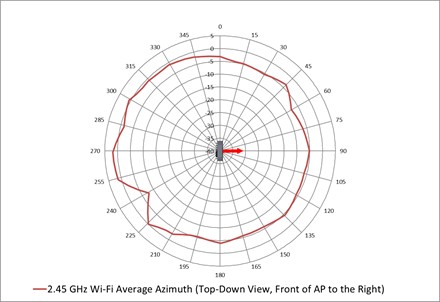
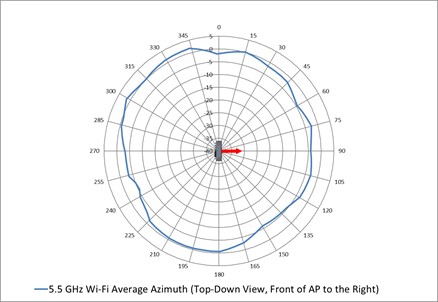
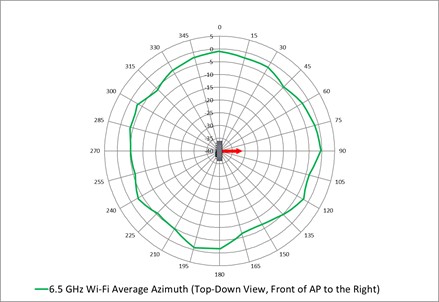
Wi-Fi Antenna Patterns Horizontal planes (top view) |
|
|
|
2.45 GHz Antenna Average Azimuth |
|
|
|
|
|
5.5 GHz Antenna Average Azimuth |
|
|
|
6.5 GHz Antenna Average Azimuth |
|
|
|
Vertical (elevation) planes 0 degree (side view) |
|
|
|
2.45 GHz Antenna Average Elevation 0 degree |
|
|
|
|
|
5.5 GHz Antenna Average Elevation 0 degree |
|
|
|
|
|
6.5 GHz Antenna Average Elevation 0 degree |
|
|
|
Vertical (elevation) planes 90 degree (front of AP) |
|
|
|
2.45 GHz Antenna Average Elevation 90 degree |
|
|
|
|
|
5.5 GHz Antenna Average Elevation 90 degree |
|
|
|
|
|
6.5 GHz Antenna Average Elevation 90 degree
|
|
|
|
AP-723H/AP-725H |
|
Horizontal planes (top view) |
|
|
|
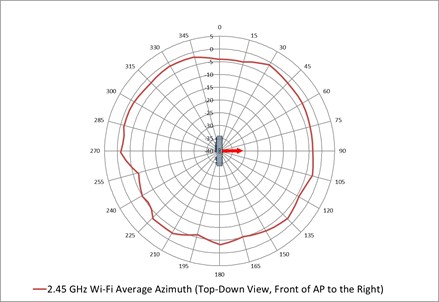
2.45 GHz Antenna Average Azimuth |
|
|
|
|
|
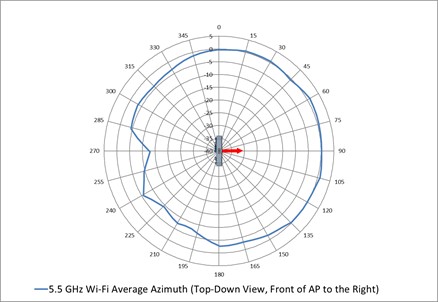
5.5 GHz Antenna Average Azimuth |
|
|
|
|
|
6.5 GHz Antenna Average Azimuth |
|
|
|
Vertical (elevation) planes 0 degree (side view) |
|
|
|
2.45 GHz Antenna Average Elevation 0 degree |
|
|
|
|
|
5.5 GHz Antenna Average Elevation 0 degree |
|
|
|
|
|
6.5 GHz Antenna Average Elevation 0 degree |
|
|
|
Vertical (elevation) planes 90 degree (front of AP) |
|
|
|
2.45 GHz Antenna Average Elevation 90 degree |
|
|
|
|
|
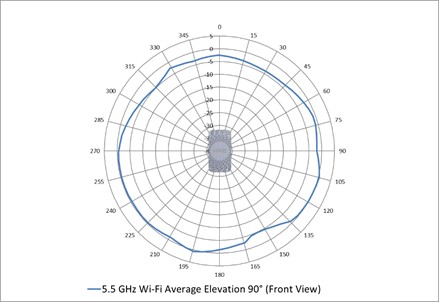
5.5 GHz Antenna Average Elevation 90 degree |
|
|
|
|
|
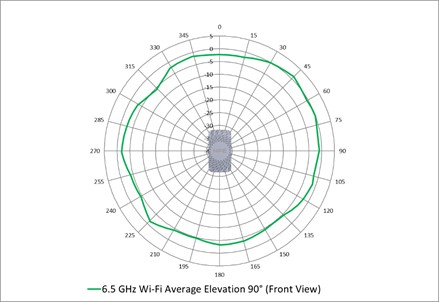
6.5 GHz Antenna Average Elevation 90 degree
|
|
|
|
Warranty HPE Aruba Networking hardware limited lifetime warranty. |
|
|
|
Minimum Operating System Software Versions | ||
|
Model |
HPE Aruba Networking |
HPE Mist |
|
AP-725H |
HPE Aruba Networking Wireless Operating System software release 10.8.1.0 |
n/a |
|
AP-723H |
HPE Aruba Networking Wireless Operating System software release 10.8.1.0 |
16.x |
|
AP-721H |
HPE Aruba Networking Wireless Operating System software release 10.8.1.0 |
n/a |
|
|
|
|
|
Support HPE Aruba Networking network devices (access points, switches, and gateways) that have an active HPE Aruba Networking Central SaaS subscription are fully supported and include: - 24 x 7 priority technical support for troubleshooting - Software updates and upgrades for HPE Aruba Networking Central and hardware products managed by HPE Aruba Networking Central
|
|
|
|
Date |
Version History |
Action |
Description of Change |
|
15-Jun-2026 |
Version 2 |
Changed |
Standard Features, and Technical Specifications sections were updated. Also SKUs were identified in Configuration Information section as HPE Aruba Networking SKUs and HPE Juniper Networking SKUs. |
|
04-May-2026 |
Version 1 |
New |
New QuickSpecs |
|
|
|
Have feedback on QuickSpecs? We're listening | |
|
|
|
| |
|
|
|
Chat now | |
|
|
|
© Copyright 2026 Hewlett Packard Enterprise Development LP. The information contained herein is subject to change without notice. The only warranties for Hewlett Packard Enterprise products and services are set forth in the express warranty statements accompanying such products and services. Nothing herein should be construed as constituting an additional warranty. Hewlett Packard Enterprise shall not be liable for technical or editorial errors or omissions contained herein.
Bluetooth is a trademark owned by its proprietor and used by Hewlett Packard Enterprise under license. All third-party marks are property of their respective owners.
To learn more, visit: http://www.hpe.com/networking
a50009259enw - 17291 - Worldwide - V2 - 15-June-2026 | |
|
|
|
HEWLETT PACKARD ENTERPRISE HPE.com |
|