






HPE Networking Comware Router Series MSR4000: технические характеристики и документация
|
Shape the Future of QuickSpecs - Your Input Matters | |
|
HPE Networking Comware Router Series MSR4000 QuickSpecs
The HPE Networking Comware Router Series MSR4000, the next generation of router from Hewlett Packard Enterprise (HPE), is a component of the HPE FlexBranch solution, which is a part of the comprehensive HPE Networking Comware architecture. These routers feature a modular design that delivers unmatched application services for extra-large branch offices, headquarters, and campuses. This gives your IT personnel the benefit of reduced complexity, and simplified configuration, deployment, and management. The MSR4000 series leverages separated data and control planes, dual main processing units (MPUs), and support for up to four power supplies, which provides outstanding performance and reliability. |
|
|
The MSR4000 routers provide a full-featured, resilient routing platform with the latest multicore CPUs, offer 10 Gigabit SFP+ integrated, provide an enhanced PCI bus, and ship with the latest version of HPE Comware software to help ensure high performance with concurrent services. The MSR4000 series provides a full-featured, resilient routing platform, including IPv6 and MPLS, with up to 36 Mpps forwarding capacity and 28 Gbps of IPSec VPN encrypted throughput. These routers also support HPE Open Application Platform (OAP) modules to deliver integrated industry-leading HPE AllianceOne partner applications such as virtualization, unified communications and collaboration (UC&C), and application optimization capabilities.
The MSR4000 series provides an agile, flexible network infrastructure that enables you to quickly adapt to your changing business requirements while delivering integrated concurrent services on a single, easy-to-manage platform.
|
|
|
|
|
|
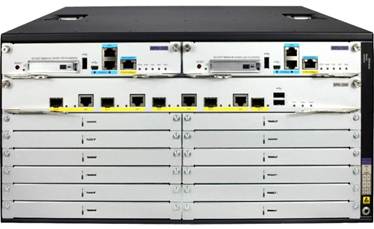
HPE Networking Comware MSR4080 Router Chassis (SPU-200) - Front View |
|
|
|
|
|
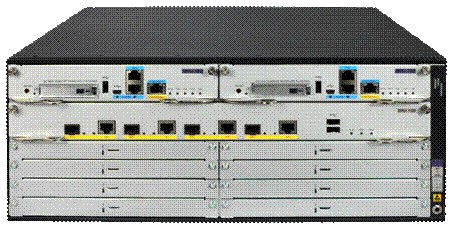
HPE Networking Comware MSR4060 Router Chassis (SPU-100) - Front View |
|
|
|
Models | |
|
HPE Networking Comware MSR4060 Router Chassis |
JG403A |
|
HPE Networking Comware MSR4080 Router Chassis |
JG402A |
|
| |
|
Key features - Up to 36 Mpps forwarding performance; support for multiple concurrent services - High reliability with separated hardware data and control planes, and dual MPUs - Open Application Platform for HPE AllianceOne applications - Powerful aggregation capacity; integrated 10GbE; support for up to 64 E1 or eight E3/T3 ports - Zero-touch solution with single pane-of-glass management | |
|
| |
|
Performance Excellent forwarding performance Excellent full-service performance (NAT + QoS + ACL Performance by Platform, IMIX Traffic), 1Gbps for SPU-100, 3Gbps for SPU-200, 8Gbps for SPU-300.
Powerful security capacity The MSR4000 series is available with standard or high encryption, an embedded hardware encryption accelerator to improve encryption performance; IPSec encryption throughput can be up to 28 Gb/s with a maximum of 10,000 IPSec VPN tunnels |
|
|
|
Product architecture - SDN/OpenFlow OpenFlow is the communications interface defined between the control and forwarding layers of a SDN (Software-Defined Networking ) architecture. OpenFlow separates the data forwarding and routing decision functions. It keeps the flow-based forwarding function and employs a separate controller to make routing decisions. OpenFlow matches packets against one or more flow tables. MSR support OpenFlow 1.3.1 - Ideal multiservice platform - Advanced hardware architecture provides multicore processors, gigabit switching, and PCIE bus; dual Main Processing Units, four internal power supplies (N+1 configuration), and internal and external CF cards are offered; new high-performance MIM modules (HMIM) supported - New operation system version - Open Application Platform architecture provides unmatched application and services flexibility, with the potential to deliver the functionality of multiple devices, creating capital and operational expense savings and lasting investment protection - Distributed architecture with separation of data and control planes delivers enhanced fault tolerance and facilitates near continuous operation and zero service disruption during planned or unplanned control-plane events; service processing units (SPUs) perform data forwarding, encryption/decryption, and analyzing/filtering of data packets; main processing units perform route calculation, forward table maintenance, and configure and monitor the SPU - Field-programmable gate array (FPGA) improves the bandwidth of I/O module slots from 100 Mb/s to 1000 Mb/s, and improves uplink performance from 1 Gb/s to 10 Gb/s - Multi Gigabit Fabric (MGF) - Main processing unit (MPU) - Service processing units (SPU) includes four 1000BASE-T and four SFP (Combo) slots, two voice processing module slots, and 2 GB DDR3 memory; SPU 200/300 also has one 10GbE SFP+ slot; Forwarding performance: 10Mpps (SPU-100), 20Mpps (SPU-200), 36Mpps (SPU-300) SPU-100-X1 and SPU-400-X1 have ten 1000BASE-T or SFP (combo) ports. |
|
Layer 2 switching - Spanning Tree Protocol (STP) supports standard IEEE 802.1D STP, IEEE 802.1w Rapid Spanning Tree Protocol (RSTP) for faster convergence, and IEEE 802.1s Multiple Spanning Tree Protocol (MSTP) - Internet Group Management Protocol (IGMP) and Multicast Listener Discovery (MLD) protocol snooping - Port mirroring - VLANs -
sFlow |
|
|
|
Connectivity - Powerful aggregation capacity - High-density port connectivity - Multiple WAN interfaces provides traditional links with E1, T1, Serial, ATM and ISDN; high-density Ethernet access with WAN Fast Ethernet and Gigabit Ethernet with POE/POE+; and high-speed T3, 155 Mb/s OC3 access options - Ethernet Virtual Interconnect (EVI) EVI is a MAC-in-IP technology that provides Layer 2 connectivity between distant Layer 2 network sites across an IP routed network. It is used for connecting geographically dispersed sites of a virtualized large-scale data center that requires Layer 2 adjacency. - VXLAN (Virtual eXtensible LAN) VXLAN (Virtual eXtensible LAN, scalable virtual local area network) is an IP-based network, using the "MAC in UDP" package of Layer VPN technology. VXLAN can be based on an existing ISP or enterprise IP networks for decentralized physical site provides Layer 2 communication, and can provide service isolation for different tenants. - Virtual Private LAN Service (VPLS) Virtual Private LAN Service (VPLS) delivers a point-to-multipoint L2VPN service over an MPLS or IP backbone. The backbone is transparent to the customer sites, which can communicate with each other as if they were on the same LAN. The following protocols support on MSRs, RFC4447, RFC4761 and RFC4762, BFD detection in VPLS, Support hierarchical HOPE(H-VPLS), MAC address recovery in H-VPLS to speed up convergence. - NEMO (Network Mobility) Network mobility (NEMO) enables a node to retain the same IP address and maintain application connectivity when the node travels across networks. It allows location-independent routing of IP datagrams on the Internet - Packet storm protection - Loopback supports internal loopback testing for maintenance purposes and an increase in availability; loopback detection protects against incorrect cabling or network configurations and can be enabled on a per-port or per-VLAN basis for added flexibility - USB interface uses USB memory disk to download and upload configuration/OS image files; supports an external USB 3G/4G modem for a 3G/4G WAN uplink - Flexible port selection provides a combination of fiber and copper interface modules, 100/1000BASE-X support, and 10/100/1000BASE-T auto-speed detection plus auto duplex and MDI/MDI-X |
|
|
|
Quality of Service (QoS) - Hierarchical quality of service (HQoS)/Nested QoS manages traffic uniformly, and hierarchically schedules traffic by user, network service, and application; provides more granular traffic control and quality assurance services than traditional QoS - Traffic policing - Congestion management - Weighted random early detection (WRED)/random early detection (RED) -
Other
QoS technologies |
|
|
|
Layer 3 routing - Static IPv4 routing - Routing Information Protocol (RIP) uses a distance vector algorithm with UDP packets for route determination; supports RIPv1 and RIPv2 routing; includes loop protection - Open shortest path first (OSPF) delivers faster convergence; uses this link-state routing Interior Gateway Protocol (IGP), which supports ECMP, NSSA, and MD5 authentication for increased security and graceful restart for faster failure recovery - Border Gateway Protocol 4 (BGP-4) delivers an implementation of the Exterior Gateway Protocol (EGP) utilizing path vectors; uses TCP for enhanced reliability for the route discovery process; reduces bandwidth consumption by advertising only incremental updates; supports extensive policies for increased flexibility; scales to very large networks - Intermediate system to intermediate system (IS-IS) uses a path vector Interior Gateway Protocol (IGP), which is defined by the ISO organization for IS-IS routing and extended by IETF RFC 1195 to operate in both TCP/IP and the OSI reference model (Integrated IS-IS) - Static IPv6 routing - Dual IP stack maintains separate stacks for IPv4 and IPv6 to ease the transition from an IPv4-only network to an IPv6-only network design - Routing Information Protocol next generation (RIPng) - OSPFv3 - BGP+ - IS-IS for IPv6 - IPv6 tunneling allows IPv6 packets to traverse IPv4-only networks by encapsulating the IPv6 packet into a standard IPv4 packet; supports manually configured, 6to4, and Intra-Site Automatic Tunnel Addressing Protocol (ISATAP) tunnels; is an important element for the transition from IPv4 to IPv6 - Multiprotocol Label Switching (MPLS) uses BGP to advertise routes across Label Switched Paths (LSPs), but uses simple labels to forward packets from any Layer 2 or Layer 3 protocol, which reduces complexity and increases performance; supports graceful restart for reduced failure impact; supports LSP tunneling and multilevel stacks - Multiprotocol Label Switching (MPLS) Layer 3 VPN allows Layer 3 VPNs across a provider network; uses Multiprotocol BGP (MP-BGP) to establish private routes for increased security; supports RFC 2547bis multiple autonomous system VPNs for added flexibility; supports IPv6 MPLS VPN - Multiprotocol Label Switching (MPLS) Layer 2 VPN establishes simple Layer 2 point-to-point VPNs across a provider network using only MPLS Label Distribution Protocol (LDP); requires no routing and therefore decreases complexity, increases performance, and allows VPNs of non-routable protocols; uses no routing information for increased security; supports Circuit Cross Connect (CCC), Static Virtual Circuits (SVCs), Martini draft, and Kompella-draft technologies - Routing policy allows custom filters for increased performance and security; supports ACLs, IP prefix, AS paths, community lists, and aggregate policies |
|
|
|
Ease of deployment -
Zero-touch
deployment |
|
|
|
Security - IPS Built-in Intrusion Prevention System (IPS) detects and protects the branch office from security threats. Optional HPE integration filters for client-side, branch protection from exploits and vulnerabilities - Enhanced stateful firewall Application layer protocol inspection, Transport layer protocol inspection, ICMP error message check, andTCP SYN check. Support more L4 and L7 protocols like TCP, UDP, UDP-Lite, ICMPv4/ICMPv6, SCTP, DCCP, RAWIP, HTTP, FTP, SMTP, DNS, SIP, H.323, SCCP. - Zone based firewall Zone-Based Policy Firewall changes the firewall configuration from the older interface-based model to a more flexible, more easily understood zone-based model. Interfaces are assigned to zones, and inspection policy is applied to traffic moving between the zones. Inter-zone policies offer considerable flexibility and granularity, so different inspection policies can be applied to multiple host groups connected to the same router interface. - Auto Discover VPN (ADVPN) collects, maintains, and distributes dynamic public addresses through the VPN Address Management (VAM) protocol, making VPN establishment available between enterprise branches that use dynamic addresses to access the public network; compared to traditional VPN technologies, ADVPN technology is more flexible and has richer features, such as NAT traversal of ADVPN packets, AAA identity authentication, IPSec protection of data packets, and multiple VPN domains - IPSec VPN - Access control list (ACL) supports powerful ACLs for both IPv4 and IPv6; ACLs are used for filtering traffic to prevent unauthorized users from accessing the network, or for controlling network traffic to save resources; rules can either deny or permit traffic to be forwarded; rules can be based on a Layer 2 header or a Layer 3 protocol header; rules can be set to operate on specific dates or times - Terminal Access Controller Access-Control System (TACACS+) - Unicast Reverse Path Forwarding (URPF) allows normal packets to be forwarded correctly, but discards the attaching packet due to lack of reverse path route or incorrect inbound interface; prevents source spoofing and distributed attacks - Network login - RADIUS - Network address translation (NAT) supports one-to-one NAT, many-to-many NAT, and NAT control, enabling NAPT to support multiple connections; supports deny list in NAT, a limit on the number of connections, session logs, and multi-instances - Secure Shell (SSHv2) uses external servers to securely log in into a remote device; with authentication and encryption, it protects against IP spoofing and plain text password interception; increases the security of SFTP transfers |
|
|
|
Convergence - Internet Group Management Protocol (IGMP) utilizes Any-Source Multicast (ASM) or Source-Specific Multicast (SSM) to manage IPv4 multicast networks; supports IGMPv1, v2, and v3 - Protocol Independent Multicast (PIM) defines modes of Internet IPv4 and IPv6 multicasting to allow one-to-many and many-to-many transmission of information; supports PIM Dense Mode (DM), Sparse Mode (SM), and Source-Specific Multicast(SSM) - Multicast Source Discovery Protocol (MSDP) -
Multicast
Border Gateway Protocol (MBGP) |
|
|
|
Layer 3 services - WAN Optimization MSR performs optimization using TFO and a combination of DRE, Lempel-Ziv (LZ) compression to provide the bandwidth optimization for file service and web applications. The policy engine module determines which traffic can be optimized and which optimization action should be taken. A pair of WAN optimization equipment can discover each other automatically and complete the negotiation to establish a TCP optimization session. - NAT-PT Network Address Translation - Protocol Translation (NAT-PT) enables communication between IPv4 andIPv6 nodes by translating between IPv4 and IPv6 packets. It performs IP address translation, and according to different protocols, performs semantic translation for packets. This technology is only suitable for communication between a pure IPv4 node and a pure IPv6 node. - Address Resolution Protocol (ARP) determines the MAC address of another IP host in the same subnet; supports static ARPs; gratuitous ARP allows detection of duplicate IP addresses; proxy ARP allows normal ARP operation between subnets or when subnets are separated by a Layer 2 network - User Datagram Protocol (UDP) helper - Dynamic Host Configuration Protocol (DHCP) simplifies the management of large IP networks and supports client and server; DHCP Relay enables DHCP operation across subnets
|
|
|
|
Resiliency and high availability - Backup Center acts as a part of the management and backup function to provide backup for device interfaces; delivers reliability by switching traffic over to a backup interface when the primary one fails - Virtual Router Redundancy Protocol (VRRP) allows groups of two routers to dynamically back each other up to create highly available routed environments; supports VRRP load balancing - In-Service Software Upgrade (ISSU) - Embedded Automation Architecture (EAA) monitors the internal event and status of system hardware and software, identifying potential problems as early as possible; collects field information and attempts to automatically repair the issues; based on the user configuration, onsite information will be sent to technical support - Multiple internal power supply slots - Bidirectional Forwarding Detection (BFD) detects quickly the failures of the bidirectional forwarding paths between two devices for upper-layer protocols such as routing protocols and MPLS. - Intelligent Resilient Fabric (IRF) Intelligent Resilient Fabric (IRF), allows the customer build an IRF stack, namely a logical device, by interconnecting multiple devices through stack ports. The customer can manage all the devices in the IRF stack by managing the logical device, which is cost-effective like a box-type device, and scalable and highly reliable like a chassis-type distributed device. |
|
|
Management - HPE Intelligent Management Center (IMC) integrates fault management, element configuration, and network monitoring from a central vantage point; built-in support for third-party devices enables network administrators to centrally manage all network elements with a variety of automated tasks, including discovery, categorization, baseline configurations, and software images; the software also provides configuration comparison tools, version tracking, change alerts, and more - Industry-standard CLI with a hierarchical structure - Management security restricts access to critical configuration commands; offers multiple privilege levels with password protection; ACLs provide Telnet and SNMP access; local and remote syslog capabilities allow logging of all access - SNMPv1, v2, and v3 provide complete support of SNMP; provide full support of industry-standard Management Information Base (MIB) plus private extensions; SNMPv3 supports increased security using encryption - Remote monitoring (RMON) uses standard SNMP to monitor essential network functions; supports events, alarm, history, and statistics group plus a private alarm extension group - FTP, TFTP, and SFTP support offers different mechanisms for configuration updates; FTP allows bidirectional transfers over a TCP/IP network; trivial FTP (TFTP) is a simpler method using User Datagram Protocol (UDP); Secure File Transfer Protocol (SFTP) runs over an SSH tunnel to provide additional security - Debug and sampler utility - Network Time Protocol (NTP) synchronizes timekeeping among distributed time servers and clients; keeps timekeeping consistent among all clock-dependent devices within the network so that the devices can provide diverse applications based on the consistent time - Information center provides a central repository for system and network information; aggregates all logs, traps, and debugging information generated by the system and maintains them in order of severity; outputs the network information to multiple channels based on user-defined rules - Management interface control provides management access through modem port and terminal interface; provides access through terminal interface, telnet, or SSH - Network Quality Analyzer (NQA) analyzes network performance and service quality by sending test packets, and provides network performance and service quality parameters such as jitter, TCP, or FTP connection delays; allows network manager to determine overall network performance and diagnose and locate network congestion points or failures - Role-based security -
Standards-based
authentication support for LDAP |
|
|
|
Integration - Embedded VPN and firewall provides enhanced stateful packet inspection and filtering; delivers advanced VPN services with Triple DES (3DES) and Advanced Encryption Standard (AES) encryption at high performance and low latency, URL filtering, and application prioritization and enhancement - Embedded NetStream improves traffic distribution using powerful scheduling algorithms, including Layer 4 to 7 services; monitors the health status of servers and firewalls - SIP trunking delivers multiple concurrent calls on one link; the carrier authenticates only the link, rather than carrying each SIP call on the link |
|
|
|
Additional information - OPEX savings simplifies and streamlines deployment, management, and training through the use of a common operating system, thereby cutting costs as well as reducing the risk of human errors associated with having to manage multiple operating systems across different platforms and network layers - Faster time to market allows new and custom features to be brought rapidly to market through engineering efficiencies, delivering better initial and ongoing stability -
Green
initiative support |
|
|
|
Warranty and support - 1-year Warranty -
Software
releases |
|
|
|
Build To Order BTO is a standalone unit with no integration. BTO products ship standalone are not part of a CTO or Rack-Shippable solution. | ||||
|
Router Chassis |
| |||
|
Remarks |
Description |
SKU | ||
|
|
HPE Networking Comware MSR4080 Router Chassis |
JG402A | ||
|
|
- Must select 1 Main Processing Unit - Must select 1 Service Processing Unit - Must select 1 Power Supply - 8-HMIM modules slot (4 Half Height + 4 Full Height Slots) - 5U - Height |
|||
|
|
HPE Networking Comware MSR4060 Router Chassis |
JG403A | ||
|
|
- Must select 1 Main Processing Unit - Must select 1 Service Processing Unit - Must select 1 Power Supply - 6-HMIM modules slot (4 Half Height + 2 Full Height Slots) - 4U - Height |
|||
|
| ||||
|
Rack Level Integration CTO Models |
| |||
|
Router Chassis |
| |||
|
|
HPE Networking Comware MSR4080 Router Chassis |
JG402A | ||
|
|
- Must select 1 Main Processing Unit - Must select 1 Service Processing Unit - Must select 1 Power Supply - 8-HMIM modules slot (4 Half Height + 4 Full Height Slots) - 5U - Height |
|||
|
|
HPE Networking Comware MSR4060 Router Chassis |
JG403A | ||
|
|
- Must select 1 Main Processing Unit - Must select 1 Service Processing Unit - Must select 1 Power Supply - 6-HMIM modules slot (4 Half Height + 2 Full Height Slots) - 4U - Height |
|||
|
Notes: |
If the CTO Router Chassis needs to be racked, Then the CTO Base Model needs to integrate (with #0D1) to the HPE Networking Rack. | |||
|
Enter the following menu selections as integrated to the CTO Model X server above if order is factory built. | ||||
|
Main Processing Units System (std 0 // max 2) User Selection (min 1 // max 2) |
| |||
|
|
HPE Networking MSR4000 MPU-100-X1 Main Processing Unit |
JM045A | ||
|
Notes: |
No mixing of any type of MPU. Must all be the same sku. |
| ||
|
Service Processing Units (std 0 // max 1) User Selection (min 1 // max 1) per router enclosure |
| |||
|
Rule # |
Description |
SKU | ||
|
1 |
HPE Networking Comware MSR4000 SPU-100-X1 Service Processing Unit |
R8V30A | ||
|
|
- 10 COMBO 1000M RJ45/SFP ports - min=0 \ max=10 SFP Transceivers - min=0 \ max=0 VPM Modules - default=2GB \ max=2GB DDR SDRAM |
| ||
|
1, 3 |
HPE Networking MSR4000 SPU-400-X1 Service Processing Unit |
JM046A | ||
|
|
- 10 COMBO 1000M RJ45/SFP ports - Min=0 \ max=10 SFP Transceivers - 4 - SFP+ Port - Min=0 \ max=4 SFP+ Transceiver - Default=4GB \ max=4GB DDR SDRAM |
| ||
|
|
Configuration Rules |
| ||
|
1 |
The following SFP Transceivers install into this SPU: |
| ||
|
HPE Networking X120 1G SFP LC SX Transceiver |
JD118B | |||
|
HPE Networking X120 1G SFP LC LX Transceiver |
JD119B | |||
|
HPE Networking X120 1G SFP LC LH100 Transceiver |
JD103A | |||
|
|
HPE Networking X120 1G SFP RJ45 T Transceiver |
JD089B | ||
|
HPE Networking X115 100M SFP LC FX Transceiver |
JD102B | |||
|
HPE Networking X110 100M SFP LC LX Transceiver |
JD120B | |||
|
HPE Networking X120 1G SFP LC BX 10-U Transceiver |
JD098B | |||
|
HPE Networking X120 1G SFP LC BX 10-D Transceiver |
JD099B | |||
|
3 |
The following SFP+ Transceivers install into this SPU: |
| ||
|
HPE Networking X130 10G SFP+ LC SR Transceiver |
JD092B | |||
|
HPE Networking X130 10G SFP+ LC LR Transceiver |
JD094B | |||
|
HPE Networking X130 10G SFP+ LC ER 40km Transceiver |
JG234A | |||
|
HPE Networking X240 10G SFP+ SFP+ 0.65m DAC Cable |
JD095C | |||
|
HPE Networking X240 10G SFP+ SFP+ 1.2m DAC Cable |
JD096C | |||
|
HPE Networking X240 10G SFP+ SFP+ 3m DAC Cable |
JD097C | |||
|
HPE Networking X240 10G SFP+ SFP+ 5m DAC Cable |
JG081C | |||
|
HMIM Modules |
| |||
|
|
System (std 0 // max 6 or 8) User Selection (min 0 // max 6 or 8) per Router Chassis (See Modules for Port information) |
| ||
|
Rule # |
Description |
SKU | ||
|
|
HPE Networking Comware MSR 4-Port Gig-T HMIM-V2 Module |
S0W32A | ||
|
|
- Half Height Module; Takes up 1 Half Height or 1 Full Height slot |
| ||
|
|
HPE Networking Comware MSR 16-Port Enhanced Async Serial HMIM-V2 Module |
S0W35A | ||
|
|
- Full Height Module; Takes up 1 - Full Height slot or 2 - Half Height slots, vertically |
| ||
|
2, 4 |
HPE Networking Comware MSR 8-port Gig-T HMIM Module |
JG422A | ||
|
|
- Half Height Module; Takes up 1 Half Height or 1 Full Height slot |
| ||
|
2, 4, 14 |
HPE Networking ComwareMSR 8-port 1000BASE-X HMIM Module |
JG425A | ||
|
|
- Half Height Module; Takes up 1 Half Height or 1 Full Height slot - min=0 \ max=8 SFP Modules |
| ||
|
1, 3, 11 |
HPE Networking Comware MSR 24-port Gig-T Switch HMIM Module |
JG426A | ||
|
|
- (Full Height Module; Takes up 1 - Full Height slot or 2 - Half Height slots, vertically) |
| ||
|
2, 4, 7, 14 |
HPE Networking Comware MSR 8-port 10/100/1000BASE-T/2-port 1000BASE-X (Combo) Switch HMIM Module |
JG741A | ||
|
|
- Half Height Module; Takes up 1 Half Height or 1 Full Height slot - min=0 \ max=2 SFP Transceivers |
| ||
|
2, 4, 10, 15, 16 |
HPE Networking Comware MSR 8-port E1/CE1/T1/CT1/PRI HMIM Module |
JH169A | ||
|
|
- Half Height Module; Takes up 1 Half Height or 1 Full Height slot - min=0 \ max=8 E1/T1 Cable |
| ||
|
2, 4, 10, 15, 16 |
HPE Networking Comware MSR 8-port E1/Fractional E1/T1/Fractional T1 HMIM Module |
JH172A | ||
|
|
- (Half Height Module; Takes up 1 Half Height or 1 Full Height slot) - min=0 \ max=8 E1/T1 Cable |
| ||
|
2, 4, 7, 14 |
HPE Networking Comware MSR 8-port 100BASE-FX/1000BASE-X/4-port 1000BASE-T (Combo) L2/L3 HMIM Module |
JH238A | ||
|
|
- (Half Height Module; Takes up 1 Half Height or 1 Full Height slot) - min=0 \ max=8 SFP Modules |
| ||
|
|
Configuration Rules |
| ||
|
Rule # |
Description |
SKU | ||
|
1 |
These Modules can install directly to the Router Chassis (JG402A) min=0\ max=6 per enclosure (Full Height Module; Takes up 1 - Full Height slot or 2 - Half Height slots, vertically) |
| ||
|
2 |
These Modules can install directly to the Router Chassis (JG402A) min=0\ max=8 per enclosure |
| ||
|
3 |
These Modules can install directly to the Router Chassis (JG403A) min=0\ max=4 per enclosure (Full Height Module; Takes up 1 - Full Height slot or 2 - Half Height slots, vertically) |
| ||
|
4 |
These Modules can install directly to the Router Chassis (JG403A) min=0\ max=6 per enclosure |
| ||
|
10 |
The following T1 Cables install into this Module: |
| ||
|
HPE Networking Comware X260 T1 Router Cable |
JD518A | |||
|
11 |
Full Height Module; Takes up 1 - Full Height slot or 2 - Half Height slots, vertically |
| ||
|
14 |
The following Transceivers install into this Module: |
| ||
|
HPE Networking X120 1G SFP LC SX Transceiver |
JD118B | |||
|
HPE Networking X120 1G SFP LC LX Transceiver |
JD119B | |||
|
HPE Networking X120 1G SFP LC BX 10-U Transceiver |
JD098B | |||
|
HPE Networking X120 1G SFP LC BX 10-D Transceiver |
JD099B | |||
|
HPE Networking X120 1G SFP LC LH100 Transceiver |
JD103A | |||
|
|
HPE Networking X120 1G SFP RJ45 T Transceiver |
JD089B | ||
|
15 |
The following E1 Cables install into this Module: |
| ||
|
|
HPE Networking Comware X260 E1 RJ45 to 2xBNC 75ohm 3m Router Cable |
JH294A | ||
|
16 |
The following E1 Cables install into this Module: |
| ||
|
|
HPE Networking Comware X260 E1 RJ45 120 ohm 2m Router Cable |
JC156A | ||
|
Notes: |
PoE Module JG427A can be used a non-POE module on chassis without PoE power supplies. |
| ||
|
Transceivers |
| |||
|
Remarks |
Description |
SKU | ||
|
|
SFP Transceivers |
| ||
|
|
System (std 0 // max 4) User Selection (min 0 // max 4) per SPU |
| ||
|
|
HPE Networking X120 1G SFP LC SX Transceiver |
JD118B | ||
|
|
HPE Networking X120 1G SFP LC LX Transceiver |
JD119B | ||
|
|
HPE Networking X115 100M SFP LC FX Transceiver |
JD102B | ||
|
|
HPE Networking X110 100M SFP LC LX Transceiver |
JD120B | ||
|
|
HPE Networking X120 1G SFP LC LH100 Transceiver |
JD103A | ||
|
|
HPE Networking X120 1G SFP LC BX 10-U Transceiver |
JD098B | ||
|
|
HPE Networking X120 1G SFP LC BX 10-D Transceiver |
JD099B | ||
|
|
HPE Networking X120 1G SFP RJ45 T Transceiver |
JD089B | ||
|
|
SFP+ Transceivers |
| ||
|
|
HPE Networking X130 10G SFP+ LC SR Transceiver |
JD092B | ||
|
|
HPE Networking X130 10G SFP+ LC LR Transceiver |
JD094B | ||
|
|
HPE Networking X130 10G SFP+ LC ER 40km Transceiver |
JG234A | ||
|
|
HPE Networking X240 10G SFP+ SFP+ 0.65m DAC Cable |
JD095C | ||
|
|
HPE Networking X240 10G SFP+ SFP+ 1.2m DAC Cable |
JD096C | ||
|
|
HPE Networking X240 10G SFP+ SFP+ 3m DAC Cable |
JD097C | ||
|
|
HPE Networking X240 10G SFP+ SFP+ 5m DAC Cable |
JG081C | ||
|
Power Supplies |
| |||
|
Rule # |
Description |
SKU | ||
|
|
System (std 0// max 4) User Selection (min 1 // max 2 or max 4) per MSR4000 Router Chassis |
| ||
|
4, 6 |
HPE Networking Comware X351 300W 48-60VDC to 12VDC Power Supply |
JG528A | ||
|
1, 2, 4, 6 |
HPE Networking Comware X351 300W 100-240VDC to 12VDC Power Supply |
JG527A | ||
|
|
HPE Networking Comware X351 300W 100-240VDC to 12VDC Power Supply PDU |
JG527A#B2B | ||
|
|
- C15 PDU Jumper Cord (NA/MEX/TW/JP) |
| ||
|
|
HPE Networking Comware X351 300W 100-240VDC to 12VDC Power Supply PDU |
JG527A#B2C | ||
|
|
- C15 PDU Jumper Cord (ROW) |
| ||
|
|
HPE Networking Comware X351 300W 100-240VDC to 12VDC Power Supply 220v |
JG527A#B2E | ||
|
|
- NEMA L6-20P Cord (NA/MEX/JP/TW) |
| ||
|
|
Configuration Rules |
| ||
|
1 |
Localization required on orders without #B2B, #B2C or #B2E options. |
| ||
|
2 |
If #B2E is selected Then replace Localized option with #B2E for power supply and with #B2E for switch. (Offered only in NA, Mexico,, Taiwan, and Japan) |
| ||
|
4 |
Maximum of 4 of this Power Supply for MSR4080 - JG402A and MSR4060 - JG403A. min=0\ max=4 |
| ||
|
6 |
Power Supplies cannot be mixed in the same Router enclosure |
| ||
|
Notes: |
- Drop down under power supply should offer the following options and results: - Switch/Router/Power Supply to PDU Power Cord - #B2B in North America, Mexico, Taiwan, and Japan or #B2C ROW. (Watson Default B2B or B2C for Rack Level CTO) - Switch/Router/Power Supply to Wall Power Cord - Localized Option (Watson Default for BTO and Box Level CTO) - High Volt Switch/Router/Power Supply to Wall Power Cord - #B2E Option. (Offered only in North America, Mexico, Taiwan, and Japan) - Configurator Blue Text: - HPE 5800 750W AC PoE Power Supply (JC089A) is only supported in slot 1 and slot 3 in the MSR4000 Router Chassis |
. | ||
|
Cables |
| |||
|
|
HPE Networking Comware X200 V.24 DTE 3m Serial Port Cable |
JD519A | ||
|
|
HPE Networking Comware X200 V.24 DCE 3m Serial Port Cable |
JD521A | ||
|
|
HPE Networking Comware X200 V.35 DTE 3m Serial Port Cable |
JD523A | ||
|
|
HPE Networking Comware X200 V.35 DCE 3m Serial Port Cable |
JD525A | ||
|
|
HPE Networking Comware X260 E1 (2) BNC 75 ohm 3m Router Cable |
JD175A | ||
|
|
HPE Networking Comware X260 E1 RJ45 BNC 75-120 ohm Conversion Router Cable |
JD511A | ||
|
|
HPE Networking Comware X260 T1 Router Cable |
JD518A | ||
|
|
HPE Networking Comware X260 T3/E3 Router Cable |
JD531A | ||
|
|
HPE Networking Comware X260 E1 RJ45 to 2xBNC 75ohm 3m Router Cable |
JH294A | ||
|
|
HPE Networking Comware X260 E1 RJ45 120 ohm 2m Router Cable |
JC156A | ||
|
Notes: |
The following cable is used for RJ45 BNC Conversion JD511A |
| ||
|
|
HPE Networking Comware X260 E1 RJ45 BNC 75-120 ohm Conversion Router Cable |
JD511A | ||
|
| ||||
|
HPE FlexNetwork MSR4060 Router Chassis (JG403A) | ||
|
I/O ports and slots |
2 MPU (Main Processing Unit) slots | |
|
AP characteristics |
3G, 4G LTE | |
|
Physical characteristics |
Dimensions |
17.32(w) x 18.9(d) x 6.89(h) in (44 x 48 x 17.50 cm) (4U height) |
|
Weight |
45.52 lb (20.65 kg) | |
|
Memory and processor |
MPU-100, 2 cores RISC @ 1 GHz, 512 MB flash capacity, 2 GB DDR3 SDRAM SPU-100, 8 cores RISC @ 1 GHz, 2 GB DDR3 SDRAM SPU-100-X1, 8 cores RISC @1.2GHz, 2GB DDR3 SDRAM SPU-200, 16 cores RISC @ 1 GHz, 2 GB DDR3 SDRAM SPU-300, 32 cores RISC @ 1 GHz, 4 GB DDR3 SDRAM SPU-400-X1, 16 cores RISC @1.5GHz, 4GB DDR3 SDRAM | |
|
Mounting and enclosure |
Desktop or can be mounted in an EIA standard 19-inch telco rack when used with the rack-mount kit in the package. | |
|
Performance |
Throughput |
up to 60 Mpps in fast forwarding mode (64-byte packets) |
|
Routing table size |
1000000 entries (IPv4), 1000000 entries (IPv6) | |
|
Forwarding table size |
1000000 entries (IPv4), 1000000 entries (IPv6) | |
|
Environment |
Operating temperature |
32ºF to 113ºF (0ºC to 45ºC) |
|
Operating relative humidity |
5% to 90%, noncondensing | |
|
Non-operating/Storage temperature |
-40ºF to 158ºF (-40ºC to 70ºC) | |
|
Non-operating/Storage relative humidity |
5% to 90%, noncondensing | |
|
Altitude |
up to 16,404 ft (5 km) | |
|
Electrical characteristics |
Frequency |
50/60 Hz |
|
Maximum heat dissipation |
285/347 BTU/hr (300.67/366.09 kJ/hr), lower number is with SPU-100 module installed; higher number is for SPU-200 | |
|
Voltage |
100 - 240 VAC, rated -36 to -75 VDC, rated (Depending on power supply chosen) | |
|
Maximum power rating |
300 W | |
|
PoE power |
450 W PoE+ | |
|
Notes: - Maximum power rating and maximum heat dissipation are the worst-case theoretical maximum numbers provided for planning the infrastructure with fully loaded PoE (if equipped), 100% traffic, all ports plugged in, and all modules populated. PoE Power is the power supplied by the internal power supply, it is dependent on the type and quantity of power supplies and may be supplemented with the use of an External Power Supply (EPS). - No default power supply is included in the chassis; a minimum of one/maximum of four power supplies should be ordered. | ||
|
Reliability |
MTBF (years) |
178.66 |
|
Safety |
UL 60950-1; EN 60825-1 Safety of Laser Products-Part 1; EN 60825-2 Safety of Laser Products-Part 2; IEC 60950-1; EN 60950-1; CAN/CSA-C22.2 No. 60950-1; FDA 21 CFR Subchapter J; AS/NZS 60950-1; GB 4943.1 | |
|
Emissions |
EN 61000-4-11:2004; ANSI C63.4-2009; AS/NZS CISPR 22:2009; CISPR 22 Ed2.0 2008-09; EN 55022:2010; EN 61000-3-3:2008; GB 9254-2008; IEC 61000-3-2 Ed3.0 (2009-02); IEC 61000-3-3 Ed2.0 (2008-06); VCCI V-4/2012.04; CISPR 24 Ed2.0 2010-08; EN 55024:2010; EN 61000-3-2:2006+A1:2009+A2:2009 ; EN 61000-4-2:2009; EN 61000-4-29:2000; EN 61000-4-3:2006; EN 61000-4-4:2012; EN 61000-4-5:2006; EN 61000-4-6:2009; EN 61000-4-8:2010; ETSI EN 300 386 V1.6.1(2012-09); FCC 47 CFR Part 15 (latest current version); ICES-003 Issue 5; IEC 61000-4-11 Ed2.0 (2004-03); IEC 61000-4-2 Ed2.0 (2008-12); IEC 61000-4-29 Ed1.0 (2000-08); IEC 61000-4-3 Ed3.2 (2010-04); IEC 61000-4-4 Ed3.0 (2012-04); IEC 61000-4-5 Ed2.0 (2005-11); IEC 61000-4-6 Ed3.0 (2008-10); IEC 61000-4-8 Ed2.0 (2009-09); VCCI V-3/2013.04 | |
|
Telecom |
FCC part 68; CS-03 | |
|
Management |
IMC - Intelligent Management Center; command-line interface; limited command-line interface; configuration menu; out-of-band management (RJ-45 Ethernet); SNMP Manager; Telnet; RMON1; FTP; in-line and out-of-band; modem interface; out-of-band management (serial RS-232C or Micro USB); IEEE 802.3 Ethernet MIB | |
|
Services |
Refer to the Hewlett Packard Enterprise website at http://www.hpe.com/networking/services for details on the service-level descriptions and product numbers. For details about services and response times in your area, please contact your local Hewlett Packard Enterprise sales office | |
|
| ||
|
HPE FlexNetwork MSR4080 Router Chassis (JG402A) | ||
|
I/O ports and slots |
2 MPU (Main Processing Unit) slots | |
|
AP characteristics Radios (via optional modules) |
3G, 4G LTE | |
|
Physical characteristics |
Dimensions |
17.32(w) x 18.9(d) x 8.64(h) in (44 x 48 x 21.95 cm) (5U height) |
|
Weight |
49.93 lb (22.65 kg) | |
|
Memory and processor |
MPU-100, 2 cores RISC @ 1 GHz, 512 MB flash capacity, 2 GB DDR3 SDRAM SPU-100, 8 cores RISC @ 1 GHz, 2 GB DDR3 SDRAM SPU-100-X1, 8 cores RISC @1.2GHz, 2GB DDR3 SDRAM SPU-200, 16 cores RISC @ 1 GHz, 2 GB DDR3 SDRAM SPU-300, 32 cores RISC @ 1 GHz, 4 GB DDR3 SDRAM SPU-400-X1, 16 cores RISC @1.5GHz, 4GB DDR3 SDRAM | |
|
Mounting and enclosure |
Desktop or can be mounted in a EIA standard 19-inch telco rack when used with the rack-mount kit in the package. | |
|
Performance |
Throughput |
up to 60 Mpps in fast forwarding mode (64-byte packets) |
|
Routing table size |
1000000 entries (IPv4), 1000000 entries (IPv6) | |
|
Forwarding table size |
1000000 entries (IPv4), 1000000 entries (IPv6) | |
|
Environment |
Operating temperature |
32ºF to 113ºF (0ºC to 45ºC) |
|
Operating relative humidity |
5% to 90%, noncondensing | |
|
Non-operating/Storage temperature |
-40ºF to 158ºF (-40ºC to 70ºC) | |
|
Non-operating/Storage relative humidity |
5% to 90%, noncondensing | |
|
Altitude |
up to 16,404 ft (5 km) | |
|
Electrical characteristics |
Frequency |
50/60 Hz |
|
Maximum heat dissipation |
297/358 BTU/hr (313.33/377.69 kJ/hr), lower number is with SPU-100 module installed; higher number is for SPU-200 | |
|
Voltage |
100 - 240 VAC, rated -36 to -75 VDC, rated (depending on power supply chosen) | |
|
Maximum power rating |
300 W | |
|
PoE power |
450 W PoE+ | |
|
Notes |
Maximum power rating and maximum heat dissipation are the worst-case theoretical maximum numbers provided for planning the infrastructure with fully loaded PoE (if equipped), 100% traffic, all ports plugged in, and all modules populated. PoE Power is the power supplied by the internal power supply, it is dependent on the type and quantity of power supplies and may be supplemented with the use of an External Power Supply (EPS). | |
|
Reliability |
MTBF (years) |
178.66 |
|
Safety |
UL 60950-1; EN 60825-1 Safety of Laser Products-Part 1; EN 60825-2 Safety of Laser Products-Part 2; IEC 60950-1; EN 60950-1; CAN/CSA-C22.2 No. 60950-1; FDA 21 CFR Subchapter J; AS/NZS 60950-1; GB 4943.1 | |
|
Emissions |
EN 61000-4-11:2004; ANSI C63.4-2009; AS/NZS CISPR 22:2009; CISPR 22 Ed2.0 2008-09; EN 55022:2010; EN 61000-3-3:2008; GB 9254-2008; IEC 61000-3-2 Ed3.0 (2009-02); IEC 61000-3-3 Ed2.0 (2008-06); VCCI V-4/2012.04; CISPR 24 Ed2.0 2010-08; EN 55024:2010; EN 61000-3-2:2006+A1:2009+A2:2009 ; EN 61000-4-2:2009; EN 61000-4-29:2000; EN 61000-4-3:2006; EN 61000-4-4:2012; EN 61000-4-5:2006; EN 61000-4-6:2009; EN 61000-4-8:2010; ETSI EN 300 386 V1.6.1(2012-09); FCC 47 CFR Part 15 (latest current version); ICES-003 Issue 5; IEC 61000-4-11 Ed2.0 (2004-03); IEC 61000-4-2 Ed2.0 (2008-12); IEC 61000-4-29 Ed1.0 (2000-08); IEC 61000-4-3 Ed3.2 (2010-04); IEC 61000-4-4 Ed3.0 (2012-04); IEC 61000-4-5 Ed2.0 (2005-11); IEC 61000-4-6 Ed3.0 (2008-10); IEC 61000-4-8 Ed2.0 (2009-09); VCCI V-3/2013.04 | |
|
Telecom |
FCC part 68; CS-03 | |
|
Management |
IMC - Intelligent Management Center; command-line interface; limited command-line interface; configuration menu; out-of-band management (RJ-45 Ethernet); SNMP Manager; Telnet; RMON1; FTP; in-line and out-of-band; modem interface; out-of-band management (serial RS-232C or Micro USB); IEEE 802.3 Ethernet MIB | |
|
Services |
Refer to the Hewlett Packard Enterprise website at http://www.hpe.com/networking/services for details on the service-level descriptions and product numbers. For details about services and response times in your area, please contact your local Hewlett Packard Enterprise sales office | |
|
| ||
|
Date |
Version History |
Action |
Description of Change: |
|
27-Feb-2026 |
Version 31 |
Changed |
New branding applied to document. |
|
04-Dec-2023 |
Version 30 |
Changed |
Series name was updated. |
|
06-Mar-2023 |
Version 29 |
Changed |
Configuration Information section was updated. |
|
04-Apr-2022 |
Version 28 |
Changed |
Standard Features, Configuration Information, and Technical Specifications sections were updated. |
|
16-Aug-2021 |
Version 27 |
Changed |
Configuration Information section was updated, obsolete SKUs were deleted. |
|
04-May-2021 |
Version 26 |
Changed |
Configuration Information section was updated. |
|
15-Feb-2021 |
Version 25 |
Changed |
Rebranding applied to document. |
|
18-Jan-2021 |
Version 24 |
Changed |
Standard Features section was updated. |
|
02-Dec-2019 |
Version 23 |
Change |
Configuration Information section was updated. Obsolete SKUs were removed. |
|
07-Apr-2017 |
Version 22 |
Change |
Updates made on Features and benefits and Accessories |
|
03-Apr-2017 |
Version 21 |
Added |
SKU added: JH449A |
|
06-Feb-2017 |
Version 20 |
Changed |
Adding MSR #A59 option on Configuration section |
|
06-Jun-2016 |
Version 19 |
Changed |
Document name changed to HPE Networking Comware Router Series MSR4000. |
|
29-Apr-2016 |
Version 18 |
Changed |
SKU descriptions updated on all the document. Accessories updated |
|
31-Mar-2016 |
Version 17 |
Changed |
SKUs added: JH223AAE, JH227AAE Features and benefits, Standards and protocols updated |
|
01-Dec-2015 |
Version 16 |
Changed |
Overview and Technical Specifications updated |
|
28-Aug-2015 |
Version 15 |
Changed |
Configuration section updated |
|
17-Aug-2015 |
Version 14 |
Changed |
SKUs added: JG445A, JH169A, JH172A, JH238A, JH294A Updated Overview, Features and Benefits and Accessories |
|
24-Feb-2015 |
Version 13 |
Changed |
Minor change on Configuration section |
|
06-Oct-2014 |
Version 12 |
Changed |
Configuration section updated |
|
18-Aug-2014 |
Version 11 |
Added |
Added 4 new accessories: JG428A, JG432A, JG434A, JG741A |
|
03-Jul-2014 |
Version 10 |
Changed |
Configuration menu updated. |
|
10-Jun-2014 |
Version 9 |
Added |
Added two new Router Enclosure Options to Configuration as well as 10 new accessories: JG670A, JG420A, JG421A, JG422A, JG423A, JG424A, JG425A, JG426A, JG427A, JG528A. |
|
10-Feb-2014 |
Version 8 |
Changed |
Key features was revised. |
|
31-Jan-2014 |
Version 7 |
Added |
GRE tunnels was added to Technical Specifications. |
|
22-Nov-2013 |
Version 6 |
Changed |
HIMM Modules and Cables were revised in Configuration. |
|
12-Nov-2013 |
Version 5 |
Changed |
Power Supplies was revised in Configuration. |
|
14-Oct-2013 |
Version 4 |
Added |
Overview images were added. |
|
30-Sep-2013 |
Version 3 |
Changed |
Configuration was reorganized. |
|
27-Sep-2013 |
Version 2 |
Added |
Configuration was added. |
|
19-Aug-2013 |
Version 1 |
New |
New QuickSpecs |
|
|
|
Shape the Future of QuickSpecs - Your Input Matters | |
|
|
|
| |
|
|
|
Chat now | |
|
|
|
© Copyright 2026 Hewlett Packard Enterprise Development LP. The information contained herein is subject to change without notice. The only warranties for Hewlett Packard Enterprise products and services are set forth in the express warranty statements accompanying such products and services. Nothing herein should be construed as constituting an additional warranty. Hewlett Packard Enterprise shall not be liable for technical or editorial errors or omissions contained herein.
To learn more, visit: http://www.hpe.com/networking
c04315129 - 14640 - Worldwide - V31 - 27-February-2026 | |
|
|
|
HEWLETT PACKARD ENTERPRISE HPE.com |
|