





HPE Networking CW 2050 Switch Series: технические характеристики и документация
|
Have feedback on QuickSpecs? We're listening | |
|
HPE Networking CW 2050 Switch Series QuickSpecs
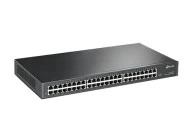
The HPE Networking CW 2050 Switch Series is the next-generation Layer 2 access switch for branch offices, small and medium sized businesses. The CW 2050 switch family features two 24 port and two 48 port models in PoE and non-PoE configurations, each with four dedicated 1G/2.5G SFP uplinks, delivering up to 116 Gbps of switching capacity along with up to 420W of PoE power. The 24-port PoE model includes four Smart Rate 1G/2.5G ports, each supporting up to 100W per port to connect wireless APs, IP phone, surveillance cameras and IoT devices. Fully managed and stackable, the CW 2050 switch delivers enterprise-grade performance, reliability and simplicity at the SMB price point. |
|
|
Network visibility, management, and operation tools for this series include Web GUI, standard CLI and the switch embedded CW Dashboard at no additional cost. Other management options include HPE Intelligent Management Center (IMC), SNMP manager, Aruba Airwave, and REST API for seamless integration into third party dashboards. |
|
|
|
|
|
HPE Networking CW 2050 Switch Series |
|
|
|
Key features |
|
- Fully managed, stackable Layer 2 switch with 24 and 48 1 GbE access ports and four (4) 1G/2.5G SFP uplinks - Deliver up to 116 Gbps in nonblocking bandwidth and 86.3 Mpps in forwarding - Up to 2-member Intelligent Resilient Fabric (IRF) stacking for reliable connectivity and simplified management - Class 4 PoE (802.3at) provides 35W per port and up to 420W per system - 24port PoE model has four (4) PoE++ ports at 100W per port - Support fast PoE and perpetual PoE for continued power delivery during equipment power cycle - 24-port non-PoE model includes four (4) HPE Smart Rate 1G/2.5G ports - Fanless design in the 24-port non PoE model for noise sensitive environments - Comprehensive security support including multi-layer access protection with granular ACLs, secure boot, encrypted access, and threat prevention features - Advanced Quality of Service (QoS) and IPv6 support for reliable connectivity - Simplified management with Web GUI, CLI and embedded CW Dashboard included free of charge - Additional management choices include HPE Intelligent Management Center (IMC), Airwave, SNMP, and REST APIs - Built-in 6 kV surge protection reduces the risk of power strikes in demanding environments such as construction sites |
|
|
|
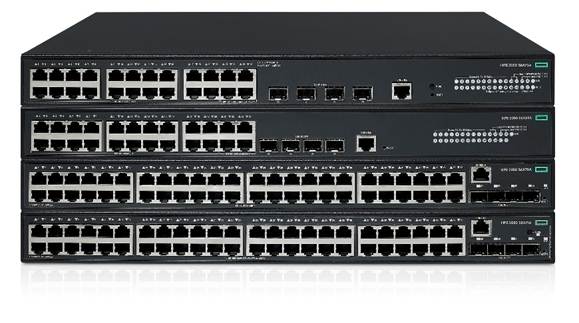
Enterprise-class Access Connectivity The HPE Networking CW 2050 Switch Series delivers up to 116 Gbps of non-blocking bandwidth and 86.9Mpps in forwarding. It supports two (2) switch Intelligent Resilient Fabric (IRF) stacking for resilient and availability.
The 1U switch family features 4 switches, two (2) 24 port and two (2) 48 port in PoE and non-PoE configurations. Each switch has four (4) 1G/2.5G SFP uplinks for improved connectivity. The 24-port PoE model includes four (4) 1G/2.5G PoE++ ports at 100W per port for connecting wireless APs, IP phones, cameras and IoT devices. The 24-port non-PoE models is fanless, makes it ideal for noise sensitive environments.
The switch series supports Layer 3 static routing and IPv6. Additional highlights include the built-in 6 kV surge protection to reduce the risk of power strikes, especially for demanding settings such as construction sites.
Powerful PoE Capabilities The CW 2150 switch series deliver 420W and 410W Class 4 PoE at 35W per port in the 24 and 48 port models. It supports advanced PoE features including fast PoE to deliver power within seconds of system startup, perpetual PoE to maintain power during a power-source reboot, and PoE watchdog function to automatically removes power when the connected device is no longer active.
Comprehensive Security Control The switch family provides comprehensive security features to protect your business data and keep unauthorized access for modern SMB environments: - Secure boot verifies digital signatures to prevent unauthorized or malicious software from loading at startup - Multi-layer access protection with granular ACLs (IPv4/IPv6, VLAN, port-based), identity-driven policies, and authentication options including 802.1X, MAC, Web, RADIUS, TACACS+ - Encrypted access using SSHv2, SSL, SNMPv3, and TLS, along with role-based privileges and audit logging - Threat-prevention features include Control Plane Policing (DoS protection), ARP and DHCP protection, ICMP throttling, port security, and source-port filtering |
|
|
|
Performance Nonblocking architecture Up to 116 Gbps of nonblocking wire speed switching with up to 86.3 Mpps throughput
Hardware-based wire speed access control lists (ACLs) Help provide high levels of security and ease of administration without impacting network performance with a feature-rich TCAM-based ACL implementation |
|
|
|
Resiliency and High Availability Separate Data and Control Paths Separate control from services and keeps service processing isolated; increases security and performance
Intelligent Resilient Fabric (IRF) Creates virtual resilient switching fabrics, where up to two (2) switches perform as a single logical device; switches do not have to be co-located and can be part of a disaster-recovery system; servers or switches can be attached using standard LACP for automatic load balancing and high availability; can eliminate the need for complex protocols like Spanning Tree Protocol, thereby simplifying network operation.
Smart
Link |
|
|
|
Quality of Service Broadcast control Allows limitation of broadcast traffic rate to cut down on unwanted network broadcast traffic
Advanced classifier-based QoS Classifies traffic using multiple match criteria based on Layer 2, 3, and 4 information; apply QoS policies such as setting priority level and rate limit to selected traffic on a port, VLAN, or whole switch
Powerful Queuing and Scheduling Supports the following congestion actions: strict priority (SP) queuing, weighted round robin (WRR), and SP+WRR hybrid scheduling for latency sensitive traffic
Traffic policing Supports Committed Access Rate (CAR) and line rate
ACL Logging Enables detailed monitoring of packet flows that match QoS-related ACL entries, improving traffic visibility and assisting in troubleshooting and policy validation
Buffer Configuration Supports flexible queue buffer allocation to accommodate bursty traffic patterns, enhance congestion management and improve overall forwarding performance |
|
|
|
Connectivity Auto-MDIX Automatically adjusts for straight-through or crossover cables on all 10/100/1000 ports
Flow Control Provides back pressure using standard IEEE 802.3x, reducing congestion in heavy traffic situations
High-density Connectivity Provides up to 48 fixed 10/100/1000BASE-T ports in a Layer 2 switch
IEEE 802.3at Power over Ethernet (PoE+) Simplifies deployment and dramatically reduces installation costs by helping to eliminate the time and cost involved in supplying local power at each access point location
Ethernet Operations, Administration and Maintenance (OAM) Detects data link layer problems that occurred in the "last mile" using the IEEE 802.3ah OAM standard; monitors the status of the link between two devices
3rd Party Transceiver support Allows to enable non-HPE 1G and 10G transceivers and cables. Note that there is no warranty nor support for the transceiver/cable when this feature is used |
|
|
|
Layer 2 switching 16K MAC Address Table Provides access to many Layer 2 devices
1G/2.5G Port Aggregation Allows grouping of ports to increase overall data throughput to a remote device
VLAN Support and Tagging Supports IEEE 802.1Q with 4,094 VLAN IDs and 512 VLANs simultaneously
Jumbo Frame Support Improves the performance of large data transfers; supports frame size of up to 9K-bytes
IEEE 802.1ad QinQ and Selective QinQ Increase the scalability of an Ethernet network by providing a hierarchical structure; connect multiple LANs on a high-speed campus or metro network STP, MSTP, RSTP, PVST+, RPVST+, MVRP Supports standard IEEE 802.1D STP, IEEE 802.1w Rapid Spanning Tree Protocol (RSTP) for faster convergence, and IEEE 802.1s Multiple Spanning Tree Protocol (MSTP), Per-VLAN Spanning Tree (PVST+), Rapid Per-VLAN Spanning Tree (RPVST+) for improved bandwidth and faster convergence. MVRP allows automatic learning and dynamic assignment of VLANs
Bridge Protocol Data Unit (BPDU) Tunneling Transmits STP BPDUs transparently, allowing correct tree calculations across service providers, WANs, or MANs
Port Mirroring and RSPAN Duplicates port traffic (ingress and egress) to a monitoring port; supports 4 mirroring groups; RSPAN mirrors traffic from source ports or VLANs across multiple, physically distributed switches to a centralized destination device remotely
Internet Group Management Protocol (IGMP) Controls and manages the flooding of multicast packets in a Layer 2 network |
|
|
|
Layer 3 services Address Resolution Protocol (ARP) Determines the MAC address of another IP host in the same subnet; supports static ARPs; gratuitous ARP allows detection of duplicate IP addresses; proxy ARP allows normal ARP operation between subnets or when subnets are separated by a Layer 2 network
Domain Name System (DNS) Provides a distributed database that translates domain names and IP addresses, which simplifies network design; supports client and server
Dynamic Host Configuration Protocol (DHCP) Simplifies the management of large IP networks; supports DHCP Client
Loopback Interface Address
User Datagram Protocol (UDP) Helper Function Allows UDP broadcasts to be directed across router interfaces to specific IP unicast or subnet broadcast addresses and prevents server spoofing for UDP services such as DHCP |
|
|
|
Layer 3 routing IPv4
and IPv6 Static IP Routing |
|
|
|
Multicast Internet Group Management Protocol (IGMP) Utilizes Any-Source Multicast (ASM) to manage IPv4 multicast networks; supports IGMPv1, v2, and v3
IGMP Snooping and PIM snooping Allow multiple VLANs to receive the same IPv4 multicast traffic and prevent unnecessary flooding between host and switch as well as between the switches
Multicast Listener Discovery (MLD) Enables discovery of IPv6 multicast listeners; support MLD v1 and v2
Multicast VLAN Registration (MVR), MVR+, MVRP Used to efficiently manage and distribute multicast traffic-typically IPTV or video services-across a network without needing complex Layer 3 routing. MVR+ allows for advanced or enhanced implementations of MVR, which provides improved control over how multicast traffic is delivered, filtered, and managed |
|
|
|
IPv6 IPv6 Host Enables switches to be managed in an IPv6 network
Dual Stack (IPv4 and IPv6) Transitions from IPv4 to IPv6, supporting connectivity for both protocols
MLD Snooping Forwards IPv6 multicast traffic to the appropriate interface
IPv6 ACL/QoS Supports ACL and QoS for IPv6 network traffic
IPv6 static routing Supports static IPv6 routing |
|
|
|
Management Secure Web GUI Provides a secure, easy-to-use graphical interface for configuring the module via HTTPS
Industry-standard CLI with a hierarchical structure for reduced training time and expense. Delivers increased productivity in multivendor environments
Remote Configuration and Management CW Dashboard Embedded network management tool with a web-based GUI to simplify operations and facilitate centralized management. It is made available at no additional cost and offers centralized configuration backup, software version management and seamless switch replacement.
HPE Intelligent Management Center (IMC) Integrates fault management, element configuration, and network monitoring from a central vantage point; built-in support for third-party devices enables network administrators to centrally manage all network elements with a variety of automated tasks, including discovery, categorization, baseline configurations, and software images; the software also provides configuration comparison tools, version tracking, change alerts, and more
Network Management SNMP v1/v2c/v3, MIB-II with Traps, and RADIUS Authentication Client MIB (RFC 2618); embedded HTML management tool with secure access
REST API interface Programmable interface for seamless integration into 3rd party dashboards
sFlow (RFC 3176) Provides scalable ASIC-based wirespeed network monitoring and accounting with no impact on network performance; this allows network operators to gather a variety of sophisticated network statistics and information for capacity planning and real-time network monitoring purposes
TFTP and SFTP support offers different mechanisms for configuration updates; trivial FTP (TFTP) allows bidirectional transfers over a TCP/IP network; Secure File Transfer Protocol (SFTP) runs over an SSH tunnel to provide additional security
Manager and Operator Privilege Levels
Command Authorization Leverages HWTACACS to link a custom list of CLI commands to an individual network administrator's login; also provides an audit trail
Multiple Configuration Files
Session Logging
Remote Monitoring (RMON) Uses standard SNMP to monitor essential network functions; supports events, alarm, history, and statistics group plus a private alarm extension group; supports RMON1 and RMON2
IEEE 802.1AB Link Layer Discovery Protocol (LLDP) Advertises and receives management information from adjacent devices on a network, facilitating easy mapping by network management applications
Management VLAN
Remote Intelligent Mirroring Mirrors ingress ACL-selected traffic from a switch port or VLAN to a local or remote switch port anywhere on the network
Device Link Detection Protocol (DLDP) Monitors a cable between two compatible switches and shuts down the ports on both ends if the cable is broken, which prevents network problems such as loops
IPv6 Management Provides future-proof networking because the switch is capable of being managed whether the attached network is running IPv4 or IPv6; supports pingv6, tracertv6, Telnetv6, TFTPv6, DNSv6, syslogv6, FTPv6, SNMPv6, DHCPv6, and RADIUS for IPv6
Troubleshooting Ingress and egress port monitoring enables network problem-solving; Virtual Cable Tests (VTC) provide visibility into cable problems |
|
|
|
Security Secure Boot Verifies digital signatures to help prevent unauthorized or malicious software from loading at startup
Access Control Lists (ACLs) Provides IP Layer 2 to Layer 4 traffic filtering; supports global ACL, VLAN ACL, port ACL, and IPv6 ACL
IEEE 802.1X Industry-standard method of user authentication using an IEEE 802.1X supplicant on the client in conjunction with a RADIUS server
Remote Authentication Dial-In User Service (RADIUS)/HWTACACS Eases switch management security administration by using a password authentication server
MAC-based
Authentication
Identity-driven Security and Access Control - Per-user ACLs - Automatic VLAN assignment
Secure Management Access
Secure FTP/ SCP Allows secure file transfer to and from the switch; protects against unwanted file downloads or unauthorized copying of a switch configuration file
Guest VLAN
Private VLAN (PVLAN)
Super VLAN Allow multiple sub-VLANs to share a single IP subnet (subnet address/default gateway), reducing IP address exhaustion and broadcast traffic.
Port Security
Port Isolation
STP BPDU Port Protection
STP Root Guard
Dynamic ARP Protection and Rate Limiting
DHCP Snooping Prevent malicious denial-of-service attacks by acting as a firewall between untrusted hosts and trusted DHCP servers. Support DHCP snooping option 82, DHCP snooping trust, DHCP snooping item backup
IP
Source Guard |
|
|
|
Device support Prestandard PoE Support Detects and provides power to prestandard PoE devices such as wireless LAN access points and IP phones |
|
|
|
Convergence IEEE 802.1AB Link Layer Discovery Protocol (LLDP) Facilitates easy mapping using network management applications with LLDP automated device discovery protocol
LLDP-MED Is a standard extension that automatically configures network devices, including LLDP-capable IP phones
LLDP-CDP compatibility Receives and recognizes CDP packets from Cisco's IP phones for seamless interoperation
IEEE 802.3at Power over Ethernet (PoE+) Provides up to 35 W per port on all models, and the 24 port model has four (4) ports delivering 100W per port for devices such as IP phones, wireless APs, security cameras; eliminates the cost of additional electrical cabling and circuits
Auto PoE Power Configuration and Allocations Assigns the required power to a port for a PD device based on Link Layer Discovery Protocol (LLDP); supports multiple methods (automatic, IEEE 802.3af class, LLDP-MED, or user-specified) to allocate PoE power
IP Multicast Snooping (data-driven IGMP) Prevents flooding of IP multicast traffic |
|
|
|
Additional information Green initiative support Provides support for RoHS and WEEE regulations
Built-in 6KV surge protection technology Reduce the risk of power strikes in demanding environments such as construction sites |
|
|
|
Warranty and support Limited Lifetime Warranty See the HPE Aruba Networking Product Warranty Quick Reference Guide for warranty information included with your product purchase.
Software releases To find software for your product, refer to http://www.hpe.com/networking/support; for details on the software releases available with your product purchase, refer to https://www.hpe.com/us/en/networking/hpe-aruba-networking-support-services.html |
|
|
|
BTO Models |
|
|
Switch Chassis |
|
|
Description |
SKU |
|
HPE Networking CW 2050 20p 10/100/1000BASE-T 4p Smart Rate 1/2.5GbE 4p SFP 1G/2.5G Switch |
S6X69A |
|
HPE Networking CW 2050 48p 10/100/1000BASE-T 4p SFP 1G/2.5G Switch |
S6X70A |
|
HPE Networking CW 2050 48p 10/100/1000BASE-T PoE+ 4p SFP 1G/2.5G 410W Switch |
S6X71A |
|
HPE Networking CW 2050 24p 10/100/1000BT PoE+ 4p SFP 1G/2.5G 420W Switch |
S6X72A |
|
|
|
|
| |
|
Transceivers |
|
|
SFP Transceivers |
|
|
Description |
SKU |
|
HPE Networking X120 1G SFP LC SX Transceiver |
JD118B |
|
HPE Networking X120 1G SFP LC LX Transceiver |
JD119B |
|
HPE Networking X120 1G SFP RJ45 T Transceiver |
JD089B |
|
HPE Networking X120 1G SFP LC BX 10-U Transceiver |
JD098B |
|
HPE Networking X120 1G SFP LC BX 10-D Transceiver |
JD099B |
|
HPE Networking X120 1G SFP LC LH100 Transceiver |
JD103A |
|
| |
HPE Networking CW 2050 Switch Series | ||||
|
Specifications |
S6X69A |
S6X72A |
S6X70A |
S6X71A |
|
Description |
HPE NW CW 2050 20G 4SR2.5 4F Sw |
HPE NW CW 2050 24G PoE+ 4F 420W Sw |
HPE NW CW 2050 48G 4F Sw |
HPE NW CW 2050 48G PoE+ 4F 410W Sw |
|
Fixed Ports |
20x10/100/1000 BASE-T |
20x10/100/1000 BASE-T PoE+ |
48x10/100/1000 BASE-T |
48x10/100/1000 BASE-T PoE+ |
|
Additional Ports |
1x RJ45 Console |
1x RJ45 Console |
1x RJ45 Console |
1x RJ45 Console |
|
Power supplies |
Fixed |
Fixed |
Fixed |
Fixed |
|
Fans |
Fanless |
2 |
1 |
2 |
|
Physical Characteristics | ||||
|
Dimensions (LxDxH) |
440x160×44mm |
440×260×44mm |
440×260×44mm |
440×260m×44mm |
|
Weight |
≤2.0kg |
≤3.6kg |
≤3.4kg |
≤4.0kg |
|
CPU |
ARM 1.25GHz. Single Core |
ARM 1.25GHz. Single Core |
ARM 1.25GHz. Single Core |
ARM 1.25GHz. Single Core |
|
Memory and Flash |
1GB SDRAM 256MB Flash |
1GB SDRAM 256MB Flash |
1GB SDRAM 256MB Flash |
1GB SDRAM 256MB Flash |
|
Packet Buffer |
0.5MB |
0.5MB |
1MB |
1MB |
|
Performance | ||||
|
Forwarding Capacity |
80Gbps |
80Gbps |
116Gbps |
116Gbps |
|
Throughput |
59.52Mpps |
59.52Mpps |
86.30Mpps |
86.30Mpps |
|
Average Latency |
GE: <5us |
GE: <5us |
GE: <5us |
GE: <5us |
|
Stacking Members |
2 |
2 |
2 |
2 |
|
Switched virtual interface (dual stack) |
16 |
16 |
16 |
16 |
|
Mac Address Table |
16K |
16K |
16K |
16K |
|
IPv4 Routes |
64 |
64 |
64 |
64 |
|
IPv4 host table (ARP) |
512 |
512 |
512 |
512 |
|
IPv6 Routes |
64 |
64 |
64 |
64 |
|
IPv6 Host Table (ND) |
256 |
256 |
256 |
256 |
|
IGMP snooping groups |
62 |
62 |
62 |
62 |
|
MLD snooping groups |
62 |
62 |
62 |
62 |
|
ACL (Ingress/Egress) |
512 |
512 |
512 |
512 |
|
CW Dashboard | ||||
|
Device Role |
Topology Client (TC) |
Topology Client (TC) |
Topology Client (TC) |
Topology Client (TC) |
|
Environment | ||||
|
Operating Temperature |
23°F to 113°F (-5°C to 45°C) |
23°F to 113°F (-5°C to 45°C) |
23°F to 113°F (-5°C to 45°C) |
23°F to 113°F (-5°C to 45°C) |
|
Operating Relative Humidity |
5% to 95%, noncondensing |
5% to 95%, noncondensing |
5% to 95%, noncondensing |
5% to 95%, noncondensing |
|
Non-operating Temperature |
-40°F to 158°F (-40°C to 70°C) |
-40°F to 158°F (-40°C to 70°C) |
-40°F to 158°F (-40°C to 70°C) |
-40°F to 158°F (-40°C to 70°C) |
|
Non-operating storage humidity |
5% to 95%, noncondensing |
5% to 95%, noncondensing |
5% to 95%, noncondensing |
5% to 95%, noncondensing |
|
Acoustic (ISO7779) |
- |
- 35.9/46.5dB |
34.8/44dB |
36.3/44.8 dB |
|
Electric Characteristics | ||||
|
Power Rating |
90V to 264V, 47-63Hz |
90 to 290V, 47-63Hz |
90 to 264V, 47-63Hz |
90v to 290v, 47-63Hz |
|
Power Consumption |
Single AC: Min: 8W Max: 19W Typical: 16W |
Single AC: Min: 14W Max: 492W (PoE 420W) Typical: 23W |
Single AC: Min: 12W Max: 27W (PoE 420W) Typical: 24W |
Single AC: Min: 18W Max: 492W (PoE 410W) Typical: 25W |
|
PoE Power |
- |
420W |
- |
410W |
|
Safety |
UL 60950-1; EN 60825-1 Safety of Laser Products-Part 1; | |||
|
Emissions |
EMC Directive 2004/108/EC; FCC (CFR 47, Part 15) Class A; | |||
|
Immunity |
EN 55024 |
EN 55024 |
EN 55024 |
EN 55024 |
|
Mounting and Enclosure |
Mounts in an EIA standard 19-inch telco rack or equipment cabinet (hardware included) | |||
|
Management |
Web GUI, Command-line interface (CLI), CW Dashboard, IMC (Intelligent Management Center), Airwave, SNMP and Rest API | |||
|
Warranty |
Limited lifetime warranty. See the warranty duration guide | |||
|
Services |
See the HPE website at http://www.hpe.com/networking/services for details on the service-level descriptions and product numbers. For details about services and response times in your area, contact your local HPE sales office. | |||
|
| ||||
|
Date |
Version History |
Action |
Description of Change: |
|
18-May-2026 |
Version 2 |
Changed |
Information for CW Dashboard was added in Standard Features and Technical Specifications sections. Also Configuration Information section was updated. |
|
06-Apr-2026 |
Version 1 |
New |
New QuickSpecs |
|
|
|
Have feedback on QuickSpecs? We're listening | |
|
|
|
| |
|
|
|
Chat now | |
|
|
|
© Copyright 2026 Hewlett Packard Enterprise Development LP. The information contained herein is subject to change without notice. The only warranties for Hewlett Packard Enterprise products and services are set forth in the express warranty statements accompanying such products and services. Nothing herein should be construed as constituting an additional warranty. Hewlett Packard Enterprise shall not be liable for technical or editorial errors or omissions contained herein.
Products within this series are IPv6 Ready certified. See the Specifications section of this series for more information.
To learn more, visit: http://www.hpe.com/networking
a50009250enw - 17282 - Worldwide - V2 - 18-May-2026 | |
|
|
|
HEWLETT PACKARD ENTERPRISE HPE.com |
|