



HPE Networking Comware Switch Series 5940: технические характеристики и документация
|
Have feedback on QuickSpecs? We’re listening | |
|
HPE Networking Comware Switch Series 5940 QuickSpecs
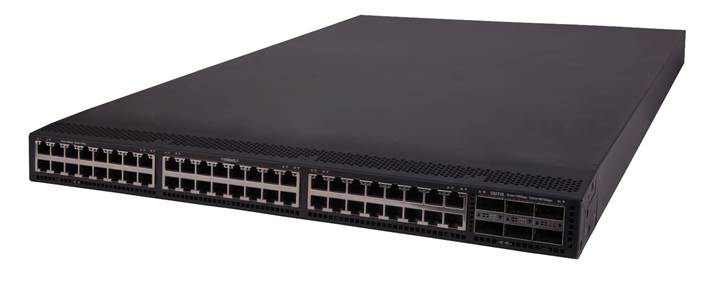
The HPE Networking Comware Switch Series 5940 is a family of high performance and low-latency 10GbE, 40GbE top-of-rack (ToR) data center switches.
The switch series includes 100G uplink technology and a 2-slot and 4-slot modular form factor, providing ultimate flexibility for ever-changing data center requirements. This entire series is part of the Hewlett Packard Enterprise HPE Networking Comware data center solution, which is a cornerstone of the HPE Networking Comware architecture.
The HPE Networking Comware 5940 Switch Series is ideally suited for deployment at the aggregation or server access layer of large enterprise data centers, or at the core layer of medium-sized enterprises. |
|
|
With the increased pace of deploying virtualized applications, adopting software-defined networking, and server-to-server traffic, many data centers now require spine and ToR switch innovations that will meet their requirements. The HPE Networking Comware 5940 is optimized to meet the increasing requirements for higher-performance server connectivity, convergence of Ethernet and storage traffic, the capability to handle virtual environments, and low-latency.
|
|
|
|
HPE Networking Comware Switch Series 5940 |
|
|
|
Key features - VXLAN L2 and L3 and EVPN support for virtualized environments - OpenFlow support for investment protection and SDN environments - High-density 10GbE, 40GbE with 40G or 100G uplink and modular for spine-and–leaf deployments - Unify management of virtual and physical network with VEPA and IMC - Includes Distributed Resilient Network Interconnect (DRNI) that offers high availability and resiliency by combining multiple physical switches into one virtual distributed-relay (DR) system. - Data center convergence and resiliency with SPB, ISSU, DCB, FC/FCoE, IRF, and TRILL |
|
|
|
Data center optimized - Flexible high port density 5940 switch enables customers to scale their server-edge 10/40/100 GbE ToR deployments to new heights with high-density 48 x 10 GbE ports with 6 ports of 40G, 48 x 10 GbE ports with 6 ports of 100G and 32 x 40 GbE delivered in a 1RU design; the 5940 32 ports of 40G switch can also be configured as a 72 x 10 GbE port device by using a 40G-to-10 GbE splitter cable that turns each 40 GbE port into four 10-GbE ports. The 48 ports models comes in SFP+ or BASE-T - High-performance switching Cut-through and nonblocking architecture delivers low latency (~1 microsecond for 10GbE) for very demanding enterprise applications; the switch delivers high-performance switching capacity and wire-speed packet forwarding - Higher scalability Hewlett Packard Enterprise Intelligent Resilient Fabric (IRF) technology simplifies the architecture of server access networks; up to nine HPE 5940 switches can be combined to deliver unmatched scalability of virtualized access layer switches and flatter two-tier networks using IRF, which reduces cost and complexity - Advanced modular operating system Comware v7 software's modular design and multiple processes bring native high stability, independent process monitoring, and restart; the OS also allows individual software modules to be upgraded for higher availability and supports enhanced serviceability functions like hitless software upgrades - Reversible airflow Enhanced for data center hot-cold aisle deployment with reversible airflow—for either front-to-back or back-to-front airflow - Redundant fans and power supplies Internal redundant and hot-pluggable power supplies and dual fan trays enhance reliability and availability - Lower OPEX and greener data center Provide reversible airflow and advanced chassis power management - Data Center Bridging (DCB) protocols Provides support for IEEE 802.1Qbb Priority Flow Control (PFC), Data Center Bridging Exchange (DCBX), IEEE 802.1Qaz Enhanced Transmission Selection (ETS), Explicit Congestion Notification (ECN) for converged FCoE, iSCSI and RoCE environments - FCoE support Provides support for T11 standards-compliant FC-BB-5 Fibre Channel over Ethernet (FCoE), including FCoE initialization protocol (FIP), FCP, Fiber Channel enhanced port types VE, TE and VF, NPV, NPIV, fabric name server, RSCN, login services, and name-server zoning, per-VSAN fabric services, FSPF, standard zoning and fiber channel ping - Jumbo frames With frame sizes of up to 10,000 bytes on Gigabit Ethernet and 10-Gigabit ports, allows high-performance remote backup and disaster-recovery services to be enabled - VXLAN hardware support VXLAN Layer 2 and Layer 3 gateway support for up to 4k tunnels - Dynamic VXLAN configuration OVSDB & ML2 support for dynamic VXLAN configuration - EVPN Control plane protocol for VXLAN based on industry standards. It enables Layer-2 and Layer-3 control-plane learning of end-host reachability information, enabling organizations to scale their VXLAN infrastructure better. Integration with Openstack Neutron plugin for overlay automation/orchestration
|
|
|
|
Quality of Service (QoS) Powerful QoS features - Flexible queue scheduling: Including Strict Priority (SP), WRR, WDRR, WFQ, SP+WRR, SP+WDRR, SP+WFQ, Configurable Buffer, Time range, Queue Shaping, CAR with 8kbps granularity. - Packet filtering and remarking: Packet filtering at L2 (Layer 2) through L4 (Layer 4); flow classification based on source MAC address, destination MAC address, source IP (IPv4/IPv6) address, destination IP (IPv4/IPv6) address, port, protocol, and VLAN. Provides no blocking, lossless Clos architecture with VOQs and large buffers with the flexibility and scalability for future growth
|
|
|
|
Manageability -
Full-featured
console - Troubleshooting
-
Multiple
configuration files -
SNMP
v1, v2c and v3 - Out-of-band interface Isolates management traffic from user data plane traffic for complete isolation and total reachability, no matter what happens in the data plane - Remote configuration and management Delivered through a secure command-line interface (CLI) over Telnet and SSH; role-cased access control (RBAC) provides multiple levels of access; configuration rollback and multiple configurations on the flash provide ease of operation; remote visibility is provided with sFlow and SNMP v1/v2/v3, and is fully supported in HPE Intelligent Management Center (IMC) - ISSU and hot patching In Services Software Upgrade (ISSU) provides hitless software upgrades and hitless patching of the modular operating system - Autoconfiguration Provides automatic configuration via DHCP autoconfiguration - NTP, SNTP Synchronizes timekeeping among distributed time servers and clients; support for network time protocol (NTP), secure network time protocol (SNTP) |
|
|
|
Resiliency and high availability - IRF technology Enables an Hewlett Packard Enterprise Networking Comware to deliver resilient, scalable, and secured data center networks for physical and virtualized environments; groups up to nine HPE 5940 switches in an IRF configuration, allowing them to be configured and managed as a single switch with a single IP address; simplifies ToR deployment and management, reducing data center deployment and operating expenses - IEEE 802.1w Rapid Convergence Spanning Tree Protocol - IEEE 802.1s Multiple Spanning Tree - Virtual Router Redundancy Protocol (VRRP) - Hitless patch upgrades Allows patches and new service features to be installed without restarting the equipment, increasing network uptime and facilitating maintenance - Ultrafast protocol convergence (< 50 ms) with standard-based failure detection—Bidirectional Forwarding Detection (BFD) Enables link connectivity monitoring and reduces network convergence time for RIP, OSPF, BGP, IS-IS, VRRP, MPLS, and IRF - Device Link Detection Protocol (DLDP) Monitors link connectivity and shuts down ports at both ends if unidirectional traffic is detected, preventing loops in STP-based networks - Graceful restart Allows routers to indicate to others their capability to maintain a routing table during a temporary shutdown and significantly reduces convergence times upon recovery; supports OSPF, BGP, and IS-IS |
|
|
|
Additional information - Green IT and power Improves energy efficiency through the use of the latest advances in silicon development; shuts off unused ports and utilizes variable-speed fans, reducing energy costs |
|
|
|
Layer 3 routing - Virtual Router Redundancy Protocol (VRRP) and VRRP Extended - Policy-based routing - Equal-Cost Multipath (ECMP) - Layer 3 IPv4 routing - Open shortest path first (OSPF) Delivers faster convergence; uses this link-state routing Interior Gateway Protocol (IGP), which supports ECMP, NSSA, and MD5 authentication for increased security and graceful restart for faster failure recovery - Border Gateway Protocol 4 (BGP-4) Delivers an implementation of the Exterior Gateway Protocol (EGP) utilizing path vectors; uses TCP for enhanced reliability for the route discovery process; reduces bandwidth consumption by advertising only incremental updates; supports extensive policies for increased flexibility; scales to very large networks - Intermediate system to intermediate system (IS-IS) Uses a path vector Interior Gateway Protocol (IGP), which is defined by the ISO organization for IS-IS routing and extended by IETF RFC 1195 to operate in both TCP/IP and the OSI reference model (Integrated IS-IS) - Static IPv6 routing - Dual IP stack Maintains separate stacks for IPv4 and IPv6 to ease the transition from an IPv4-only network to an IPv6-only network design - Routing Information Protocol next generation (RIPng) - OSPFv3 - BGP+ - IS-IS for IPv6 - IPv6 tunneling Allows IPv6 packets to traverse IPv4-only networks by encapsulating the IPv6 packet into a standard IPv4 packet; supports manually configured, 6to4, and Intra-Site Automatic Tunnel Addressing Protocol (ISATAP) tunnels; is an important element for the transition from IPv4 to IPv6 - Policy routing Allows custom filters for increased performance and security; supports ACLs, IP prefix, AS paths, community lists, and aggregate policies - Bidirectional Forwarding Detection (BFD) Enables link connectivity monitoring and reduces network convergence time for RIP, OSPF, BGP, IS-IS, VRRP, MPLS, and IRF - Multicast Routing PIM Dense and Sparse modes -
Layer
3 IPv6 routing |
|
|
|
Layer 2 switching - MAC-based VLAN - Address Resolution Protocol (ARP) -
IEEE
802.3x Flow Control - Ethernet Link Aggregation Provides IEEE 802.3ad Link Aggregation of up to 128 groups of 32 ports; support for LACP, LACP Local Forwarding First, and LACP Short-time provides a fast, resilient environment that is ideal for the data center - Spanning Tree Protocol (STP) - VLAN support Provides support for 4,096 VLANs based on port, MAC address, IPv4 subnet, protocol, and guest VLAN; supports VLAN mapping - IGMP support - DHCP support at Layer 2 Provides full DHCP Snooping support for DHCP Snooping Option 82, DHCP Relay Option 82, DHCP Snooping trust, and DHCP Snooping item backup |
|
|
|
Layer 3 services - Address Resolution Protocol (ARP) Determines the MAC address of another IP host in the same subnet; supports static ARPs; gratuitous ARP allows detection of duplicate IP addresses; proxy ARP allows normal ARP operation between subnets or when subnets are separated by a Layer 2 network - Dynamic Host Configuration Protocol (DHCP) Simplifies the management of large IP networks and supports client and server; DHCP Relay enables DHCP operation across subnets - Operations, administration and maintenance (OAM) support Provides support for Connectivity Fault Management (IEEE 802.1AG) and Ethernet in the First Mile (IEEE 802.3AH); provides additional monitoring that can be used for fast fault detection and recovery |
|
|
|
Security - Access control lists (ACLs) - RADIUS/TACACS+ - Secure shell - IEEE 802.1X and RADIUS network logins -
Port
security |
|
|
|
Convergence - LLDP-MED (Media Endpoint Discovery) Defines a standard extension of LLDP that stores values for parameters such as QoS and VLAN to configure automatically network devices such as IP phones |
|
|
|
Management - USB support
-
Port
mirroring -
Remote
configuration and management - IEEE 802.1AB Link Layer Discovery Protocol (LLDP) Advertises and receives management information from adjacent devices on a network, facilitating easy mapping by network management applications - sFlow (RFC 3176) Provides scalable ASIC-based wirespeed network monitoring and accounting with no impact on network performance; this allows network operators to gather a variety of sophisticated network statistics and information for capacity planning and real-time network monitoring purposes - Command authorization Leverages RADIUS to link a custom list of CLI commands to an individual network administrator's login; an audit trail documents activity -
Dual
flash images - Command-line interface (CLI) Provides a secure, easy-to-use CLI for configuring the module via SSH or a switch console; provides direct real-time session visibility - Logging Provides local and remote logging of events via SNMP (v2c and v3) and syslog; provides log throttling and log filtering to reduce the number of log events generated - Management interface control Provides management access through a modem port and terminal interface, as well as in-band and out-of-band Ethernet ports; provides access through terminal interface, Telnet, or secure shell (SSH) - Industry-standard CLI with a hierarchical structure Reduces training time and expenses, and increases productivity in multivendor installations - Management security Restricts access to critical configuration commands; offers multiple privilege levels with password protection; ACLs provide Telnet and SNMP access; local and remote syslog capabilities allow logging of all access - Information center Provides a central repository for system and network information; aggregates all logs, traps, and debugging information generated by the system and maintains them in order of severity; outputs the network information to multiple channels based on user-defined rules - Network management HPE IMC centrally configures, updates, monitors, and troubleshoots - Remote intelligent mirroring Mirrors ingress/egress ACL-selected traffic from a switch port or VLAN to a local or remote switch port anywhere on the network |
|
|
|
Warranty and support - 1-year warranty See Warranty and support summary for warranty and support information included with your product purchase. - Software releases To find software for your product, refer to http://www.hpe.com/networking/support; for details on the software releases available with your product purchase, refer to Warranty and support summary. |
|
|
|
BTO Models |
|
|
Standard Switch Enclosures |
|
|
Description |
SKU |
|
HPE Networking Comware Switch 48SFP+ 6QSFP28 5940 |
JH390A |
|
HPE Networking Comware Switch 48XGT 6QSFP28 5940 |
JH391A |
|
|
|
|
| |
Rack Level Integration CTO Models |
|
|
CTO Switch Chassis |
|
|
Description |
SKU |
|
HPE Networking Comware Switch 48SFP+ 6QSFP28 5940 |
JH390A |
|
HPE Networking Comware Switch 48XGT 6QSFP28 5940 |
JH391A |
|
|
|
|
| |
|
Transceivers |
|
|
Description |
SKU |
|
SFP Transceivers |
|
|
HPE Networking X120 1G SFP RJ45 T Transceiver |
JD089B |
|
HPE Networking X120 1G SFP LC SX Transceiver |
JD118B |
|
HPE Networking X120 1G SFP LC LX Transceiver |
JD119B |
|
HPE Networking X120 1G SFP LC LH100 Transceiver |
JD103A |
|
|
|
|
SFP+ Transceivers |
|
|
HPE Networking X130 10G SFP+ LC BiDi 10km-Uplink Transceiver |
JL737A |
|
HPE Networking X130 10G SFP+ LC BiDi 10km-Downlink Transceiver |
JL738A |
|
HPE Networking X130 10G SFP+ LC BiDi 40km-Uplink Transceiver |
JL739A |
|
HPE Networking X130 10G SFP+ LC BiDi 40km-Downlink Transceiver |
JL740A |
|
HPE Networking X130 10G SFP+ LC SR Transceiver |
JD092B |
|
HPE Networking X130 10G SFP+ LC LR Transceiver |
JD094B |
|
HPE Networking X130 10G SFP+ LC LH 80km Transceiver |
JG915A |
|
HPE Networking Comware 10GBASE-T SFP+ RJ45 30m Cat6A Transceiver |
S2N61A |
|
HPE Networking X240 10G SFP+ SFP+ 0.65m DAC Cable |
JD095C |
|
HPE Networking X240 10G SFP+ SFP+ 1.2m DAC Cable |
JD096C |
|
HPE Networking X240 10G SFP+ SFP+ 3m DAC Cable |
JD097C |
|
HPE Networking X240 10G SFP+ SFP+ 5m DAC Cable |
JG081C |
|
HPE Networking X2A0 10G SFP+ to SFP+ 7m Active Optical Cable |
JL290A |
|
HPE Networking X2A0 10G SFP+ to SFP+ 10m Active Optical Cable |
JL291A |
|
HPE Networking X2A0 10G SFP+ to SFP+ 20m Active Optical Cable |
JL292A |
|
|
|
|
FC SFP+ Transceivers |
|
|
HPE 16Gb FC/10GbE 100m SR SFP+ Transceiver |
H6Z42A |
|
|
|
|
QSFP+ Transceivers |
|
|
HPE Networking X140 40G QSFP+ MPO SR4 Transceiver |
JG325B |
|
HPE Networking X140 40G QSFP+ CSR4 300m Transceiver |
JG709A |
|
HPE Networking X140 40G QSFP+ LC LR4 SM 10km 1310nm Transceiver |
JG661A |
|
HPE Networking X140 40G QSFP+ LC ER4 40km SM Transceiver |
JL306A |
|
HPE Networking Comware X240 40G QSFP+ QSFP+ 1m Direct Attach Copper Cable |
JG326A |
|
HPE Networking Comware X240 40G QSFP+ QSFP+ 3m Direct Attach Copper Cable |
JG327A |
|
HPE Networking Comware X240 40G QSFP+ QSFP+ 5m Direct Attach Copper Cable |
JG328A |
|
HPE Networking X140 40G QSFP+ LC BiDi 100m MM Transceiver |
JL251A |
|
HPE Networking X140 40G QSFP+ LC LR4L 2km SM Transceiver |
JL286A |
|
HPE Networking X2A0 40G QSFP+ to QSFP+ 7m Active Optical Cable |
JL287A |
|
HPE Networking X2A0 40G QSFP+ to QSFP+ 10m Active Optical Cable |
JL288A |
|
HPE Networking X2A0 40G QSFP+ to QSFP+ 20m Active Optical Cable |
JL289A |
|
|
|
|
QSFP28 Transceivers |
|
|
HPE Networking X150 100G QSFP28 MPO SR4 100m MM Transceiver |
JL274A |
|
HPE Networking X150 100G QSFP28 LC BiDi 100m MM Transceiver |
JQ344A |
|
HPE Networking X150 100G QSFP28 eSR4 300m MM Transceiver |
JH672A |
|
HPE Networking X150 100G QSFP28 LC LR4 10km SM Transceiver |
JL275A |
|
HPE Networking X2A0 100G QSFP28 to QSFP28 7m Active Optical Cable |
JL276A |
|
HPE Networking X2A0 100G QSFP28 to QSFP28 10m Active Optical Cable |
JL277A |
|
HPE Networking X2A0 100G QSFP28 to QSFP28 20m Active Optical Cable |
JL278A |
|
HPE Networking X150 100G QSFP28 PSM4 500m SM Transceiver |
JH420A |
|
HPE Networking X150 100G QSFP28 CWDM4 2km SM Transceiver |
JH673A |
|
HPE Networking X150 100G QSFP28 LC SWDM4 100m MM Transceiver |
JH419A |
|
HPE Networking Comware 100G FR1 QSFP28 LC 2km SMF Transceiver |
S2P29A |
|
HPE Networking Comware 100G DR QSFP28 LC 500m SM Transceiver |
S4J89A |
|
HPE Networking X2A0 100G QSFP28 to QSFP28 7m Active Optical Cable |
JL276A |
|
HPE Networking X2A0 100G QSFP28 to QSFP28 10m Active Optical Cable |
JL277A |
|
HPE Networking X2A0 100G QSFP28 to QSFP28 20m Active Optical Cable |
JL278A |
|
HPE Networking X240 100G QSFP28 1m DAC Cable |
JL271A |
|
HPE Networking X240 100G QSFP28 3m DAC Cable |
JL272A |
|
HPE Networking X240 100G QSFP28 5m DAC Cable |
JL273A |
|
HPE Networking X2A0 100G QSFP28 30m Active Optical Cable |
JL795A |
|
HPE Networking X2A0 100G QSFP28 5m Active Optical Cable |
JL796A |
|
|
|
|
| |
|
Cables |
|
|
Description |
SKU |
|
Multi-Mode Cables |
|
|
HPE LC to LC Multi-mode OM3 2-Fiber 0.5m 1-Pack Fiber Optic Cable |
AJ833A |
|
HPE LC to LC Multi-mode OM3 2-Fiber 1.0m 1-Pack Fiber Optic Cable |
AJ834A |
|
HPE LC to LC Multi-mode OM3 2-Fiber 2.0m 1-Pack Fiber Optic Cable |
AJ835A |
|
HPE LC to LC Multi-mode OM3 2-Fiber 5.0m 1-Pack Fiber Optic Cable |
AJ836A |
|
HPE LC to LC Multi-mode OM3 2-Fiber 15.0m 1-Pack Fiber Optic Cable |
AJ837A |
|
HPE LC to LC Multi-mode OM3 2-Fiber 30.0m 1-Pack Fiber Optic Cable |
AJ838A |
|
HPE LC to LC Multi-mode OM3 2-Fiber 50.0m 1-Pack Fiber Optic Cable |
AJ839A |
|
HPE Premier Flex LC/LC Multi-mode OM4 2 Fiber 1m Cable |
QK732A |
|
HPE Premier Flex LC/LC Multi-mode OM4 2 Fiber 2m Cable |
QK733A |
|
HPE Premier Flex LC/LC Multi-mode OM4 2 Fiber 5m Cable |
QK734A |
|
HPE Premier Flex LC/LC Multi-mode OM4 2 Fiber 15m Cable |
QK735A |
|
HPE Premier Flex LC/LC Multi-mode OM4 2 Fiber 30m Cable |
QK736A |
|
HPE Premier Flex LC/LC Multi-mode OM4 2 Fiber 50m Cable |
QK737A |
|
|
|
|
MPO Cables |
|
|
HPE Premier Flex MPO8 to 4xLC Multi-mode OM4 5m Fiber Cable |
K2Q46A |
|
HPE Premier Flex MPO8 to 4xLC Multi-mode OM4 15m Fiber Cable |
K2Q47A |
|
HPE Premier Flex MPO12/MPO12 Multi-mode OM4 10m Fiber Cable |
QK729A |
|
HPE Premier Flex MPO12/MPO12 Multi-mode OM4 50m Fiber Cable |
QK731A |
|
HPE Premier Flex MPO12/MPO12 Multi-mode OM4 100m Fiber Cable |
H6Z30A |
|
|
|
|
| |
|
Internal Power Supplies |
|
|
Description |
SKU |
|
(JH390A, JH391A) System (std 0 // max 2) User Selection (min 1 // max 2) |
|
|
HPE Networking A58x0AF 300W AC Power Supply |
JG900A |
|
HPE A58x0AF Back (Power Side) to Front (Port Side) Airflow 300W AC Power Supply PDU Cable NA/JP/TW |
JG900A#B2B |
|
HPE Networking A58x0AF 300W DC Power Supply |
JG901A |
|
HPE Networking 58x0AF 650W AC Power Supply |
JC680A |
|
HPE 58x0AF 650W AC Power Supply PDU Cable NA/JP/TW |
JC680A#B2B |
|
HPE Networking 58x0AF 650W AC Power Supply |
JC680A |
|
HPE 58x0AF 650W AC Power Supply PDU Cable NA/JP/TW |
JC680A#B2B |
|
HPE 58x0AF 650W AC Power Supply PDU Cable ROW |
JC680A#B2C |
|
HPE A58x0AF 650W AC Power Supply |
JC680A#AC3 |
|
HPE Networking SW 650W 48V NEBS DC Power Supply Unit |
JH336A |
|
|
|
|
| |
|
Fan Trays |
|
|
Description |
SKU |
|
HPE Networking 58x0AF Bck(pwr) Frt(prt) Fan Tray |
JC682A |
|
HPE Networking 58x0AF Frt(prt) Bck(pwr) Fan Tray |
JC683A |
|
HPE Networking X711 Frt(prt) Bck(pwr) HV Fan Tray |
JG552A |
|
HPE Networking X712 Bck(pwr) Frt(prt) HV Fan Tray |
JG553A |
|
|
|
|
| |
|
HPE FlexFabric 5940 48SFP+ 6QSFP28 Switch (JH390A) | ||
|
I/O ports and slots |
48 fixed 1G/10G SFP+ ports | |
|
6 QSFP28 100GbE ports | ||
|
Additional ports and slots |
1 RJ-45 serial console port | |
|
1 RJ-45 out-of-band management port 1 SFP out-of-band management port | ||
|
1 SFP GbE port | ||
|
1 USB 2.0 | ||
|
1 Mini USB 2.0 | ||
|
Power supplies |
2 power supply slots 1 minimum power supply required (ordered separately) | |
|
Fan tray |
2 fan tray slots The customer must order fan trays, as fan trays are not included with the switch. This system requires two same-direction airflow fan trays to function properly. The system should not be operated with only one fan tray for more than 24 hours. The system should not be operated without a fan tray for more than two minutes. The system should not be operated outside of the temperature range of 32°F (0°C) to 113°F (45°C). Failure to comply with these operating requirements may void the product warranty. | |
|
Physical characteristics |
Dimensions |
17.32(w) x 18.11(d) x 1.72(h) in (44 x 46 x 4.36 cm) |
|
Weight |
24.25 lb (11 kg) shipping weight | |
|
Memory and processor |
1 GB flash; Packet buffer size: 16 MB, 4 GB SDRAM | |
|
Performance |
10 Gbps Latency |
< 1 µs (64-byte packets) |
|
Throughput |
up to 1607 Mpps | |
|
Routing/Switching capacity |
2160 Gbps | |
|
Routing table size |
250000 entries (IPv4), 64000 entries (IPv6) | |
|
MAC address table size |
288000 entries | |
|
Environment |
Operating temperature |
32°F to 113°F (0°C to 45°C) |
|
Operating relative humidity |
10% to 90%, noncondensing | |
|
Acoustic |
Low-speed fan: 65.7 dB, High-speed fan: 70.6 dB | |
|
Electrical characteristics
|
Maximum heat dissipation |
887 BTU/hr (935.79 kJ/hr) |
|
Voltage |
100 - 240 VAC, rated -40 to -60 VDC, rated (depending on power supply chosen) | |
|
Maximum power rating |
196 W | |
|
Frequency |
50/60 Hz | |
|
Notes: |
Maximum power rating and maximum heat dissipation are the worst-case theoretical maximum numbers provided for planning the infrastructure with fully loaded PoE (if equipped), 100% traffic, all ports plugged in, and all modules populated. | |
|
Safety |
UL 60950-1; EN 60825-1 Safety of Laser Products-Part 1; EN 60825-2 Safety of Laser Products-Part 2; IEC 60950-1; CAN/CSA-C22.2 No. 60950-1; Anatel; ULAR; GOST; EN 60950-1/A11; FDA 21 CFR Subchapter J; NOM; ROHS Compliance | |
|
Emissions |
VCCI Class A; EN 55022 Class A; ICES-003 Class A; ANSI C63.4 2003; AS/NZS CISPR 22 Class A; EN 61000-3-2:2006; EN 61000-3-3:1995 +A1:2001+A2:2005; EMC Directive 2004/108/EC; FCC (CFR 47, Part 15) Class A; ANSI/TIA-1057 LLDP Media Endpoint Discovery (LLDP-MED) | |
|
Immunity |
Generic |
ETSI EN 300 386 V1.3.3 |
|
EN |
EN 55024:1998+ A1:2001 + A2:2003 | |
|
ESD |
EN 61000-4-2; IEC 61000-4-2 | |
|
Radiated |
EN 61000-4-3; IEC 61000-4-3 | |
|
EFT/Burst |
EN 61000-4-4; IEC 61000-4-4 | |
|
Surge |
EN 61000-4-5; IEC 61000-4-5 | |
|
Conducted |
EN 61000-4-6; IEC 61000-4-6 | |
|
Power frequency magnetic field |
IEC 61000-4-8; EN 61000-4-8 | |
|
Voltage dips and interruptions |
EN 61000-4-11; IEC 61000-4-11 | |
|
Harmonics |
EN 61000-3-2, IEC 61000-3-2 | |
|
Flicker |
EN 61000-3-3, IEC 61000-3-3 | |
|
Management |
IMC - Intelligent Management Center; Command-line interface; Out-of-band management; SNMP manager; Telnet; FTP | |
|
Notes |
The customer must order a power supply, as the device does not come with one. At least one JC680A or JC681A is required. | |
|
Services |
Refer to the Hewlett Packard Enterprise website at: http://www.hpe.com/networking/services for details on the service-level descriptions and product numbers. For details about services and response times in your area, please contact your local Hewlett Packard Enterprise sales office. | |
|
|
|
HPE FlexFabric 5940 48XGT 6QSFP28 Switch (JH391A) | ||
|
I/O ports and slots |
48 100M/1G/10GBASE-T ports | |
|
6 QSFP28 100GbE ports | ||
|
Additional ports and slots |
1 RJ-45 serial console port | |
|
1 RJ-45 out-of-band management port | ||
|
1 SFP out-of-band management port 1 SFP GbE port | ||
|
1 USB 2.0 | ||
|
1 Mini USB 2.0 | ||
|
Power supplies |
2 power supply slots 1 minimum power supply required (ordered separately) | |
|
Fan tray |
2 fan tray slots The customer must order fan trays, as fan trays are not included with the switch. This system requires two same-direction airflow fan trays to function properly. The system should not be operated with only one fan tray for more than 24 hours. The system should not be operated without a fan tray for more than two minutes. The system should not be operated outside of the temperature range of 32°F (0°C) to 113°F (45°C). Failure to comply with these operating requirements may void the product warranty. | |
|
Physical characteristics |
Dimensions |
17.32(w) x 25.98(d) x 1.72(h) in (44 x 66 x 4.36 cm) |
|
Weight |
28.66 lb (13 kg) shipping weight | |
|
Memory and processor |
1 GB flash; Packet buffer size: 16 MB, 4 GB SDRAM | |
|
Performance |
10 Gbps Latency |
< 1 µs (64-byte packets) |
|
Throughput |
up to 1607 Mpps | |
|
Routing/Switching capacity |
2160 Gbps | |
|
Routing table size |
250000 entries (IPv4), 64000 entries (IPv6) | |
|
MAC address table size |
288000 entries | |
|
Environment |
Operating temperature |
32°F to 113°F (0°C to 45°C) |
|
Operating relative humidity |
10% to 90%, noncondensing | |
|
Acoustic |
Low-speed fan: 65.7 dB, High-speed fan: 70.6 dB | |
|
Electrical characteristics
|
Maximum heat dissipation |
887 BTU/hr (935.79 kJ/hr) |
|
Voltage |
100 - 240 VAC, rated -40 to -60 VDC, rated (depending on power supply chosen) | |
|
Maximum power rating |
320 W | |
|
Frequency |
50/60 Hz | |
|
Notes |
Maximum power rating and maximum heat dissipation are the worst-case theoretical maximum numbers provided for planning the infrastructure with fully loaded PoE (if equipped), 100% traffic, all ports plugged in, and all modules populated. | |
|
Safety |
UL 60950-1; EN 60825-1 Safety of Laser Products-Part 1; EN 60825-2 Safety of Laser Products-Part 2; IEC 60950-1; CAN/CSA-C22.2 No. 60950-1; Anatel; ULAR; GOST; EN 60950-1/A11; FDA 21 CFR Subchapter J; NOM; ROHS Compliance | |
|
Emissions |
VCCI Class A; EN 55022 Class A; ICES-003 Class A; ANSI C63.4 2003; AS/NZS CISPR 22 Class A; EN 61000-3-2:2006; EN 61000-3-3:1995 +A1:2001+A2:2005; EMC Directive 2004/108/EC; FCC (CFR 47, Part 15) Class A; ANSI/TIA-1057 LLDP Media Endpoint Discovery (LLDP-MED) | |
|
Immunity |
Generic |
ETSI EN 300 386 V1.3.3 |
|
EN |
EN 55024:1998+ A1:2001 + A2:2003 | |
|
ESD |
EN 61000-4-2; IEC 61000-4-2 | |
|
Radiated |
EN 61000-4-3; IEC 61000-4-3 | |
|
EFT/Burst |
EN 61000-4-4; IEC 61000-4-4 | |
|
Surge |
EN 61000-4-5; IEC 61000-4-5 | |
|
Conducted |
EN 61000-4-6; IEC 61000-4-6 | |
|
Power frequency magnetic field |
IEC 61000-4-8; EN 61000-4-8 | |
|
Voltage dips and interruptions |
EN 61000-4-11; IEC 61000-4-11 | |
|
Harmonics |
EN 61000-3-2, IEC 61000-3-2 | |
|
Flicker |
EN 61000-3-3, IEC 61000-3-3 | |
|
Management |
IMC - Intelligent Management Center; Command-line interface; Out-of-band management; SNMP manager; Telnet; FTP | |
|
Notes: |
The customer must order a power supply, as the device does not come with one. At least one JC680A or JC681A is required. | |
|
Services |
Refer to the Hewlett Packard Enterprise website at: http://www.hpe.com/networking/services for details on the service-level descriptions and product numbers. For details about services and response times in your area, please contact your local Hewlett Packard Enterprise sales office. | |
|
|
|
Standards and protocols Applies to all products in series
|
|
BGP - RFC 1163 Border Gateway Protocol (BGP) - RFC 1771 BGPv4 - RFC 1997 BGP Communities Attribute - RFC 2918 Route Refresh Capability - RFC 3392 Capabilities Advertisement with BGP-4 - RFC 4271 A Border Gateway Protocol 4 (BGP-4) - RFC 4360 BGP Extended Communities Attribute - RFC 4456 BGP Route Reflection: An Alternative to Full Mesh Internal BGP (IBGP) - RFC 4760 Multiprotocol Extensions for BGP-4 - RFC 7432 BGP MPLS-Based Ethernet VPN
|
|
Device Management - RFC 1157 SNMPv1/v2c - RFC 1305 NTPv3 - RFC 1591 DNS (client) - RFC 1902 (SNMPv2) - RFC 1908 (SNMP v1/2 Coexistence) - RFC 2573 (SNMPv3 Applications) - RFC 2576 (Coexistence between SNMP V1, V2, V3) - RFC 2819 RMON - Multiple Configuration Files - Multiple Software Images - SSHv1/SSHv2 Secure Shell - TACACS/TACACS+
|
|
MIBs - RFC 1213 MIB II - RFC 1907 SNMPv2 MIB - RFC 2571 SNMP Framework MIB - RFC 2572 SNMP-MPD MIB - RFC 2573 SNMP-Notification MIB - RFC 2573 SNMP-Target MIB - RFC 2574 SNMP USM MIB - RFC 2737 Entity MIB (Version 2) - RFC 3414 SNMP-User based-SM MIB - RFC 3415 SNMP-View based-ACM MIB - LLDP-EXT-DOT1-MIB - LLDP-EXT-DOT3-MIB - LLDP-MIB
|
|
General Protocols - IEEE 802.1ad Q-in-Q - IEEE 802.1AX-2008 Link Aggregation - IEEE 802.1D MAC Bridges - IEEE 802.1p Priority - IEEE 802.1Q VLANs - IEEE 802.1s Multiple Spanning Trees - IEEE 802.1w Rapid Reconfiguration of Spanning Tree - IEEE 802.3ad Link Aggregation Control Protocol (LACP) - IEEE 802.3ae 10-Gigabit Ethernet - IEEE 802.3ag Ethernet OAM - IEEE 802.3ah Ethernet in First Mile over Point to Point Fiber - EFMF - IEEE 802.3x Flow Control - RFC 768 UDP - RFC 783 TFTP Protocol (revision 2) - RFC 791 IP - RFC 792 ICMP - RFC 793 TCP - RFC 826 ARP - RFC 854 TELNET - RFC 856 TELNET - RFC 868 Time Protocol - RFC 896 Congestion Control in IP/TCP Internetworks - RFC 950 Internet Standard Subnetting Procedure - RFC 1027 Proxy ARP - RFC 1058 RIPv1 - RFC 1091 Telnet Terminal-Type Option - RFC 1141 Incremental updating of the Internet checksum - RFC 1142 OSI IS-IS Intra-domain Routing Protocol - RFC 1191 Path MTU discovery - RFC 1213 Management Information Base for Network Management of TCP/IP-based internets - RFC 1253 (OSPF v2) - RFC 1531 Dynamic Host Configuration Protocol - RFC 1533 DHCP Options and BOOTP Vendor Extensions - RFC 1534 DHCP/BOOTP Interoperation - RFC 1541 DHCP - RFC 1542 Clarifications and Extensions for the Bootstrap Protocol - RFC 1591 DNS (client only) - RFC 1624 Incremental Internet Checksum - RFC 1723 RIP v2 - RFC 1812 IPv4 Routing - RFC 2030 Simple Network Time Protocol (SNTP) v4 - RFC 2131 DHCP - RFC 2236 IGMP Snooping - RFC 2338 VRRP - RFC 2453 RIPv2 - RFC 2581 TCP Congestion Control - RFC 2644 Directed Broadcast Control - RFC 2767 Dual Stack Hosts using BIS - RFC 2865 Remote Authentication Dial In User Service (RADIUS) - RFC 2868 RADIUS Attributes for Tunnel Protocol Support - RFC 2890 Key and Sequence Number Extensions to GRE - RFC 2929 DNS IANA Considerations - RFC 3046 DHCP Relay Agent Information Option - RFC 3411 An Architecture for Describing Simple Network Management Protocol (SNMP) Management Frameworks - RFC 3412 Message Processing and Dispatching for the Simple Network Management Protocol (SNMP) - RFC 3413 Simple Network Management Protocol (SNMP) Applications - RFC 3416 Protocol Operations for SNMP - RFC 3417 Transport Mappings for the Simple Network Management Protocol (SNMP) - RFC 3418 Management Information Base (MIB) for the Simple Network Management Protocol (SNMP) - RFC 3768 Virtual Router Redundancy Protocol (VRRP) - RFC 4250 The Secure Shell (SSH) Protocol Assigned Numbers - RFC 4251 The Secure Shell (SSH) Protocol Architecture - RFC 4252 The Secure Shell (SSH) Authentication Protocol - RFC 4253 The Secure Shell (SSH) Transport Layer Protocol - RFC 4254 The Secure Shell (SSH) Connection Protocol - RFC 4292 IP Forwarding Table MIB - RFC 4293 Management Information Base for the Internet Protocol (IP) - RFC 4364 BGP/MPLS IP Virtual Private Networks (VPNs) - RFC 4419 Diffie-Hellman Group Exchange for the Secure Shell (SSH) Transport Layer Protocol - RFC 4594 Configuration Guidelines for DiffServ Service Classes - RFC 4601 Protocol Independent Multicast - Sparse Mode (PIM-SM): Protocol Specification (Revised) - RFC 4604 Using Internet Group Management Protocol Version 3 (IGMPv3) and Multicast Listener Discovery Protocol Version 2 (MLDv2) for Source-Specific Multicast - RFC 4607 Source-Specific Multicast for IP - RFC 4941 Privacy Extensions for Stateless Address Autoconfiguration in IPv6 - RFC 5340 OSPF for IPv6 - RFC 5905 Network Time Protocol Version 4: Protocol and Algorithms Specification
|
|
Network Management - RFC 2580 Conformance Statements for SMIv2 - RFC 3164 BSD syslog Protocol
|
|
OSPF - RFC 1587 OSPF NSSA - RFC 2328 OSPFv2 - RFC 3101 OSPF NSSA - RFC 3137 OSPF Stub Router Advertisement - RFC 3623 Graceful OSPF Restart - RFC 4577 OSPF as the Provider/Customer Edge Protocol for BGP/MPLS IP Virtual Private Networks (VPNs) - RFC 4811 OSPF Out-of-Band LSDB Resynchronization - RFC 4812 OSPF Restart Signaling - RFC 4813 OSPF Link-Local Signaling
|
|
QoS/CoS - IEEE 802.1p (CoS) - RFC 2475 DiffServ Architecture - RFC 2597 DiffServ Assured Forwarding (AF) - RFC 3247 Supplemental Information for the New Definition of the EF PHB (Expedited Forwarding Per-Hop Behavior) - RFC 3260 New Terminology and Clarifications for DiffServ
|
|
IPv6 - RFC 2080 RIPng for IPv6 - RFC 2460 IPv6 Specification - RFC 2461 IPv6 Neighbor Discovery - RFC 2462 IPv6 Stateless Address Auto-configuration - RFC 2463 ICMPv6 - RFC 2464 Transmission of IPv6 over Ethernet Networks - RFC 2473 Generic Packet Tunneling in IPv6 - RFC 2545 Use of MP-BGP-4 for IPv6 - RFC 2563 ICMPv6 - RFC 2711 IPv6 Router Alert Option - RFC 2740 OSPFv3 for IPv6 - RFC 2767 Dual Stack Hosts using BIS - RFC 3315 DHCPv6 (client and relay) - RFC 3484 Default Address Selection for IPv6 - RFC 3810 Multicast Listener Discovery Version 2 (MLDv2) for IPv6 - RFC 4213 Basic Transition Mechanisms for IPv6 Hosts and Routers - RFC 4291 IP Version 6 Addressing Architecture - RFC 4443 ICMPv6 - RFC 4552 Authentication/Confidentiality for OSPFv3 - RFC 4862 IPv6 Stateless Address Auto-configuration - RFC 5095 Deprecation of Type 0 Routing Headers in IPv6
|
|
Security - RFC 1321 The MD5 Message-Digest Algorithm - RFC 2818 HTTP Over TLS - RFC 6192 Partial Support - Protecting the Router Control Plane - Access Control Lists (ACLs) - SSHv2 Secure Shell |
|
|
|
Date |
Version History |
Action |
Description of Change |
|
15-Jun-2026 |
Version 28 |
Changed |
New QSFP28 transceivers SKUs added in Configuration Information section. |
|
27-Feb-2026 |
Version 27 |
Changed |
Rebranding update applied to QuickSpecs |
|
28-Apr-2025 |
Version 26 |
Changed |
Configuration Information section was updated. |
|
04-Dec-2023 |
Version 25 |
Changed |
Series name was updated. |
|
21-Aug-2023 |
Version 24 |
Changed |
Technical Specifications section was updated. |
|
06-Feb-2023 |
Version 23 |
Changed |
Configuration Information section was updated. |
|
15-Aug-2022 |
Version 22 |
Changed |
Overview section was updated. |
|
06-Dec-2021 |
Version 21 |
Changed |
Configuration Information section was updated and obsolete SKUs were removed. |
|
03-Aug-2020 |
Version 20 |
Changed |
SKU descriptions were updated. |
|
04-May-2020 |
Version 19 |
Changed |
Configuration Information and Related Options was updated. Obsolete SKUs were removed. |
|
16-Dec-2019 |
Version 18 |
Changed |
Configuration Information was updated. Obsolete SKUs were removed. |
|
03-Sep-2019 |
Version 17 |
Changed |
Configuration Information and Related Options were updated. Obsolete SKUs were removed. New SKUs were added. |
|
04-Feb-2019 |
Version 16 |
Removed |
Switch Bundles removed: JH684A, JH685A, JH686A, JH691A, JH692A Removed Box Level CTO SSP Section and logic from menu and configurators |
|
17-Dec-2018 |
Version 15 |
Changed |
Technical Specifications and Configuration section updated |
|
01-Oct-2018 |
Version 14 |
Changed |
Configuration Information section was updated |
|
06-Aug-2018 |
Version 13 |
Changed |
Configuration Information section was updated |
|
04-Jun-2018 |
Version 12 |
Removed |
SKUs removed: JD093B, JL438A |
|
07-May-2018 |
Version 11 |
Added |
SKU added: JH419A |
|
02-Apr-2018 |
Version 10 |
Changed |
Configuration Information section was updated |
|
04-Dec-2017 |
Version 9 |
Added |
SKU added: JH957A, JQ041A, JQ042A, JQ043A, JQ044A |
|
05-Jun-2017 |
Version 8 |
Added |
SKU added: JH673A |
|
03-Apr-2017 |
Version 7 |
Changed |
Configuration Information section was updated |
|
06-Mar-2017 |
Version 6 |
Changed |
SKUs added: JL437A; JL438A; JL439A Configuration Information section was updated |
|
06-Feb-2017 |
Version 5 |
Changed |
Related Options was updated |
|
09-Jan-2017 |
Version 4 |
Added |
Models added: JH684A, JH685A, JH686A, JH691A, JH692A SKUs added: JH689A, JH690A, JH409A, JH677A, JH678A, JH679A, JH680A, JH681A, JH682A, JH683A, JH693A, JH694A, JH695A, JH696A, JH697A, JH698A, JH699A, JH700A, JH701A, JH702A, JH703A |
|
07-Nov-2016 |
Version 3 |
Changed |
Models added: JH397A; JH398A Edits made on Configuration and Accessories sections |
|
05-Sep-2016 |
Version 2 |
Changed |
SKUs added: JL273A, JL282A, JL283A, JL284A Overview and Technical Specifications updated |
|
01-Aug-2016 |
Version 1 |
New |
New QuickSpecs |
|
|
|
Have feedback on QuickSpecs? We’re listening | |
|
|
|
| |
|
|
|
Chat now | |
|
|
|
© Copyright 2026 Hewlett Packard Enterprise Development L.P. The information contained herein is subject to change without notice. The only warranties for Hewlett Packard Enterprise products and services are set forth in the express warranty statements accompanying such products and services. Nothing herein should be construed as constituting an additional warranty. Hewlett Packard Enterprise shall not be liable for technical or editorial errors or omissions contained herein.
To learn more, visit: http://www.hpe.com/networking
c05158726 - 15632 - Worldwide - V28 - 15-June-2026 | |
|
|
|
HEWLETT PACKARD ENTERPRISE HPE.com |
|