

HPE Networking Comware Switch Series 5140 HI: технические характеристики и документация
|
Have feedback on QuickSpecs? We're listening | |
|
HPE Networking Comware Switch Series 5140 HI QuickSpecs
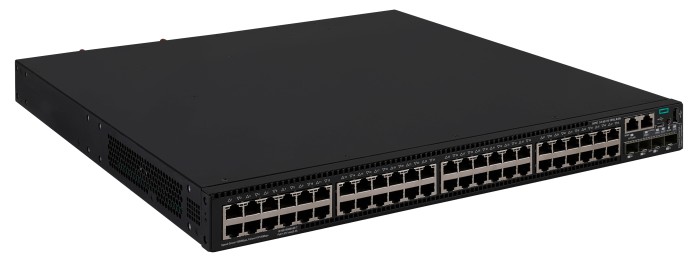
The HPE Networking Comware 5140 HI Switch series delivers high availability and scalability at the access layer of medium and large enterprise campus networks.
These switches offer high speed connectivity and flexibility with 10GbE uplinks, and combo ports. Support for add-on modules increases capacity with additional features. It is a highly cost-effective switch with abundant features such as Distributed Resilient Network Interconnect (DRNI) and Intelligent Resilient Fabric (IRF) for improved resiliency, QoS features for better reliability, Intelligent Network Quality Analyzer (iNQA) for real time network health performance and capacity visibility, hardware based MACsec for end-to-end encrypted security and dual redundant power supplies with Energy Efficient Ethernet for improved power saving. |
|
|
This switch series also includes Smart MC at no additional cost and combined with Intelligent Management Center (IMC), provides both embedded network management, enhanced network visibility and automation | |
|
| |
|
| |
|
HPE Networking Comware Switch Series 5140 HI | |
|
| |
|
Models | |
|
HPE Networking Comware Switch 24G 4SFP+ 1-slot 5140HI |
R9L61A |
|
HPE Networking Comware Switch 48G 4SFP+ 1-slot 5140HI |
R9L62A |
|
HPE Networking Comware Switch 24G PoE+ 4SFP+ 1-slot 5140HI |
R9L63A |
|
HPE Networking Comware Switch 48G PoE+ 4SFP+ 1-slot 5140HI |
R9L64A |
|
|
|
|
| |
|
Key Features | |
|
- Gigabit Ethernet access switch with enhanced L3 routing features such as OSPF V2 / OSPF V3 / VRRP / VRRPE / Routed Ports, RIP, 10GbE uplinks, and PoE+ models for voice, video, wireless and IoT. - Higher port switching capacity, forwarding performance and port line rate granularity, 2x dynamic ARP, 2x IPv6 unicast routing and introduction of IGMP proxy for improved network performance. - DRNI combines multiple physical switches into one virtual distributed-relay (DR) system for doubling aggregate bandwidth, faster forwarding, resiliency, and high availability. - Intelligent Network Quality Analyzer (iNQA) measures network packet loss performance and provides visibility into real-time application performance and health. - Industry standard MACsec support, increased MAC port binding and link group capacity for improved encryption and end-to-end network security. - Includes In Service Software Upgrades (ISSU) that enables high availability by lowering downtime caused by planned maintenance and software upgrades. - Smart Management Center (SmartMC) provides centralized network management and maintains dispersed network edge devices at no additional cost. - Includes introduction of a 2 port MACsec AES 256 module supported on all "HI" series models (R9L65A)". | |
|
| |
|
Software-Defined Networking - OpenFlow Supports OpenFlow 1.3 specification to enable SDN by allowing separation of the data (packet forwarding) and control (routing decision) paths. |
|
|
|
Management - Remote configuration and management - Manager and operator privilege levels - Command authorization Leverages RADIUS/HWTACACS to link a custom list of CLI commands to an individual network administrator's login; also provides an audit trail. - Multiple configuration files - Complete session logging - Remote monitoring (RMON) Uses standard SNMP to monitor essential network functions; supports events, alarm, history, and statistics group plus a private alarm extension group. - IEEE 802.1AB Link Layer Discovery Protocol (LLDP) Advertises and receives management information from adjacent devices on a network, facilitating easy mapping by network management applications. - sFlow (RFC 3176) Provides scalable ASIC-based wirespeed network monitoring and accounting with no impact on network performance; this allows network operators to gather a variety of sophisticated network statistics and information for capacity planning and real-time network monitoring purposes. - Management VLAN - Remote intelligent mirroring Mirrors ingress/egress ACL-selected traffic from a switch port or VLAN to a local or remote switch port anywhere on the network. - Device Link Detection Protocol (DLDP) Monitors a cable between two compatible switches and shuts down the ports on both ends if the cable is broken, which prevents network problems such as loops. - IPv6 management Provides future-proof networking because the switch is capable of being managed whether the attached network is running IPv4 or IPv6; supports pingv6, tracertv6, Telnetv6, TFTPv6, DNSv6, syslogv6, FTPv6, SNMPv6, DHCPv6, and RADIUS for IPv6. - Troubleshooting Ingress and egress port monitoring enables network problem-solving; virtual cable tests provide visibility into cable problems. - HPE Intelligent Management Center (IMC) Integrates fault management, element configuration, and network monitoring from a central vantage point; built-in support for third-party devices enables network administrators to centrally manage all network elements with a variety of automated tasks, including discovery, categorization, baseline configurations, and software images; the software also provides configuration comparison tools, version tracking, change alerts, and more. - Network Management SNMP v1/v2c/v3, MIB-II with Traps, and RADIUS Authentication Client MIB (RFC 2618); embedded HTML management tool with secure access. |
|
|
|
Security -
Access
control lists (ACLs) - IEEE 802.1X Industry-standard method of user authentication using an IEEE 802.1X supplicant on the client in conjunction with a RADIUS server. -
MAC-based
authentication - Identity-driven security and access control
Permits or denies user access to specific network resources based on user identity and time of day, allowing multiple types of users on the same network to access specific network services without risking network security or providing unauthorized access to sensitive data.
Automatically assigns users to the appropriate VLAN based on their identities. -
Secure
management access - Secure FTP/ SCP Allows secure file transfer to and from the switch; protects against unwanted file downloads or unauthorized copying of a switch configuration file. -
Guest
VLAN -
Port
security -
Port
isolation -
STP
BPDU port protection -
STP
root guard -
DHCP
protection -
IP
source guard -
Dynamic
ARP protection -
RADIUS/HWTACACS -
Endpoint
Admission Defense (EAD) -
IPv6
source guard |
|
|
|
Quality of Service (QoS) - Broadcast control - Advanced classifier-based QoS Classifies traffic using multiple match criteria based on Layers 2, 3, and 4 information; applies QoS policies such as setting priority level and rate limit to selected traffic on a port, VLAN, or entire switch. - Powerful QoS feature -
Traffic
policing |
|
|
|
Connectivity - Auto-MDIX - Flow control - High-density connectivity - IEEE 802.3at Power over Ethernet (PoE+) support Simplifies deployment and dramatically reduces installation costs by helping to eliminate the time and cost involved in supplying local power at each access point location. - Ethernet operations, administration and maintenance (OAM) Detects data link layer problems that occurred in the "last mile" using the IEEE 802.3ah OAM standard; monitors the status of the link between two devices. |
|
|
|
Performance - Nonblocking architecture - Hardware-based wirespeed access control lists (ACLs) Help provide high levels of security and ease of administration without impacting network performance with a feature-rich TCAM-based ACL implementation. |
|
|
|
Resiliency and High Availability - Separate data and control paths - Smart Link - Spanning Tree/PVST+, MSTP, RSTP - Intelligent Resilient Fabric (IRF) Creates virtual resilient switching fabrics, where two to nine switches perform as a single L2 switch and L3 router; switches do not have to be co-located and can be part of a disaster-recovery system; servers or switches can be attached using standard LACP for automatic load balancing and high availability; can eliminate need for complex protocols like Spanning Tree Protocol, Equal-Cost Multipath (ECMP), or VRRP, thereby simplifying network operation. -
Internal
Dual Redundant Power Supply |
|
|
|
Layer 2 Switching - 32K MAC address table - VLAN support and tagging - IEEE 802.1ad QinQ and selective QinQ Increase the scalability of an Ethernet network by providing a hierarchical structure; connect multiple LANs on a high-speed campus or metro network. - 10GbE port aggregation - Device Link Detection Protocol (DLDP) Monitors link connectivity and shuts down ports at both ends if unidirectional traffic is detected, preventing loops in STP-based networks. -
Jumbo
frame support |
|
|
|
Layer 3 Services - Address Resolution Protocol (ARP) Determines the MAC address of another IP host in the same subnet; supports static ARPs; gratuitous ARP allows detection of duplicate IP addresses; proxy ARP allows normal ARP operation between subnets or when subnets are separated by a Layer 2 network. - Dynamic Host Configuration Protocol (DHCP) - Loopback interface address - User Datagram Protocol (UDP) helper function Allows UDP broadcasts to be directed across router interfaces to specific IP unicast or subnet broadcast addresses and prevents server spoofing for UDP services such as DHCP. - Route maps - DHCP server - Policy Based Routing Provides a mechanism for indicating and executing forwarding/routing of data packets based on the policies defined by the network administrator. |
|
|
|
Layer 3 Routing - Static IP routing - Open Shortest Path First (OSPF) Delivers faster convergence; uses this link-state routing Interior Gateway Protocol (IGP), which supports ECMP, NSSA, and MD5 authentication for increased security and graceful restart for faster failure recovery. - Routing Information Protocol (RIP) Uses a distance vector algorithm with UDP packets for route determination; supports RIPv1 and RIPv2 routing; includes loop protection. - Policy Based Routing Provides a mechanism for indicating and executing forwarding/routing of data packets based on the policies defined by the network administrator. |
|
|
|
Convergence - IEEE 802.1AB Link Layer Discovery Protocol (LLDP) - LLDP-MED (Media Endpoint Discovery) Defines a standard extension of LLDP that stores values for parameters such as QoS and VLAN to automatically configure network devices such as IP phones. - LLDP-CDP compatibility - IEEE 802.3at Power over Ethernet (PoE+) Provides up to 30 W per port that allows support of the latest PoE+-capable devices such as IP phones, wireless access points, and security cameras, as well as any IEEE 802.3af-compliant end device; eliminates the cost of additional electrical cabling and circuits that would otherwise be necessary in IP phone and WLAN deployments. - PoE allocations Supports multiple methods (automatic, IEEE 802.3af class, LLDP-MED, or user-specified) to allocate PoE power for more efficient energy savings. - Voice VLAN - IP multicast snooping (data-driven IGMP) -
Multicast
Source Discovery Protocol (MSDP) |
|
|
|
Device Support -
Pre-standard
PoE support |
|
|
|
Manageability - Dual flash images - Multiple configuration files - IPv6 management Future-proofs networking, as the switch is capable of being managed whether the attached network is running IPv4 or IPv6; supports pingv6, tracertv6, Telnetv6, TFTPv6, DNSv6, and ARPv6. - Troubleshooting Allows ingress and egress port monitoring, enabling network problem solving; virtual cable tests provide visibility into cable problems. |
|
|
|
Additional Information - Green IT and power Simplify to "Enhances energy efficiency with advanced silicon technology; shuts off unused ports and utilizes variable-speed fans, reducing energy costs. - Green initiative support - Unified Hewlett Packard Enterprise Comware operating system with modular architecture Provides an easy-to-enhance-and-extend feature set, which doesn't require whole-scale changes; all switching, routing, and security platforms leverage the Comware OS, a common unified modular operating system. -
Energy
Efficient Ethernet (EEE) support |
|
|
|
Warranty and Support - Limited Lifetime Warranty See HPE Aruba Networking warranty and support summary for warranty and support information included with your product purchase. - Software releases To find software for your product, refer to http://www.hpe.com/networking/support; for details on the software releases available with your product purchase, refer to HPE Aruba Networking warranty and support summary. |
|
|
|
BTO Models |
| |
|
Switch Chassis |
||
|
Description |
SKU | |
|
HPE Networking Comware Switch 24G 4SFP+ 1-slot 5140HI |
R9L61A | |
|
- 16 fixed 10/100/1000Base-T Ports - 8 combo SFP Ports (min=0 \ max 8 SFP Transceivers) - 4 fixed SFP+ Ports (min=0 \ max=4 SFP/SFP+ Transceivers) - 1 port expansion module slot - Must select min 1/ max 2 power supply - Includes 2 Fan Trays - 1U - Height |
||
|
HPE Networking Comware Switch 48G 4SFP+ 1-slot 5140HI |
R9L62A | |
|
- 48 fixed 10/100/1000Base-T Ports - 4 fixed SFP+ Ports (min=0 \ max=4 SFP/SFP+ Transceivers) - 1 port expansion module slot - Must select min 1/ max 2 power supply - Includes 2 Fan Trays - 1U - Height |
||
|
HPE Networking Comware Switch 24G PoE+ 4SFP+ 1-slot 5140HI |
R9L63A | |
|
- 24 fixed 10/100/1000Base-T POE+ Ports - 4 fixed SFP+ Ports (min=0 \ max=4 SFP/SFP+ Transceivers) - 1 port expansion module slot - Must select min 1/ max 2 power supply - Includes 2 Fan Trays - 1U - Height |
||
|
HPE Networking Comware Switch 48G PoE+ 4SFP+ 1-slot 5140HI |
R9L64A | |
|
- 48 fixed 10/100/1000Base-T POE+ Ports - 4 fixed SFP+ Ports (min=0 \ max=4 SFP/SFP+ Transceivers) - 1 port expansion module slot - Must select min 1/ max 2 power supply - Includes 2 Fan Trays - 1U - Height |
||
|
|
| |
|
| ||
|
Rack Level Integration CTO Models | |
|
Switch Chassis |
|
|
Description |
SKU |
|
HPE Networking Comware Switch 24G 4SFP+ 1-slot 5140HI |
R9L61A |
|
- 16 fixed 10/100/1000Base-T Ports - 8 combo SFP Ports - (min=0 \ max 8 SFP Transceivers) - 4 fixed SFP+ Ports - (min=0 \ max=4 SFP/SFP+ Transceivers) - 1 port expansion module slot - Must select min 1/ max 2 power supply - Includes 2 Fan Trays - 1U - Height |
|
|
HPE Networking Comware Switch 48G 4SFP+ 1-slot 5140HI |
R9L62A |
|
- 48 fixed 10/100/1000Base-T Ports - 4 fixed SFP+ Ports - (min=0 \ max=4 SFP/SFP+ Transceivers) - 1 port expansion module slot - Must select min 1/ max 2 power supply - Includes 2 Fan Trays - 1U - Height |
|
|
HPE Networking Comware Switch 24G PoE+ 4SFP+ 1-slot 5140HI |
R9L63A |
|
- 24 fixed 10/100/1000Base-T POE+ Ports - 4 fixed SFP+ Ports - (min=0 \ max=4 SFP/SFP+ Transceivers) - 1 port expansion module slot - Must select min 1/ max 2 power supply - Includes 2 Fan Trays - 1U - Height |
|
|
HPE Networking Comware Switch 48G PoE+ 4SFP+ 1-slot 5140HI |
R9L64A |
|
- 48 fixed 10/100/1000Base-T POE+ Ports - 4 fixed SFP+ Ports - (min=0 \ max=4 SFP/SFP+ Transceivers) - 1 port expansion module slot - Must select min 1/ max 2 power supply - Includes 2 Fan Trays - 1U - Height |
|
|
|
|
|
| |
|
Modules |
|
|
System (std 0 // max 1) User Selection (min 0 // max 1) |
|
|
HPE Networking Comware Module 2p 10GBASE-T MACsec 5140/5520 |
R9L65A |
|
HPE Networking Comware Module 10GbE SFP+MACsec128 2p 5140HI/5520HI |
JH157A |
|
HPE Networking Comware Module 4-port 10/100/1000Base-T 6-port SFP (2P Combo) 5140HI/5520HI/5600HI |
S0T02A |
|
HPE Networking Comware Module 4-port 1/10G SFP+ 5140HI/5520HI/5600HI |
S0T04A |
|
HPE Networking Comware Module 8-port 1/2.5/5/10GBASE-T 5140HI/5520HI/5600HI |
S0T05A |
|
HPE Networking Comware Module 2-port SFP28 5140HI/5520HI/5600HI |
S0T06A |
|
HPE Networking Comware Module MACsec 8p SFP+ 1G/10G 5XX0HI |
S6C30A1 |
|
|
|
|
| |
|
Transceivers |
|
|
FE SFP Transceivers |
|
|
Description |
SKU |
|
HPE Networking X115 100M SFP LC FX Transceiver |
JD102B |
|
HPE Networking X110 100M SFP LC LX Transceiver |
JD120B |
|
HPE Networking X115 100M SFP LC BX 10-U Transceiver |
JD100A |
|
HPE Networking X115 100M SFP LC BX 10-D Transceiver |
JD101A |
|
|
|
|
SFP Transceivers |
|
|
Description |
SKU |
|
HPE Networking X120 1G SFP RJ45 T Transceiver |
JD089B |
|
HPE Networking X120 1G SFP LC SX Transceiver |
JD118B |
|
HPE Networking X120 1G SFP LC LX Transceiver |
JD119B |
|
HPE Networking X120 1G SFP LC BX 10-U Transceiver |
JD098B |
|
HPE Networking X120 1G SFP LC BX 10-D Transceiver |
JD099B |
|
HPE Networking X120 1G SFP LC LH100 Transceiver |
JD103A |
|
|
|
|
SFP+ Transceivers |
|
|
Description |
SKU |
|
HPE Networking X130 10G SFP+ LC BiDi 40km-Downlink Transceiver |
JL740A |
|
HPE Networking X130 10G SFP+ LC ER 40km Transceiver |
JG234A |
|
HPE Networking X130 10G SFP+ LC BiDi 40km-Uplink Transceiver |
JL739A |
|
HPE Networking X130 10G SFP+ LC LH 80km Transceiver |
JG915A |
|
HPE Networking X130 10G SFP+ LC SR Transceiver |
JD092B |
|
HPE Networking X130 10G SFP+ LC LR Transceiver |
JD094B |
|
HPE Networking X130 10G SFP+ LC BiDi 10km-Uplink Transceiver |
JL737A |
|
HPE Networking X130 10G SFP+ LC BiDi 10km-Downlink Transceiver |
JL738A |
|
HPE Networking X240 10G SFP+ SFP+ 3m DAC Cable |
JD097C |
|
HPE Networking X240 10G SFP+ SFP+ 5m DAC Cable |
JG081C |
|
HPE Networking X240 10G SFP+ SFP+ 0.65m DAC Cable |
JD095C |
|
HPE Networking X240 10G SFP+ SFP+ 1.2m DAC Cable |
JD096C |
|
HPE Networking X2A0 10G SFP+ to SFP+ 7m Active Optical Cable |
JL290A |
|
HPE Networking X2A0 10G SFP+ to SFP+ 10m Active Optical Cable |
JL291A |
|
HPE Networking X2A0 10G SFP+ to SFP+ 20m Active Optical Cable |
JL292A |
|
|
|
|
SFP28 Transceiver |
|
|
HPE Networking X190 25G SFP28 LC SR 100m MM Transceiver |
JL293A |
|
HPE Networking 25G SFP28 LC LR 10km SMF Transceiver |
JL855A |
|
|
|
|
SFP28 Transceiver Cables |
|
|
HPE Networking X240 25G SFP28 to SFP28 1m DAC Cable |
JL294A |
|
HPE Networking X240 25G SFP28 to SFP28 3m DAC Cable |
JL295A |
|
HPE Networking X240 25G SFP28 to SFP28 5m DAC Cable |
JL296A |
|
HPE Networking X2A0 25G SFP28 to SFP28 3m Active Optical Cable |
JH955A |
|
HPE Networking X2A0 25G SFP28 to SFP28 5m Active Optical Cable |
JH956A |
|
|
|
|
Description |
SKU |
|
HPE Networking X361 150W 100-240VAC to 12VDC Power Supply |
JD362B |
|
HPE Networking X361 150W 100-240VAC to 12VDC Power Supply |
JD362B |
|
HPE Networking X361 150W 100-240VAC to 12VDC Power Supply |
JD362B |
|
HPE Networking X361 150W 100-240VAC to 12VDC Power Supply |
JD362B |
|
HPE Networking X361 150W 100-240VAC to 12VDC Power Supply |
JD362B |
|
HPE Networking X361 150W 48-60VDC to 12VDC Power Supply |
JD366B |
|
HPE Networking X362 720W 100-240VAC to 56VDC PoE Power Supply |
JG544A |
|
HPE Networking X362 720W 100-240VAC to 56VDC PoE Power Supply |
JG544A |
|
HPE Networking X362 720W 100-240VAC to 56VDC PoE Power Supply |
JG544A |
|
HPE Networking X362 720W 100-240VAC to 56VDC PoE Power Supply |
JG544A |
|
HPE Networking X361 150W 100-240VAC to 12VDC Power Supply |
JD362B |
|
HPE Networking X362 1110W 115-240VAC to 56VDC PoE Power Supply |
JG545A |
|
HPE Networking X362 1110W 115-240VAC to 56VDC PoE Power Supply |
JG545A |
|
HPE Networking X362 1110W 115-240VAC to 56VDC PoE Power Supply |
JG545A |
|
HPE Networking X362 1110W 115-240VAC to 56VDC PoE Power Supply |
JG545A |
|
HPE Networking X361 150W 100-240VAC to 12VDC Power Supply |
JD362B |
|
|
|
|
HPE Networking Comware 5140 24G 4SFP+ HI Switch (R9L61A) | ||
|
I/O ports and slots |
24 RJ-45 autosensing 10/100/1000 ports (IEEE 802.3 Type 10BASE-T, IEEE 802.3u Type 100BASE-TX, IEEE 802.3ab Type 1000BASE-T) with 8 combo ports (RJ45 or SFP) | |
|
4 1/10G SFP+ ports, 1 port expansion module slot. | ||
|
Attention: SFP PLUS can also support 1G SFP and 1G SFP-GE-T (only works at GE) | ||
|
Additional ports and slots |
1 dual-personality (RJ-45 or mini-USB) serial console port 1 RJ-45 out-of-band management port 1 USB 2.0 | |
|
Power supplies |
2 power supply slots 1 minimum power supply required | |
|
Fan tray |
Airflow direction is from side to back | |
|
Physical characteristics |
Dimensions |
17.32 (w) x 14.17 (d) x 1.71 (h) in (44.00 x 36.00 x 4.36 cm) (1U height) |
|
Weight |
≤6.7 kg | |
|
Memory and processor |
2 GB SDRAM; Packet buffer size: 4 MB, 512 MB flash | |
|
Mounting and enclosure |
Mounts in an EIA standard 19-inch telco rack or equipment cabinet (hardware included) | |
|
Performance |
1000 Mb Latency |
< 5 µs |
|
10 Gbps Latency |
< 3 µs | |
|
Throughput |
180 Mpps | |
|
Routing/Switching capacity |
288 Gbps | |
|
Routing table size |
8K | |
|
MAC address table size |
32K | |
|
Environment |
Operating temperature |
23°F to 113°F (-5°C to 45°C) |
|
Operating relative humidity |
5% to 95%, noncondensing | |
|
Non-operating/Storage temperature |
-40°F to 158°F (-40°C to 70°C) | |
|
Non-operating/Storage relative humidity |
5% to 95%, noncondensing | |
|
Acoustic |
low speed fan: 53.0 dB, High speed fan: 68.9 dB. ISO 7779 | |
|
Electrical characteristics |
Frequency |
50/60 Hz |
|
Maximum heat dissipation |
ranges from 81.89 BTU/hr to 324 BTU/hr depending on power supply configuration | |
|
Current |
6A | |
|
Voltage |
100-240 VAC, rated (90-264 VAC, max)-48 to -60 VDC, rated (-36 to -72 VDC, max) (depending on power supply chosen) | |
|
Maximum power rating |
95 W (dual DC) | |
|
Idle power |
29 W (dual AC) | |
|
Notes: |
- Idle power is the actual power consumption of the device with no ports connected. - Maximum power rating and maximum heat dissipation are the worst-case theoretical maximum numbers provided for planning the infrastructure with fully loaded PoE (if equipped), 100% traffic, all ports plugged in, and all modules populated | |
|
Safety |
UL 60950-1; EN 60825-1 Safety of Laser Products-Part 1; EN 60825-2 Safety of Laser Products-Part 2; IEC 60950-1; EN 60950-1; CAN/ CSA-C22.2 No. 60950-1; FDA 21 CFR Subchapter J; RoHS Compliance; AS/NZS 60950-1; GB 4943; EAC (EurAsian Conformity Certification) | |
|
Emissions |
ETSI EN300 386 V1.6.1 (2012-09); ETSI EN 300 386 V2.1.1 (2016-07); EN 55032:2015 CLASS A; CISPR 32:2015 CLASS A; AS/NZS CISPR 32:2015 CLASS A; EN 61000-3-2:2014; EN61000-3-3:2013; FCC PART15 Subpart B CLASS A; ICES-003 Issue 7 CLASS A; ANSI C63.4-2014; VCCI-CISPR 32:2016 CLASS A | |
|
Generic |
IEC 61000-4-1:2006; IEC 61000-4-2:Ed2 2008; IEC 61000-4-3:2020; IEC 61000-4-3:2010; IEC 61000-4-4:2004; IEC 61000-4-4:2011; IEC 61000-4-4:Ed3.0 2012; IEC 61000-4-5:2014; IEC 61000-4-5:2017; IEC 61000-4-6:2013; IEC 61000-4-6:2013 COR1:2015; IEC 61000-4-8:2009; IEC 61000-4-11:2004; IEC 61000-4-11:2017; IEC 61000-4-11:2020 | |
|
ESD |
Air 8KV; Con 6KV; Criteria B | |
|
Immunity |
ETSI EN300 386 V1.6.1 (2012-09); ETSI EN 300 386 V2.1.1 (2016-07); EN 55035:2017; CISPR 35:2016; | |
|
Management |
IMC-Intelligent Management Center; Smart MC, command-line interface; SNMP Manager | |
|
Services |
Refer to the Hewlett Packard Enterprise website at http://www.hpe.com/networking/services for details on the service-level descriptions and product numbers. For details about services and response times in your area, contact your local HPE sales representative for details. | |
|
| ||
|
HPE Networking Comware 5140 48G 4SFP+HI Switch (R9L62A) | ||
|
I/O ports and slots |
48 RJ-45 autosensing 10/100/1000 ports (IEEE 802.3 Type 10BASE-T, IEEE 802.3u Type 100BASE-TX, IEEE 802.3ab Type 1000BASE-T), | |
|
4 1/10G SFP+ ports, 1 port expansion module slot. | ||
|
1G SFP and 1G SFP-GE-T (only works at GE) | ||
|
Additional ports and slots |
1 dual-personality (RJ-45 or mini-USB) serial console port 1 RJ-45 out-of-band management port 1 USB 2.0 | |
|
Power supplies |
2 power supply slots 1 minimum power supply required | |
|
Fan tray |
Airflow direction is from side to back | |
|
Physical characteristics |
Dimensions |
17.32(w) x 14.17(d) x 1.71(h) in. (44.00 x 36.00 x 4.36 cm) (1U height) |
|
Weight |
≤7.0 kg | |
|
Memory and processor |
2 GB SDRAM; Packet buffer size: 4 MB, 512 MB flash | |
|
Mounting and enclosure |
Mounts in an EIA standard 19-inch telco rack or equipment cabinet (hardware included) | |
|
Performance |
1000 Mb Latency |
< 5 µs |
|
10 Gbps Latency |
< 3 µs | |
|
Throughput |
180 Mpps | |
|
Routing/Switching capacity |
336 Gbps | |
|
Routing table size |
8K | |
|
MAC address table size |
32K | |
|
Environment |
Operating temperature |
23°F to 113°F (-5°C to 45°C) |
|
Operating relative humidity |
5% to 95%, noncondensing | |
|
Non-operating/Storage temperature |
-40°F to 158°F (-40°C to 70°C) | |
|
Non-operating/Storage relative humidity |
5% to 95%, noncondensing | |
|
Acoustic |
low speed fan: 49.2 dB, High speed fan: 68.9 dB. ISO 7779 | |
|
Electrical characteristics |
Frequency |
50/60 Hz |
|
Maximum heat dissipation |
ranges from 81.89 BTU/hr to 324 BTU/hr depending on power supply configuration | |
|
Current |
6A | |
|
Voltage |
100-240 VAC, rated (90-264 VAC, max)-48 to -60 VDC, rated (-36 to -72 VDC, max) (depending on power supply chosen) | |
|
Maximum power rating |
96 W (dual DC) | |
|
Idle power |
31 W (dual AC) | |
|
Notes: |
- Idle power is the actual power consumption of the device with no ports connected. - Maximum power rating and maximum heat dissipation are the worst-case theoretical maximum numbers provided for planning the infrastructure with fully loaded PoE (if equipped), 100% traffic, all ports plugged in, and all modules populated | |
|
Safety |
UL 60950-1; EN 60825-1 Safety of Laser Products-Part 1; EN 60825-2 Safety of Laser Products-Part 2;IEC 60950-1; EN 60950-1; CAN/CSA-C22.2 No. 60950-1; FDA 21 CFR Subchapter J; RoHS Compliance; AS/NZS 60950-1; GB 4943; EAC (EurAsian Conformity Certification) | |
|
Emissions |
ETSI EN300 386 V1.6.1 (2012-09); ETSI EN 300 386 V2.1.1 (2016-07); EN 55032:2015 CLASS A; CISPR 32:2015 CLASS A; AS/NZS CISPR 32:2015 CLASS A; EN 61000-3-2:2014; EN 61000-3-3:2013; FCC PART15 Subpart B CLASS A; ICES-003 Issue 7 CLASS A; ANSI C63.4-2014; VCCI-CISPR 32:2016 CLASS A | |
|
Generic |
IEC 61000-4-1:2006; IEC 61000-4-2:Ed2 2008; IEC 61000-4-3:2020; IEC 61000-4-3:2010; IEC 61000-4-4:2004; IEC 61000-4-4:2011; IEC 61000-4-4:Ed3.0 2012; IEC 61000-4-5:2014; IEC 61000-4-5:2017; IEC 61000-4-6:2013; IEC 61000-4-6:2013 COR1:2015; IEC 61000-4-8:2009; IEC 61000-4-11:2004; IEC 61000-4-11:2017; IEC 61000-4-11:2020 | |
|
ESD |
Air 8KV; Con 6KV; Criteria B | |
|
Inmunity |
ETSI EN300 386 V1.6.1 (2012-09); ETSI EN 300 386 V2.1.1 (2016-07); EN 55035:2017; CISPR 35:2016; | |
|
Management |
IMC-Intelligent Management Center; Smart MC, command-line interface; SNMP Manager | |
|
Services |
Refer to the Hewlett Packard Enterprise website at: http://www.hpe.com/networking/services for details on the service-level descriptions and product numbers. For details about services and response times in your area, contact your local HPE sales representative for details. | |
|
| ||
|
HPE Networking Comware 5140 24G PoE+ 4SFP+ HI Switch (R9L63A) | ||
|
I/O ports and slots |
24 RJ-45 autosensing 10/100/1000 PoE+ ports (IEEE 802.3 Type 10BASE-T, IEEE 802.3u Type 100BASE-TX, IEEE 802.3ab Type 1000BASE-T, IEEE 802.3at PoE+), | |
|
4 SFP+ 10GbE ports 1 port expansion module slot | ||
|
Additional ports and slots |
1 dual-personality (RJ-45 or mini-USB) serial console port 1 RJ-45 out-of-band management port 1 USB 2.0 | |
|
Power supplies |
2 power supply slots 1 minimum power supply required | |
|
Fan tray |
Airflow direction is from side to back | |
|
Physical characteristics |
Dimensions |
17.32(w) x 18.11(d) x 1.71(h) in. (44.00 x 46.00 x 4.36 cm) (1U height) |
|
Weight |
≤9.2 kg | |
|
Memory and processor |
2 GB SDRAM; Packet buffer size: 4 MB, 512 MB flash | |
|
Mounting and enclosure |
Mounts in an EIA standard 19-inch telco rack or equipment cabinet (hardware included) | |
|
Performance |
1000 Mb Latency |
< 5 µs |
|
10 Gbps Latency |
< 3 µs | |
|
Throughput |
180 Mpps | |
|
Routing/Switching capacity |
288 Gbps | |
|
Routing table size |
8K | |
|
MAC address table size |
32K | |
|
Environment |
Operating temperature |
23°F to 113°F (-5°C to 45°C) |
|
Operating relative humidity |
5% to 95%, noncondensing | |
|
Non-operating/Storage temperature |
-40°F to 158°F (-40°C to 70°C) | |
|
Non-operating/Storage relative humidity |
5% to 95%, noncondensing | |
|
Acoustic |
low speed fan: 57.2 dB, High speed fan: 68.9 dB. ISO 7779 | |
|
Electrical characteristics |
Frequency |
50/60 Hz |
|
Maximum heat dissipation |
ranges from 105.7 BTU/hr to 3166 BTU/hr depending on power supply configuration | |
|
Current |
20A | |
|
Voltage |
100-240 VAC, rated (90-264 VAC, max)-48 to -60 VDC, rated (-36 to -72 VDC, max) (depending on power supply chosen) | |
|
Maximum power rating |
928 W (dual AC) | |
|
Idle power |
31 W (dual AC) | |
|
PoE power |
720W (30W max PoE power per port) | |
|
Notes: |
- Idle power is the actual power consumption of the device with no ports connected. - Maximum power rating and maximum heat dissipation are the worst-case theoretical maximum numbers provided for planning the infrastructure with fully loaded PoE (if equipped), 100% traffic, all ports plugged in, and all modules populated - PoE+ power range is from 360W to 740W. PoE+ power is the power supplied by the internal power supplies. It is dependent on the type and quantity of power supplies. Device supports 1 or 2 internal modular power supplies. | |
|
Safety |
UL 60950-1; EN 60825-1 Safety of Laser Products-Part 1; EN 60825-2 Safety of Laser Products-Part 2;IEC 60950-1; EN 60950-1; CAN/CSA-C22.2 No. 60950-1; FDA 21 CFR Subchapter J; RoHS Compliance; AS/NZS 60950-1; GB 4943; EAC (EurAsian Conformity Certification) | |
|
Emissions |
ETSI EN300 386 V1.6.1 (2012-09); ETSI EN 300 386 V2.1.1 (2016-07); EN 55032:2015 CLASS A; CISPR 32:2015 CLASS A; AS/NZS CISPR 32:2015 CLASS A; EN 61000-3-2:2014; EN 61000-3-3:2013; FCC PART15 Subpart B CLASS A; ICES-003 Issue 7 CLASS A; ANSI C63.4-2014; VCCI-CISPR 32:2016 CLASS A | |
|
Generic |
IEC 61000-4-1:2006; IEC 61000-4-2:Ed2 2008; IEC 61000-4-3:2020; IEC 61000-4-3:2010; IEC 61000-4-4:2004; IEC 61000-4-4:2011; IEC 61000-4-4:Ed3.0 2012; IEC 61000-4-5:2014; IEC 61000-4-5:2017; IEC 61000-4-6:2013; IEC 61000-4-6:2013 COR1:2015; IEC 61000-4-8:2009; IEC 61000-4-11:2004; IEC 61000-4-11:2017; IEC 61000-4-11:2020 | |
|
ESD |
Air 8KV; Con 6KV; Criteria B | |
|
Management |
ETSI EN300 386 V1.6.1 (2012-09); ETSI EN 300 386 V2.1.1 (2016-07); EN 55035:2017; CISPR 35:2016; | |
|
Services |
Refer to the Hewlett Packard Enterprise website at: http://www.hpe.com/networking/services for details on the service-level descriptions and product numbers. For details about services and response times in your area, contact your local HPE sales representative for details. | |
|
| ||
|
HPE Networking Comware 5140 48G PoE+ 4SFP+ HI Switch (R9L64A) | |||
|
I/O ports and slots |
48 RJ-45 autosensing 10/100/1000 PoE+ ports (IEEE 802.3 Type 10BASE-T, IEEE 802.3u Type 100BASE-TX, IEEE 802.3ab Type 1000BASE-T, IEEE 802.3at PoE+) | ||
|
4 SFP+ 10GbE ports 1 port expansion module slot | |||
|
Additional ports and slots |
1 dual-personality (RJ-45 or mini-USB) serial console port 1 RJ-45 out-of-band management port 1 USB 2.0 | ||
|
Power supplies |
2 power supply slots 1 minimum power supply required | ||
|
Fan tray |
Airflow direction is from side to back | ||
|
Physical characteristics |
Dimensions |
17.32(w) x 18.11(d) x 1.71(h) in. (44.00 x 46.00 x 4.36 cm) (1U height) | |
|
Weight |
≤9.6 kg | ||
|
Memory and processor |
2 GB SDRAM; Packet buffer size: 4 MB, 512 MB flash | ||
|
Mounting and enclosure |
Mounts in an EIA standard 19-inch telco rack or equipment cabinet (hardware included) | ||
|
Performance |
1000 Mb Latency |
< 5 µs | |
|
10 Gbps Latency |
< 3 µs | ||
|
Throughput |
180 Mpps | ||
|
Routing/Switching capacity |
336 Gbps | ||
|
Routing table size |
8K | ||
|
MAC address table size |
32K | ||
|
Environment |
Operating temperature |
23°F to 113°F (-5°C to 45°C) | |
|
Operating relative humidity |
5% to 95%, noncondensing | ||
|
Non-operating/Storage temperature |
-40°F to 158°F (-40°C to 70°C) | ||
|
Non-operating/Storage relative humidity |
5% to 95%, noncondensing | ||
|
Acoustic |
Low-speed fan: 57.2 dB, High-speed fan: 68.9 dB; ISO 7779 | ||
|
Electrical characteristics |
Frequency |
50/60 Hz | |
|
Maximum heat dissipation |
ranges from 112 BTU/hr to 5943 BTU/hr depending on power supply configuration | ||
|
Voltage |
100-240 VAC, rated (90-264 VAC, max)-48 to -60 VDC, rated (-36 to -72 VDC, max) (depending on power supply chosen) | ||
|
Maximum power rating |
1742 W (dual AC) | ||
|
Idle power |
40 W (dual AC) | ||
|
PoE power |
1440W (30W max PoE power per port) | ||
|
Notes: |
- Idle power is the actual power consumption of the device with no ports connected. - Maximum power rating and maximum heat dissipation are the worst-case theoretical maximum numbers provided for planning the infrastructure with fully loaded PoE (if equipped), 100% traffic, all ports plugged in, and all modules populated - PoE+ power range is from 360W to 1440W. PoE+ power is the power supplied by the internal power supplies. It is dependent on the type and quantity of power supplies. Device supports 1 or 2 internal modular power supplies. | ||
|
Safety |
UL 60950-1; EN 60825-1 Safety of Laser Products-Part 1; EN 60825-2 Safety of Laser Products-Part 2; IEC 60950-1; EN 60950-1; CAN/CSA-C22.2 No. 60950-1; FDA 21 CFR Subchapter J; RoHS Compliance; AS/NZS 60950-1; GB 4943; EAC (EurAsian Conformity Certification) | ||
|
Emissions |
ETSI EN300 386 V1.6.1 (2012-09); ETSI EN 300 386 V2.1.1 (2016-07); EN 55032:2015 CLASS A; CISPR 32:2015 CLASS A; AS/NZS CISPR 32:2015 CLASS A; EN 61000-3-2:2014; EN 61000-3-3:2013; FCC PART15 Subpart B CLASS A; ICES-003 Issue 7 CLASS A; ANSI C63.4-2014; VCCI-CISPR 32:2016 CLASS A | ||
|
Generic |
IEC 61000-4-1:2006; IEC 61000-4-2:Ed2 2008; IEC 61000-4-3:2020; IEC 61000-4-3:2010; IEC 61000-4-4:2004; IEC 61000-4-4:2011; IEC 61000-4-4:Ed3.0 2012; IEC 61000-4-5:2014; IEC 61000-4-5:2017; IEC 61000-4-6:2013; IEC 61000-4-6:2013 COR1:2015; IEC 61000-4-8:2009; IEC 61000-4-11:2004; IEC 61000-4-11:2017; IEC 61000-4-11:2020 | ||
|
ESD |
Air 8KV; Con 6KV; Criteria B | ||
|
Immunity |
ETSI EN300 386 V1.6.1 (2012-09); ETSI EN 300 386 V2.1.1 (2016-07); EN 55035:2017; CISPR 35:2016; | ||
|
Management |
IMC-Intelligent Management Center; Smart MC, command-line interface; SNMP Manager | ||
|
Services |
Refer to the Hewlett Packard Enterprise website at: http://www.hpe.com/networking/services for details on the service-level descriptions and product numbers. For details about services and response times in your area, contact your local HPE sales representative for details. | ||
|
| |||
|
Standards and protocols (Apply to all products in series) |
|
General Protocols - IEEE 802.1ad Q-in-Q - IEEE 802.1ak Multiple Registration Protocol (MRP) and Multiple VLAN Registration Protocol (MVRP) - IEEE 802.1AE MACsec - IEEE 802.1AX-2008 Link Aggregation - IEEE 802.1D MAC Bridges - IEEE 802.1p Priority - IEEE 802.1Q (GVRP) - IEEE 802.1Q VLANs - IEEE 802.1s Multiple Spanning Trees - IEEE 802.1v VLAN classification by Protocol and Port - IEEE 802.1w Rapid Reconfiguration of Spanning Tree - IEEE 802.1X PAE - IEEE 802.3 Type 10BASE-T - IEEE 802.3ab 1000BASE-T - IEEE 802.3ac (VLAN Tagging Extension) - IEEE 802.3ad Link Aggregation (LAG) - IEEE 802.3ad Link Aggregation Control Protocol (LACP) - IEEE 802.3ae 10-Gigabit Ethernet - IEEE 802.3af Power over Ethernet - IEEE 802.3at Power over Ethernet Plus - IEEE 802.3az Energy Efficient Ethernet - IEEE 802.3i 10BASE-T - IEEE 802.3u 100BASE-X - IEEE 802.3x Flow Control - IEEE 802.3z 1000BASE-X RFC 768 UDP - RFC 783 TFTP Protocol (revision 2) - RFC 791 IP - RFC 792 ICMP - RFC 793 TCP - RFC 826 ARP - RFC 854 TELNET - RFC 855 Telnet Option Specification - RFC 894 IP over Ethernet - RFC 925 Multi-LAN Address Resolution - RFC 950 Internet Standard Subnetting Procedure - RFC 951 BOOTP - RFC 959 File Transfer Protocol (FTP) - RFC 1027 Proxy ARP - RFC 1042 IP Datagrams - RFC 1058 RIPv1 - RFC 1071 Computing the Internet Checksum - RFC 1166 IP Addresses - RFC 1122 Requirements for Internet Hosts-Communication Layers - RFC 1123 Requirements for Internet Hosts - RFC 1141 Incremental updating of the Internet checksum - RFC 1191 Path MTU discovery - RFC 1213 Management Information Base for Network Management of TCP/IP-based internets - RFC 1256 ICMP Router Discovery Protocol (IRDP) - RFC 1305 NTPv3 - RFC 1350 TFTP Protocol (revision 2) - RFC 1519 CIDR - RFC 1533 DHCP Options and BOOTP Vendor Extensions - RFC 1542 BOOTP Extensions - RFC 1591 DNS (client only) - RFC 1643 Definitions of Managed Objects for the Ethernet-like Interface Types - RFC 1723 RIP v2 - RFC 1812 IPv4 Routing - RFC 1866 Hypertext Markup Language-2.0 - RFC 1887 An Architecture for IPv6 Unicast Address Allocation - RFC 1901 Introduction to Community-based SNMPv2 - RFC 1902-1907 SNMPv2 - RFC 2131 DHCP - RFC 2236 IGMP Snooping - RFC 2375 IPv6 Multicast Address Assignments - RFC 2462 IPv6 Stateless Address Autoconfiguration - RFC 2474 Definition of the Differentiated Services Field (DS Field) in the IPv4 and IPv6 Headers - RFC 2475 Architecture for Differentiated Services - RFC 2597 Assured Forwarding PHB Group - RFC 2616 Hypertext Transfer Protocol-HTTP/1.1 - RFC 2644 Directed Broadcast Control - RFC 2665 Definitions of Managed Objects for the Ethernet-like Interface Types - RFC 2668 Definitions of Managed Objects for - IEEE 802.3 Medium Attachment Units (MAUs) - RFC 2711 IPv6 Router Alert Option - RFC 2865 Remote Authentication Dial In User Service (RADIUS) - RFC 2866 RADIUS Accounting - RFC 2868 RADIUS Attributes for Tunnel Protocol Support - RFC 3046 DHCP Relay Agent Information Option - RFC 3246 Expedited Forwarding PHB - RFC 3410 Applicability Statements for SNMP - RFC 3414 User-based Security Model (USM) for version 3 of the Simple Network Management Protocol (SNMPv3) - RFC 3415 View-based Access Control Model (VACM) for the Simple Network Management Protocol (SNMP) - RFC 3416 Protocol Operations for SNMP - RFC 3417 Transport Mappings for the Simple Network Management Protocol (SNMP) - RFC 3418 Management Information Base (MIB) for the Simple Network Management - RFC 3484 Default Address Selection for Internet Protocol version 6 (IPv6) - RFC 3493 Basic Socket Interface Extensions for IPv6 - RFC 3542 Advanced Sockets Application Program Interface (API) for IPv6 - RFC 3576 Ext to RADIUS (CoA only) - RFC 3580 IEEE 802.1X Remote Authentication Dial in User Service (RADIUS) Usage Guidelines - RFC 3587 IPv6 Global Unicast Address Format - RFC 3596 DNS Extensions to Support IP Version 6 - RFC 3704 Unicast Reverse Path Forwarding (URPF) - RFC 4113 Management Information Base for the User Datagram Protocol (UDP) - RFC 4213 Basic IPv6 Transition Mechanisms - RFC 4250 The Secure Shell (SSH) Protocol Assigned Numbers - RFC 4251 The Secure Shell (SSH) Protocol Architecture - RFC 4252 The Secure Shell (SSH) Authentication Protocol - RFC 4253 The Secure Shell (SSH) Transport Layer Protocol - RFC 4254 The Secure Shell (SSH) Connection Protocol - RFC 4291 IP Version 6 Addressing Architecture - RFC 4443 Internet Control Message Protocol (ICMPv6) for the Internet Protocol Version 6 (IPv6) Specification - RFC 4541 Considerations for Internet Group Management Protocol (IGMP) and Multicast Listener Discovery (MLD) Snooping Switches - RFC 4594 Configuration Guidelines for DiffServ Service Classes - RFC 4675 RADIUS VLAN & Priority - RFC 5095 Deprecation of Type 0 Routing Headers in IPv6 |
|
|
|
IPv6 - RFC 1981 IPv6 Path MTU Discovery - RFC 2460 IPv6 Specification - RFC 2461 IPv6 Neighbor Discovery - RFC 2463 ICMPv6 - RFC 2464 Transmission of IPv6 over Ethernet Networks - RFC 3162 RADIUS and IPv6 - RFC 3306 Unicast-Prefix-based IPv6 Multicast Addresses - RFC 3307 IPv6 Multicast Address Allocation - RFC 3315 DHCPv6 (client and relay) - RFC 3484 Default Address Selection for IPv6 - RFC 3736 Stateless Dynamic Host Configuration Protocol (DHCP) Service for IPv6 - RFC 4291 IP Version 6 Addressing Architecture - RFC 4293 MIB for IP RFC 4443 ICMPv6 - RFC 4861 IPv6 Neighbor Discovery - RFC 4862 IPv6 Stateless Address Auto-configuration - RFC 6724 Default Address Selection for Internet Protocol Version 6 (IPv6) |
|
|
|
QoS/CoS - RFC 2474 DS Field in the IPv4 and IPv6 Headers - RFC 3260 New Terminology and Clarifications for DiffServ |
|
|
|
IPv6 - RFC 1981 IPv6 Path MTU Discovery - RFC 2460 IPv6 Specification - RFC 2461 IPv6 Neighbor Discovery - RFC 2463 ICMPv6 - RFC 2464 Transmission of IPv6 over Ethernet Networks - RFC 3162 RADIUS and IPv6 - RFC 3306 Unicast-Prefix-based IPv6 Multicast Addresses - RFC 3315 DHCPv6 (client and relay) - RFC 3484 Default Address Selection for IPv6 - RFC 3736 Stateless Dynamic Host Configuration Protocol (DHCP) Service for IPv6 - RFC 4291 IP Version 6 Addressing Architecture - RFC 4293 MIB for IP - RFC 4443 ICMPv6 - RFC 4861 IPv6 Neighbor Discovery - RFC 4862 IPv6 Stateless Address Auto-configuration - RFC 6724 Default Address Selection for Internet Protocol Version 6 (IPv6) |
|
|
|
MIBs - RFC 1212 Concise MIB Definitions RFC 1213 MIB II - RFC 1215 A Convention for Defining Traps for use with the SNMP - RFC 1493 Bridge MIB - RFC 1757 Remote Network Monitoring MIB - RFC 2096 IP Forwarding Table MIB - RFC 2233 Interface MIB - RFC 2571 SNMP Framework MIB - RFC 2572 SNMP-MPD MIB - RFC 2573 SNMP-Notification MIB - RFC 2573 SNMP-Target MIB - RFC 2574 SNMP USM MIB - RFC 2618 RADIUS Authentication Client MIB - RFC 2620 RADIUS Accounting Client MIB - RFC 2665 Ethernet-Like-MIB - RFC 2668 802.3 MAU MIB - RFC 2674 Definitions of Managed Objects for Bridges with Traffic Classes, Multicast Filtering, and Virtual Extensions - RFC 2737 Entity MIB (Version 2) - RFC 2819 RMON MIB - RFC 2863 The Interfaces Group MIB - RFC 2925 Ping MIB - RFC 3414 SNMP-User based-SM MIB - RFC 3415 SNMP-View based-ACM MIB - RFC 3418 MIB for SNMPv3 - RFC 3621 Power Ethernet MIB |
|
|
|
Network Management - IEEE 802.1AB Link Layer Discovery Protocol (LLDP) - RFC 1215 Convention for Defining Traps for use with the SNMP - RFC 2579 Textual Conventions for SMIv2 - RFC 2580 Conformance Statements for SMIv2 - RFC 2818 HTTP over TLS - RFC 2819 Four groups of RMON: 1 (statistics), 2 (history), 3 (alarm) and 9 (events) - RFC 6398 IP Router Alert Considerations and Usage - ANSI/TIA-1057 LLDP Media Endpoint Discovery (LLDP-MED) SNMPv1/v2c/v3 |
|
|
|
QoS/CoS - RFC 2474 DS Field in the IPv4 and IPv6 Headers - RFC 3260 New Terminology and Clarifications for DiffServ |
|
|
|
Security - IEEE 802.1X Port Based Network Access Control - RFC 1492 TACACS+ - RFC 2138 RADIUS Authentication - RFC 2139 RADIUS Accounting - RFC 2865 RADIUS Authentication - RFC 2866 RADIUS Accounting - RFC 3260 New Terminology and Clarifications for DiffServ - RFC 4716 SSH Public Key File Format - Secure Sockets Layer (SSL) SSHv2 Secure Shell |
|
|
|
Date |
Version History |
Action |
Description of Change |
|
20-Jul-2026 |
Version 11 |
Changed |
Internal QS Updates: Survey Text link and portrait brand format update. |
|
03-Nov-2025 |
Version 10 |
Changed |
Configuration Information was updated. |
|
04-Dec-2023 |
Version 9 |
Changed |
Series name was updated. |
|
06-Feb-2023 |
Version 8 |
Changed |
Configuration Information section was updated. |
|
10-Oct-2022 |
Version 7 |
Changed |
Standard Features section was updated. |
|
16-Aug-2022 |
Version 6 |
Changed |
Technical Specifications sections were updated. |
|
01-Aug-2022 |
Version 5 |
Changed |
Configuration Information section was updated. |
|
27-Jun-2022 |
Version 4 |
Changed |
Overview section was updated. |
|
06-Jun-2022 |
Version 3 |
Changed |
Configuration Information section was updated. |
|
09-May-2022 |
Version 2 |
Changed |
Configuration Information section was updated. |
|
02-May-2022 |
Version 1 |
New |
New QuickSpecs |
|
|
|
Have feedback on QuickSpecs? We're listening | |
|
|
|
| |
|
|
|
Chat now | |
|
|
|
© Copyright 2026 Hewlett Packard Enterprise Development LP. The information contained herein is subject to change without notice. The only warranties for Hewlett Packard Enterprise products and services are set forth in the express warranty statements accompanying such products and services. Nothing herein should be construed as constituting an additional warranty. Hewlett Packard Enterprise shall not be liable for technical or editorial errors or omissions contained herein.
Products within this series are IPv6 Ready certified. See the Specifications section of this series for more information.
To learn more, visit: http://www.hpe.com/networking
a50004280enw - 16884 - Worldwide - V11 - 20-July-2026 | |
|
|
|
HEWLETT PACKARD ENTERPRISE HPE.com |
|