



HPE Networking Comware Switch Series 12900E: технические характеристики и документация
|
Have feedback on QuickSpecs? We're listening | |
|
HPE Networking Comware Switch Series 12900E QuickSpecs
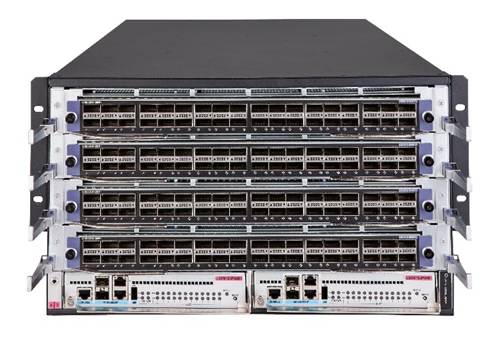
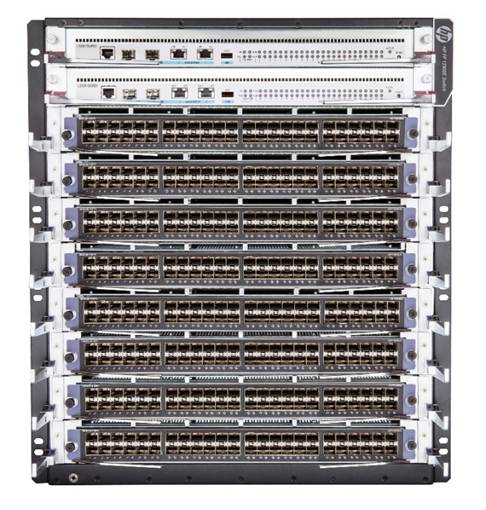
The HPE Networking Comware Switch Series 12900E is a next-generation modular data center core switch designed to support virtualized data centers and the evolving needs of private and public cloud deployments. The HPE Networking Comware 12900E Switch delivers unprecedented levels of performance, buffering, scale, and availability with high-density GbE, 10GbE, 40GbE, 100GbE, and 400GbE connectivity. The HPE Networking Comware Switch Series 12900E includes 16-, 10-, 8- 4-, 2-, and 1-slot chassis. |
|
|
The switch supports full Layer 2 and 3 features, including advanced features such as Virtual Extensible LAN (VXLAN), Distributed Resilient Network Interconnect (DRNI) and Intelligent Resilient Fabric (IRF), which provide the ability to build large, resilient switching fabrics. The HPE Networking Comware Switch Series 12900E also supports fully redundant and hot-swappable components to complement its other enterprise-class capabilities. | ||
|
| ||
|
|
| |
|
HPE Networking Comware Switch Series 12900E | ||
|
| ||
|
Models | ||
|
HPE Networking Comware Switch Chassis 12916E |
JH103A | |
|
HPE Networking Comware Switch Chassis 12908E |
JH255A | |
|
HPE Networking Comware Switch Chassis 12904E |
JH262A | |
|
HPE Networking Comware Switch Chassis 12902E |
JH345A | |
|
HPE Networking Comware Switch Chassis 12901E |
JH951A | |
|
| ||
|
Key features - Introducing next generation, high performance 400G/100G H2 modules with deep buffer, increased routing scale, SR capability, up to 2000 hardware assisted BFD sessions ideal for telcos, Cloud Service Providers and large enterprises - Type X modules that offer application telemetry support, automation capabilities with HPE IMC Orchestrator and Analyzer and up to 16K multicast group support. - High density 10GbE, 40GbE, 100GbE and 400GbE connectivity with nonblocking wirespeed performance. (H2 modules supports 100GbE/400GbE with Comware v9) - New gen OS-Comware v9 available with H2 modules offers enhanced software features such as Segment Routing-MPLS, egress ACL and others for highly distributed environments. - HB/HF, Type X and H2 modules support the same chassis, fan tray and power supply resulting in investment protection for customer - Nonblocking, lossless Clos architecture - VXLAN, IRF, and DRNI support for virtualized and cloud deployments - Enhanced modularity with control and data plane separation |
|
|
|
Product architecture - Modern scalable system architecture - Distributed architecture with separation of data and control planes - Advanced Comware modular operating system - In-Service Software Upgrade (ISSU) Provides an IRF-based upgrade for seamless maintenance with minimal disruption - Multitenant Device Context (MDC) Virtualizes a physical switch into multiple logical devices, with each logical switch having its own processes, configuration, and administration |
|
|
|
Performance - High-performance fully distributed architecture Delivers up to 184 Tbps (bi-directional) switching capacity and 92.16 Bpps throughput with non-blocking wire speed performance - High-density 1, 10, 40,100, 400GbE interface connectivity - Low latency and consistent performance Under 5 microsecond latency (64-byte packets) and consistent performance for broad range of applications typical of a data center including mixed traffic loads of real-time, multicast, and storage traffic -
Distributed
scalable fabric architecture |
|
|
|
Data center optimized - Virtual Extensible LAN (VXLAN) - Scalable Layer 2 fabrics - Data Center Bridging (DCB) protocols Provides support for IEEE 802.1Qaz Data Center Bridging Exchange (DCBX), Enhanced Transmission Selection (ETS), and IEEE 802.1Qbb Priority Flow Control (PFC) for converged fabrics - Fibre Channel over Ethernet (FCoE) features Delivers FCoE using 5930 modules with converged ports, including expansion, fabric, trunk VF and N ports, and aggregation of E-port and N-port virtualization -
Front-to-back
airflow chassis available |
|
|
|
Resiliency and high availability - Intelligent Resilient Fabric (IRF) Creates virtual resilient switching fabrics, where two or more switches perform as a single L2 switch and L3 router; switches do not have to be co-located and can be part of a disaster-recovery system; servers or switches can be attached using standard LACP for automatic load balancing and high availability; can eliminate the need for complex protocols like Spanning Tree Protocol, Equal-Cost Multipath (ECMP), or VRRP, thereby simplifying network operation - Redundant/load-sharing fabrics, management, fan assemblies, and power supplies - Hot-swappable modules - Graceful restart Allows routers to indicate to others their capability to maintain a routing table during a temporary shutdown, which significantly reduces convergence times upon recovery; supports OSPF, BGP, and IS-IS - Virtual Router Redundancy Protocol (VRRP) - Device Link Detection Protocol (DLDP) Monitors link connectivity and shuts down ports at both ends if unidirectional traffic is detected, preventing loops in STP-based networks - Hitless patch upgrades Allows patches and new service features to be installed without restarting the equipment, increasing network uptime and facilitating maintenance - IEEE 802.3ad Link Aggregation Control Protocol (LACP) Supports up to 1024 trunk groups and up to 16 members per trunk; supports static or dynamic groups and a user-selectable hashing algorithm - Passive design system Delivers increased system reliability as the backplane has no active components - Ultrafast protocol convergence (sub-second) with standard-based failure detection-Bidirectional Forwarding Detection (BFD) Enables link connectivity monitoring and reduces network convergence time for RIP, OSPF, BGP, IS-IS, VRRP, MPLS, and IRF |
|
|
|
Layer 2 switching - VLAN - Bridge Protocol Data Unit (BPDU) tunneling Transmits Spanning Tree Protocol BPDUs transparently, allowing correct tree calculations across service providers, WANs, or MANs - Port mirroring Duplicates port traffic (ingress and egress) to a local or remote monitoring port; supports four mirroring groups, with an unlimited number of ports per group - Multiple VLAN Registration Protocol (MVRP) Helps to maintain VLAN configuration dynamically based on current network configurations - Port isolation Increases security by isolating ports within a VLAN while still allowing them to communicate with other VLANs - Internet Group Management Protocol (IGMP) and Multicast Listener Discovery (MLD) protocol snooping Controls and manages the flooding of multicast packets in a Layer 2 network - Spanning Tree Protocol (STP) Supports standard IEEE 802.1D STP, IEEE 802.1w Rapid Spanning Tree Protocol (RSTP) for faster convergence, and IEEE 802.1s Multiple Spanning Tree Protocol (MSTP) - IEEE 802.1ad QinQ and selective QinQ Increase the scalability of an Ethernet network by providing a hierarchical structure; connect multiple LANs on a high-speed campus or metro network. |
|
|
|
Layer 3 routing - Open shortest path first (OSPF) Delivers faster convergence; uses this link-state routing Interior Gateway Protocol (IGP), which supports ECMP, NSSA, and MD5 authentication for increased security and graceful restart for faster failure recovery - Intermediate system to intermediate system (IS-IS) Uses a path vector Interior Gateway Protocol (IGP), which is defined by the ISO organization for IS-IS routing and extended by IETF RFC 1195 to operate in both TCP/IP and the OSI reference model (Integrated IS-IS) - Border Gateway Protocol 4 (BGP-4) Delivers an implementation of the Exterior Gateway Protocol (EGP) utilizing path vectors; uses TCP for enhanced reliability for the route discovery process; reduces bandwidth consumption by advertising only incremental updates; supports extensive policies for increased flexibility; scales to very large network - Multiprotocol Label Switching (MPLS) Uses BGP to advertise routes across Label Switched Paths (LSPs), but uses simple labels to forward packets from any Layer 2 or Layer 3 protocol, which reduces complexity and increases performance; supports graceful restart for reduced failure impact; supports LSP tunneling and multilevel stacks - Dual IP stack Maintains separate stacks for IPV4 and IPV6 to ease the transition from an IPV4-only network to an IPV6-only network design - Equal-Cost Multipath (ECMP) Enables multiple equal-cost links in a routing environment to increase link redundancy and scale bandwidth - Policy-based routing Makes routing decisions based on policies set by the network administrator - Static IPV4 routing Provides simple manually configured IPV4 routing - Routing Information Protocol (RIP) Uses a distance vector algorithm with UDP packets for route determination; supports rIPV1 and rIPV2 routing; includes loop protection - IP performance optimization Provides a set of tools to improve the performance of IPV4 networks; includes directed broadcasts, customization of TCP parameters, support of ICNP error packets, and extensive display capabilities - Unicast Reverse Path Forwarding (URPF) - Static IPV6 routing - Routing Information Protocol next generation (RIPng) - Ospfv3 - IS-IS for IPV6 - BGP+ - Multiprotocol Label Switching (MPLS) Layer 3 VPN Allows Layer 3 VPNs across a provider network; uses MP-BGP to establish private routes for increased security; supports RFC 2547bis multiple autonomous system VPNs for added flexibility - Multiprotocol Label Switching (MPLS) Layer 2 VPN Establishes simple Layer 2 point-to-point VPNs across a provider network using only MPLS Label Distribution Protocol (LDP); requires no routing and therefore decreases complexity, increases performance, and allows VPNs of non-routable protocols; uses no routing information for increased security; supports Circuit Cross Connect (CCC), Static Virtual Circuits (SVCS), Martini draft, and Kompella-draft technologies. - Virtual Private LAN Service (VPLS) Establishes point-to-multipoint Layer 2 VPNs across a provider network - IPV6 tunneling Provides an important element for the transition from IPV4 to IPV6; allows IPV6 packets to traverse IPV4-only networks by encapsulating the IPV6 packet into a standard IPV4 packet; supports manually configured, 6to4, Intra-Site Automatic Tunnel Addressing Protocol (ISATAP) tunnels, and IPV6 on VPN to Provider Edge (6VPE) router tunnel |
|
|
|
Quality of Service (QoS) -
IEEE
802.1p prioritization - Flexible classification Creates traffic classes based on access control lists (ACLs), IEEE 802.1p precedence, IP, and DSCP or Type of Service (ToS) precedence; supports filter, redirect, mirror, remark, and logging - Bandwidth shaping
- Broad QoS feature set Provides support for Strict Priority Queuing (SP), Weighted Fair Queuing (WFQ), Weighted Deficit Round Robin (WDRR), SP+WDRR together, configurable buffers, Explicit Congestion Notification (ECN), and Weighted Random Early Detection (WRED) -
Traffic
policing |
|
|
|
Layer 3 services - Address Resolution Protocol (ARP) Determines the MAC address of another IP host in the same subnet; supports static ARPs; gratuitous ARP allows detection of duplicate IP addresses; proxy ARP allows normal ARP operation between subnets or when subnets are separated by a Layer 2 network - User Datagram Protocol (UDP) helper - Dynamic Host Configuration Protocol (DHCP) Simplifies the management of large IP networks and supports client and server; DHCP Relay enables DHCP operation across subnets |
|
|
|
Management - Management interface control Enables or disables each of the following interfaces depending on security preferences: console port, Telnet port, or reset button - Industry-standard CLI with a hierarchical structure - SNMPv1, v2, and v3 Provide complete support of SNMP; provide full support of industry-standard Management Information Base (MIB) plus private extensions; snmpv3 supports increased security using encryption - Sflow (RFC 3176) Provides scalable ASIC-based wirespeed network monitoring and accounting with no impact on network performance; this allows network operators to gather a variety of sophisticated network statistics and information for capacity planning and real-time network monitoring purposes. - Remote monitoring (RMON) Uses standard SNMP to monitor essential network functions; supports events, alarm, history, and statistics group plus a private alarm extension group -
Debug
and sampler utility - Network Time Protocol (NTP) Synchronizes timekeeping among distributed time servers and clients; keeps timekeeping consistent among all clock-dependent devices within the network so that the devices can provide diverse applications based on the consistent time - Network Quality Analyzer (NQA) Analyzes network performance and service quality by sending test packets, and provides network performance and service quality parameters such as jitter, TCP, or FTP connection delays and file transfer rates; allows a network manager to determine overall network performance and to diagnose and locate network congestion points or failures - IMC Orchestrator and Analyzer support Type X modules support application telemetry and can also take advantage of the orchestration, automated provisioning and analytical capabilities offered by IMC Orchestrator and Analyzer. - Information center Provides a central repository for system and network information; aggregates all logs, traps, and debugging information generated by the system and maintains them in order of severity; outputs the network information to multiple channels based on user-defined rules - IEEE 802.1AB Link Layer Discovery Protocol (LLDP) Advertises and receives management information from adjacent devices on a network, facilitating easy mapping by network management applications |
|
|
|
Connectivity - Jumbo frames - Loopback Supports internal loopback testing for maintenance purposes and an increase in availability; loopback detection protects against incorrect cabling or network configurations and can be enabled on a per-port or per-VLAN basis for added flexibility - Ethernet operations, administration and maintenance (OAM) Detects data link layer problems that occurred in the "last mile" using the IEEE 802.3ah OAM standard; monitors the status of the link between two devices - Monitor link - Packet storm protection -
Flow
control |
|
|
|
Multicast support - Internet Group Management Protocol (IGMP) Utilizes Any-Source Multicast (ASM) or Source-Specific Multicast (SSM) to manage IPV4 multicast networks; supports igmpv1, v2, and v3 - Protocol Independent Multicast (PIM) Defines modes of Internet IPV4 and IPV6 multicasting to allow one-to-many and many-to-many transmission of information; PIM Dense Mode (DM), Sparse Mode (SM), and Source-Specific Mode (SSM) are supported |
|
|
|
Security - Access control list (ACL) Supports powerful ACLs for both IPV4 and IPV6; ACLs are used for filtering traffic to prevent unauthorized users from accessing the network, or for controlling network traffic to save resources; rules can either deny or permit traffic to be forwarded; rules can be based on a Layer 2 header or a Layer 3 protocol header; rules can be set to operate on specific dates or times - Remote Authentication Dial-In User Service (RADIUS) - Terminal Access Controller Access-Control System (TACACS+) - Secure shell (SSHv2) Uses external servers to securely log in to a remote device; with authentication and encryption, it protects against IP spoofing and plain-text password interception; increases the security of Secure FTP (SFTP) transfers - DHCP snooping Helps ensure that DHCP clients receive IP addresses from authorized DHCP servers and maintain a list of DHCP entries for trusted ports; prevents reception of fake IP addresses and reduces ARP attacks, improving security - IP Source Guard - ARP attack protection -
Port
security |
|
|
|
Warranty and support - 1-year warranty See Warranty and support summary for what is included with your product purchase. - Software releases To find software for your product, refer to http://www.hpe.com/networking/support; for details on the software releases available with your product purchase, refer to Warranty and support summary. |
|
|
|
Type X and Type HB/HF LPU Modules The following table provides a feature comparison of the Type X modules and the Type HB/HF modules supported on the 12900E Switch series: | ||||||||||||||||||||||||||||||||||||||||||||||||||||||||||||||||||||||||||||||||||||||||||||||||||||||||||||||||||||||||||||||||||||
| ||||||||||||||||||||||||||||||||||||||||||||||||||||||||||||||||||||||||||||||||||||||||||||||||||||||||||||||||||||||||||||||||||||
|
|
|
Build to Order: BTO is a standalone unit with no integration. BTO products ship standalone are not part of a CTO or Rack-Shippable solution. | ||
|
BTO Models | ||
|
Description |
SKU | |
|
HPE Networking Comware Switch Chassis 12901E |
JH951A | |
|
HPE Networking Comware Switch Chassis 12902E |
JH345A | |
|
HPE Networking Comware Switch Chassis 12904E |
JH262A | |
|
HPE Networking Comware Switch Chassis 12908E |
JH255A | |
|
HPE Networking Comware Switch Chassis 12916E |
JH103A | |
|
|
| |
|
Modules | ||
|
Management Modules |
| |
|
Description |
SKU | |
|
HPE Networking 12902E Main Processing Unit |
JH346A | |
|
HPE Networking 12904E v2 Main Processing Unit |
JH668A | |
|
HPE Networking 12904E Type H2 Main Processing Unit |
R9F17A | |
|
HPE Networking 12900E v2 Main Processing Unit |
JH669A | |
|
HPE Networking 12904E Type X Main Processing Unit |
JL844A | |
|
HPE Networking 12900E Type X Main Processing Unit |
JL845A | |
|
HPE Networking 12900E Type H2 Main Processing Unit |
R9F18A | |
|
|
| |
|
Fabric Modules |
| |
|
Description |
SKU | |
|
HPE Networking 12904E 7.2Tbps Type H Fabric Module |
JH364A | |
|
HPE Networking 12904E Type X Fabric Module |
JL841A | |
|
HPE Networking 12904E Type H2 Fabric Module |
R9F14A | |
|
HPE Networking 12908E Type X Fabric Module |
JL842A | |
|
HPE Networking 12908E 14.4Tbps Type H Fabric Module |
JH362A | |
|
HPE Networking 12908E Type H2 Fabric Module |
R9F15A | |
|
HPE Networking 12916E 21.6Tbps Type H Fabric Module |
JH361A | |
|
HPE Networking 12916E 43 2Tps Type H Fabric Module |
JH435A | |
|
|
| |
|
I/O Modules |
| |
|
Description |
SKU | |
|
HPE Networking Comware Module 48-Port 10GbE SFP+ Type X 12900E |
JL846A | |
|
HPE Networking 12900E 36p 100GbE QSFP28 HB Module |
JH357A | |
|
HPE Networking Comware Module 36-Port 100GbE QSFP28 Type X 12900E |
JL848A | |
|
HPE Networking Comware Module 48-port 40GbE QSFP+ HB 12900E |
JH359A | |
|
HPE Networking 12900E 48p 10G 2p 100G HB Module |
JH360A | |
|
HPE Networking 12900E 18p 100G/18p 40G HB Module |
JH422A | |
|
HPE Networking 12900E 18p 100G/18p 40G HF Module |
JH425A | |
|
HPE Networking 12900E 24p 10G/2p 40G HB 59xx Module |
JH953A | |
|
HPE Networking 12900E 48p 10GbE SFP+ HF Module |
JQ061A | |
|
HPE Networking Comware Module 36-Port 40GbE QSFP+ Type X 12900E |
JL847A | |
|
HPE Networking 12900E 24p 10G/4p 100G HD 59xx Module |
JH954A | |
|
HPE Networking Comware Module 48-Port 100GbE QSFP28 Type H2 12900E |
R9F20A | |
|
HPE Networking Comware Module 24-Port 400GbE QSFP-DD Type H2 12900E |
R9F19A | |
|
|
| |
|
59XX Modules |
| |
|
Description |
SKU | |
|
HPE Networking 12900E 24p 10G/2p 40G HB 59xx Module |
JH953A | |
|
(std 0 // max 1) User Selection (min 0 // max 1) |
| |
|
HPE Networking 12900E 24p 10G/4p 100G HD 59xx Module |
JH954A | |
|
HPE Networking 5930 24p SFP+ and 2p QSFP+ Module |
JH180A | |
|
HPE Networking 5930 24p SFP+/2p QSFP+ w/Msec Module |
JH181A | |
|
HPE Networking 5930 24p 10GBASE-T/2p MCsc QSFP+ Module |
JH182A | |
|
HPE Networking 5930 8-port QSFP+ Module |
JH183A | |
|
HPE Networking 5930 24-port Converged Port and 2-port QSFP+ Module |
JH184A | |
|
HPE Networking 5950 16-port QSFP+ Module |
JH405A | |
|
HPE Networking 5950 8-port QSFP28 Module |
JH406A | |
|
HPE Networking 5950 24p SFP28 and 2p QSFP28 Module |
JH450A | |
|
HPE Networking 5950 8-port QSFP28 MACsec Module |
JH957A | |
|
|
| |
|
| ||
|
Transceivers | ||
|
SFP Transceivers | ||
|
Description |
SKU | |
|
HPE Networking X120 1G SFP RJ45 T Transceiver |
JD089B | |
|
HPE Networking X120 1G SFP LC BX 10-U Transceiver |
JD098B | |
|
HPE Networking X120 1G SFP LC BX 10-D Transceiver |
JD099B | |
|
HPE Networking X120 1G SFP LC LH100 Transceiver |
JD103A | |
|
HPE Networking X120 1G SFP LC SX Transceiver |
JD118B | |
|
HPE Networking X120 1G SFP LC LX Transceiver |
JD119B | |
|
|
| |
|
SFP+ Transceivers |
||
|
HPE Networking X130 10G SFP+ LC BiDi 10km-Uplink Transceiver |
JL737A | |
|
HPE Networking X130 10G SFP+ LC BiDi 10km-Downlink Transceiver |
JL738A | |
|
HPE Networking X130 10G SFP+ LC BiDi 40km-Uplink Transceiver |
JL739A | |
|
HPE Networking X130 10G SFP+ LC BiDi 40km-Downlink Transceiver |
JL740A | |
|
HPE Networking X130 10G SFP+ LC SR Transceiver |
JD092B | |
|
HPE Networking X130 10G SFP+ LC LR Transceiver |
JD094B | |
|
HPE Networking X130 10G SFP+ LC ER 40km Transceiver |
JG234A | |
|
HPE Networking X130 10G SFP+ LC LH 80km Transceiver |
JG915A | |
|
HPE Networking X240 10G SFP+ SFP+ 0.65m DAC Cable |
JD095C | |
|
HPE Networking X240 10G SFP+ SFP+ 1.2m DAC Cable |
JD096C | |
|
HPE Networking X240 10G SFP+ SFP+ 3m DAC Cable |
JD097C | |
|
HPE Networking X240 10G SFP+ SFP+ 5m DAC Cable |
JG081C | |
|
HPE Networking X240 10G SFP+ 7m DAC Cable |
JC784C | |
|
HPE Networking X2A0 10G SFP+ to SFP+ 7m Active Optical Cable |
JL290A | |
|
HPE Networking X2A0 10G SFP+ to SFP+ 10m Active Optical Cable |
JL291A | |
|
HPE Networking X2A0 10G SFP+ to SFP+ 20m Active Optical Cable |
JL292A | |
|
HPE Networking Comware 10GBASE-T SFP+ RJ45 30m Cat6A Transceiver |
S2N61A | |
|
|
| |
|
SFP28 Transceivers |
||
|
HPE Networking X190 25G SFP28 LC SR 100m MM Transceiver |
JL293A | |
|
HPE Networking X240 25G SFP28 to SFP28 1m DAC Cable |
JL294A | |
|
HPE Networking X240 25G SFP28 to SFP28 3m DAC Cable |
JL295A | |
|
HPE Networking X240 25G SFP28 to SFP28 5m DAC Cable |
JL296A | |
|
HPE Networking X2A0 25G SFP28 to SFP28 3m Active Optical Cable |
JH955A | |
|
HPE Networking X2A0 25G SFP28 to SFP28 5m Active Optical Cable |
JH956A | |
|
HPE Networking X2A0 25G SFP28 to SFP28 7m Active Optical Cable |
JL297A | |
|
HPE Networking X2A0 25G SFP28 to SFP28 10m Active Optical Cable |
JL298A | |
|
HPE Networking X2A0 25G SFP28 to SFP28 20m Active Optical Cable |
JL299A | |
|
|
| |
|
QSFP+ Transceivers |
||
|
HPE Networking X140 40G QSFP+ LC LR4 SM 10km 1310nm Transceiver |
JG661A | |
|
HPE Networking X140 40G QSFP+ LC BiDi 100m MM Transceiver |
JL251A | |
|
HPE Networking X140 40G QSFP+ MPO SR4 Transceiver |
JG325B | |
|
HPE Networking X140 40G QSFP+ CSR4 300m Transceiver |
JG709A | |
|
HPE Networking X140 40G QSFP+ LC LR4L 2km SM Transceiver |
JL286A | |
|
HPE Networking X140 40G QSFP+ LC ER4 40km SM Transceiver |
JL306A | |
|
HPE Networking Comware 40G PLR4 QSFP+ 10km Transceiver |
S4J93A | |
|
HPE Networking Comware X240 40G QSFP+ QSFP+ 1m Direct Attach Copper Cable |
JG326A | |
|
HPE Networking Comware X240 40G QSFP+ QSFP+ 3m Direct Attach Copper Cable |
JG327A | |
|
HPE Networking Comware X240 40G QSFP+ QSFP+ 5m Direct Attach Copper Cable |
JG328A | |
|
HPE Networking Comware X240 40G QSFP+ to 4x10G SFP+ 1m Direct Attach Copper Splitter Cable |
JG329A | |
|
HPE Networking Comware X240 40G QSFP+ to 4x10G SFP+ 3m Direct Attach Copper Splitter Cable |
JG330A | |
|
HPE Networking Comware X240 40G QSFP+ to 4x10G SFP+ 5m Direct Attach Copper Splitter Cable |
JG331A | |
|
HPE Networking X2A0 40G QSFP+ to QSFP+ 7m Active Optical Cable |
JL287A | |
|
HPE Networking X2A0 40G QSFP+ to QSFP+ 10m Active Optical Cable |
JL288A | |
|
HPE Networking X2A0 40G QSFP+ to QSFP+ 20m Active Optical Cable |
JL289A | |
|
|
| |
|
QSFP28 Transceivers |
| |
|
HPE Networking X150 100G QSFP28 LC BiDi 100m MM Transceiver |
JQ344A | |
|
HPE Networking X150 100G QSFP28 eSR4 300m MM Transceiver |
JH672A | |
|
HPE Networking X150 100G QSFP28 MPO SR4 100m MM Transceiver |
JL274A | |
|
HPE Networking X150 100G QSFP28 LC LR4 10km SM Transceiver |
JL275A | |
|
HPE Networking X150 100G QSFP28 PSM4 500m SM Transceiver |
JH420A | |
|
HPE Networking X150 100G QSFP28 CWDM4 2km SM Transceiver |
JH673A | |
|
HPE Networking X150 100G QSFP28 LC SWDM4 100m MM Transceiver |
JH419A | |
|
HPE Networking Comware 100G DR QSFP28 LC 500m SM Transceiver |
S4J89A | |
|
HPE Networking Comware 100G FR1 QSFP28 LC 2km SMF Transceiver |
S2P29A | |
|
HPE Networking X240 100G QSFP28 1m DAC Cable |
JL271A | |
|
HPE Networking X240 100G QSFP28 3m DAC Cable |
JL272A | |
|
HPE Networking X240 100G QSFP28 5m DAC Cable |
JL273A | |
|
HPE Networking X2A0 100G QSFP28 to QSFP28 7m Active Optical Cable |
JL276A | |
|
HPE Networking X2A0 100G QSFP28 to QSFP28 10m Active Optical Cable |
JL277A | |
|
HPE Networking X2A0 100G QSFP28 to QSFP28 20m Active Optical Cable |
JL278A | |
|
HPE Networking X2A0 100G QSFP28 30m Active Optical Cable |
JL795A | |
|
HPE Networking X2A0 100G QSFP28 5m Active Optical Cable |
JL796A | |
|
HPE Networking X240 QSFP28 4xSFP28 1m Direct Attach Copper Cable |
JL282A | |
|
HPE Networking X240 QSFP28 4xSFP28 3m Direct Attach Copper Cable |
JL283A | |
|
HPE Networking X240 QSFP28 4xSFP28 5m Direct Attach Copper Cable |
JL284A | |
|
|
| |
|
QSFP-DD Transceivers |
| |
|
HPE Networking X1E0 400G QSFP-DD FR4-WDM1300 2km LC Transceiver |
R9J30A | |
|
HPE Networking X1E0 400G QSFP-DD SR8 MM850 100m OM4 MPO16/APC Transceiver |
R9J29A | |
|
HPE NW CW 400G DR4 QDD MPO 500m XCVR |
S4J85A | |
|
HPE NW CW 400G LR4 WDM QDD LC 10km XCVR |
S4J87A | |
|
HPE NW CW 400G ZR QSFP-DD LC 120km XCVR (Only first-row ports supported) |
S4M22A | |
|
HPE NW CW 1xQDD/4xQSFP56 2.5m Split DAC |
S0E49A | |
|
|
| |
|
| ||
|
Cables |
| |
|
MPO Cables |
| |
|
Description |
SKU | |
|
HPE Premier Flex MPO8 to 4xLC Multi-mode OM4 5m Fiber Cable |
K2Q46A | |
|
HPE Premier Flex MPO8 to 4xLC Multi-mode OM4 15m Fiber Cable |
K2Q47A | |
|
|
| |
|
Internal Power Supplies |
| |
|
Description |
SKU | |
|
HPE Networking 12900E 2400W DC Power Supply Unit |
JH269A | |
|
HPE Networking 12902E 1800W DC Power Supply Unit |
JH671A | |
|
HPE Networking 12900E 2400W AC Power Supply Unit |
JH108A | |
|
HPE Networking 12900E 2400W AC Power Supply Unit PDU Cable NA/JP/TW |
JH108A#B2B | |
|
HPE Networking 12900E 2400W AC Power Supply Unit PDU Cable ROW |
JH108A#B2C | |
|
HPE Networking 12900E 2400W AC Power Supply Unit 220V N.A. - english localized |
JH108A#B2E | |
|
HPE Networking 12900E 2400W AC PSU |
JH108A#AC3 | |
|
HPE Networking 12900E 3000W AC Power Supply Unit |
JH348A | |
|
HPE FlexFabric 12900E 3000W AC Power Supply Unit PDU NA, JP or TW |
JH348A#B2B | |
|
HPE FlexFabric 12900E 3000W AC Power Supply Unit PDU ROW |
JH348A#B2C | |
|
HPE FlexFabric 12900E 3000W AC Power Supply Unit United States 220 volt |
JH348A#B2E | |
|
HPE FlexFabric 12900E 3000W AC Power Supply Unit |
JH348A#AC3 | |
|
HPE Networking 7900 1800w AC Power Supply Unit |
JG840A | |
|
HPE FlexFabric 7900 1800w AC Power Supply Unit PDU Cable NA/JP/TW |
JG840A#B2B | |
|
HPE FlexFabric 7900 1800w AC Power Supply Unit PDU Cable ROW |
JG840A#B2C | |
|
HPE FlexFabric 7900 1800w AC Power Supply Unit 220V N.A. - english localized |
JG840A#B2E | |
|
HPE FF 7900 1800w AC PSU |
JG840A#AC3 | |
|
|
| |
|
| ||
|
Switch Enclosure Options |
|
|
Mounting Kit |
|
|
Description |
SKU |
|
HPE Networking Comware 12900E Chassis Universal Rack Mount Kit |
JQ059A |
|
HPE Networking Comware 7910 Bottom Support Rails |
JH042A |
|
|
|
|
Fans |
|
|
Description |
SKU |
|
Spare only; Included in Chassis - Supported on, JH113A |
|
|
HPE Networking 12902E High Speed Fan Tray |
JH447A |
|
HPE Networking 12916E High Speed Fan Tray |
JH423A |
|
HPE Networking 12908E High Speed Fan Tray |
JH424A |
|
HPE Networking 12904E High Speed Fan Tray |
JH448A |
|
HPE Networking 12901E Fan Tray |
JH952A |
|
|
|
|
Power Supply Cables |
|
|
Description |
SKU |
|
HPE Networking Comware 12900E 48V 3m DC Power Supply Unit Cable |
JQ232A |
|
HPE Networking Comware 12902E 48V 15m DC Power Supply Unit Cable |
JQ058A |
|
|
|
|
| |
|
Software |
| |
|
Orchestrator |
| |
|
Description |
SKU | |
|
HPE Networking IMC Orchestrator Base License E-LTU |
JL849AAE | |
|
HPE Networking IMC Orchestrator Analyzer Add-on License E-LTU |
JL850AAE | |
|
HPE Networking IMC Orchestrator Network Node Add-on License E-LTU |
JL851AAE | |
|
HPE Networking IMC Orchestrator Analyzer IP Host Add-on License E-LTU |
JL852AAE | |
|
|
| |
|
|
| |
|
HPE FlexFabric 12916E Switch Chassis (JH103A) | |||||
|
I/O ports and slots |
16 I/O module slots | ||||
|
Supports a maximum 768 1/10GbE ports or 768 40GbE ports or 576 100GbE ports, or a combination 384 1/10GBase-T ports when using JH953A (HPE FlexFabric 12900E 24-port 10GbE/2-port 40GbE HB 59xx Module) with JH182A (HPE FlexFabric 5930 24p 10GBASE-T/2p MACsec QSFP+ Module) | |||||
|
Additional ports and slots |
2 MPU (for management modules) slots | ||||
|
Power supplies |
16 power supply slots | ||||
|
Fan tray |
2 fan tray slots | ||||
|
Physical characteristics |
Dimensions |
17.32(w) x 33.74(d) x 36.65(h) in (43.99 x 85.7 x 93.1 cm) (21U height) | |||
|
Weight |
189.82 lb (86.1 kg) | ||||
|
Memory and processor |
Management module |
Quad Core MIPS64 @ 1.2 GHz, 1 GB flash, 8 GB DDR2 SDRAM | |||
|
Mounting and enclosure |
Mounts in an EIA standard 19-inch rack or other equipment cabinet (hardware included); Horizontal surface mounting only | ||||
|
Performance |
Throughput |
up to 92.1 Bpps (64-byte packets) | |||
|
Switching capacity |
184 Tbps | ||||
|
Reliability |
Availability |
99.999% | |||
|
Environment |
Operating temperature |
32°F to 104°F (0°C to 40°C) | |||
|
Operating relative humidity |
5% to 95%, noncondensing | ||||
|
Non-operating/Storage temperature |
-40°F to 158°F (-40°C to 70°C) | ||||
|
Non-operating/Storage relative humidity |
5% to 95%, noncondensing | ||||
|
Altitude |
up to 13,123 ft (4 km) | ||||
|
Acoustic |
Low-speed fan: 67.8 dB, High-speed fan: 91.2 dB; ISO 7779 | ||||
|
Airflow direction |
Front-to-back | ||||
|
Electrical characteristics |
Frequency |
50/60 Hz | |||
|
Voltage |
100 - 240 VAC, rated (depending on power supply chosen) | ||||
|
Current |
16 A | ||||
|
Power output |
2400 W | ||||
|
Frequency |
50/60 Hz | ||||
|
Notes: Based on a common power supply of 2,400 W (AC) | |||||
|
Safety |
UL 60950-1 CAN/CSA 22.2 No. 60950-1 IEC 60950-1 EN 60950-1 FDA 21 CFR Subchapter J AS/NZS 60950-1 RoHS Compliance EN 50581 | ||||
|
Emissions |
VCCI Class A; EN 55022 Class A; CISPR 22 Class A; IEC/EN 61000-3-2; IEC/EN 61000-3-3; ICES-003 Class A; AS/NZS CISPR 22 Class A; FCC (CFR 47, Part 15) Class A; ETSI EN 300 386 | ||||
|
Immunity |
Generic |
EN 55024 | |||
|
Management |
IMC - Intelligent Management Center; Command-line interface; Out-of-band management (serial RS-232c); SNMP manager; Telnet; Terminal interface (serial RS-232c); Modem interface; IEEE 802.3 Ethernet mib; Ethernet interface mib | ||||
|
Services |
Refer to the Hewlett Packard Enterprise website at: https://h10145.www1.hpe.com/support/SupportLookUp.aspx For details on the service-level descriptions and product numbers. For details about services and response times in your area, please contact your local Hewlett Packard Enterprise sales office. | ||||
|
| |||||
|
HPE FlexFabric 12908E Switch Chassis (JH255A) | |||||
|
I/O ports and slots |
8 I/O module slots | ||||
|
Supports 384 1/10/40/100GbE ports or 192 400GbE ports or a combination 192 1/10GBase-T ports when using JH953A (HPE FlexFabric 12900E 24-port 10GbE/2-port 40GbE HB 59xx Module) with JH182A (HPE FlexFabric 5930 24p 10GBASE-T/2p MACsec QSFP+ Module) | |||||
|
Additional ports and slots |
2 MPU (for management modules) slots | ||||
|
Power supplies |
8 power supply slots 1 minimum power supply required (ordered separately) | ||||
|
Fan tray |
2 fan tray slots Fan trays are not included. | ||||
|
Physical characteristics |
Dimensions |
17.32(w) x 33.74(d) x 20.91(h) in (43.99 x 85.7 x 53.1 cm) (12U height) | |||
|
Weight |
103.62 lb (47 kg) | ||||
|
Memory and processor |
Management module |
Quad Core MIPS64 @ 1.2 GHz, 1 GB flash, 8 GB DDR3 SDRAM Quad Core Intel X86 @ 2.2GHz, 8 GB flash, 16 GB DDR3 SDRAM (Type X and H2 modules) | |||
|
Mounting and enclosure |
Mounts in an EIA standard 19-inch rack or other equipment cabinet (hardware included); Horizontal surface mounting only | ||||
|
Performance |
Throughput |
152 Tbps | |||
|
Switching capacity |
32 Bpps (with H2 modules) | ||||
|
Reliability |
Availability |
99.999% | |||
|
Environment |
Operating temperature |
32°F to 104°F (0°C to 40°C) | |||
|
Operating relative humidity |
5% to 95%, noncondensing | ||||
|
Non-operating/Storage temperature |
-40°F to 158°F (-40°C to 70°C) | ||||
|
Non-operating/Storage relative humidity |
5% to 95%, noncondensing | ||||
|
Altitude |
up to 13,123 ft (4 km) | ||||
|
Acoustic |
Low-speed fan: 62.1 dB, High-speed fan: 87.6 dB; ISO 7779 | ||||
|
Airflow direction |
Front-to-back | ||||
|
Electrical characteristics |
Frequency |
50/60 Hz | |||
|
Voltage |
100 - 240 VAC, rated (depending on power supply chosen) | ||||
|
Current |
16 A | ||||
|
Power output |
2400 W | ||||
|
Notes: Based on a common power supply of 2,400 W (AC) | |||||
|
Safety |
UL 60950-1; CAN/CSA 22.2 No. 60950-1; IEC 60950-1; EN 60950-1; FDA 21 CFR Subchapter J; AS/NZS 60950-1; RoHS Compliance EN 50581 | ||||
|
Emissions |
VCCI Class A; EN 55022 Class A; CISPR 22 Class A; IEC/EN 61000-3-2; IEC/EN 61000-3-3; ICES-003 Class A; AS/NZS CISPR 22 Class A; FCC (CFR 47, Part 15) Class A; ETSI EN 300 386 | ||||
|
Immunity |
Generic |
EN 55024 | |||
|
Management |
IMC - Intelligent Management Center; Command-line interface; Out-of-band management (serial RS-232c); SNMP manager; Telnet; Terminal interface (serial RS-232c); Modem interface; IEEE 802.3 Ethernet mib; Ethernet interface mib | ||||
|
Services |
Refer to the Hewlett Packard Enterprise website at: http://www.hpe.com/networking/services for details on the service-level descriptions and product numbers. For details about services and response times in your area, please contact your local Hewlett Packard Enterprise sales office. | ||||
|
| |||||
|
HPE FlexFabric 12904E Switch Chassis (JH262A) | |||||
|
I/O ports and slots |
4 I/O module slots | ||||
|
Supports 192 1/10/40/100GbE ports or 96 400GbE ports or a combination | |||||
|
Additional ports and slots |
2 MPU (for management modules) slots 6 switch fabric slots | ||||
|
Power supplies |
4 power supply slots 1 minimum power supply required (ordered separately) | ||||
|
Fan tray |
2 fan tray slots Fan trays are not included. | ||||
|
Physical characteristics |
Dimensions |
17.32(w) x 33.74(d) x 10.39(h) in (43.99 x 85.7 x 26.39 cm) (6U height) | |||
|
Weight |
79.37 lb (36 kg) | ||||
|
Memory and processor |
Management module |
Quad Core MIPS64 @ 1.2 GHz, 1 GB flash, 8 GB DDR3 SDRAM Quad Core Intel X86 @ 2.2GHz, 8 GB flash, 16 GB DDR3 SDRAM (Type X and H2 modules) | |||
|
Mounting and enclosure |
Mounts in an EIA standard 19-inch rack or other equipment cabinet (hardware included); Horizontal surface mounting only | ||||
|
Performance |
Throughput |
76.8Tbps | |||
|
Switching capacity |
16 Bpps (with H2 modules) | ||||
|
Reliability |
Availability |
99.999% | |||
|
Safety |
UL 60950-1; CAN/CSA 22.2 No. 60950-1; IEC 60950-1; EN 60950-1; FDA 21 CFR Subchapter J; AS/NZS 60950-1; RoHS Compliance EN 50581 | ||||
|
Emissions |
VCCI Class A; EN 55022 Class A; CISPR 22 Class A; IEC/EN 61000-3-2; IEC/EN 61000-3-3; ICES-003 Class A; AS/NZS CISPR 22 Class A; FCC (CFR 47, Part 15) Class A; ETSI EN 300 386 | ||||
|
Immunity |
Generic |
EN 55024 | |||
|
Management |
IMC - Intelligent Management Center; Command-line interface; Out-of-band management (serial RS-232c); SNMP manager; Telnet; Terminal interface (serial RS-232c); Modem interface; IEEE 802.3 Ethernet mib; Ethernet interface mib | ||||
|
Environment |
Operating temperature |
32°F to 104°F (0°C to 40°C) | |||
|
Operating relative humidity |
5% to 95%, noncondensing | ||||
|
Non-operating/Storage temperature |
-40°F to 158°F (-40°C to 70°C) | ||||
|
Non-operating/Storage relative humidity |
5% to 95%, noncondensing | ||||
|
Altitude |
up to 13,123 ft (4 km) | ||||
|
Acoustic |
Low-speed fan: 67.5 dB, High-speed fan: 85.3 dB; ISO 7779 | ||||
|
Airflow direction |
Front-to-back | ||||
|
Electrical characteristics |
Frequency |
50/60 Hz | |||
|
Voltage |
100 - 240 VAC, rated (depending on power supply chosen) | ||||
|
Current |
16 A | ||||
|
Power output |
2400 W | ||||
|
Notes: Based on a common power supply of 2,400 W (AC) | |||||
|
Services |
Refer to the Hewlett Packard Enterprise website at: https://h10145.www1.hpe.com/support/SupportLookUp.aspx For details on the service-level descriptions and product numbers. For details about services and response times in your area, please contact your local Hewlett Packard Enterprise sales office. | ||||
|
| |||||
|
HPE FlexFabric 12902E Switch Chassis (JH345A) | |||
|
I/O ports and slots |
2 I/O module slots | ||
|
Supports a maximum of 48 1/10GBASE-T ports or 96 1/10GbE ports or 96 40GbE ports or 96 100GbE ports or a combination | |||
|
Additional ports and slots |
2 MPU (for management modules) slots | ||
|
Power supplies |
4 power supply slots 1 minimum power supply required (ordered separately) | ||
|
Fan tray |
2 fan tray slots Fan trays are not included | ||
|
Physical characteristics |
Dimensions |
17.32(w) x 35.24(d) x 5.24(h) in. (44.0 x 89.5 x 13.3 cm) (3U height) | |
|
Weight |
52.91 lb (24 kg) | ||
|
Memory and processor |
Management module |
Quad Core MIPS64 @ 1 GHz, 1 GB flash, 8 GB DDR3 SDRAM | |
|
Mounting and enclosure |
Mounts in an EIA standard 19-inch rack or other equipment cabinet (hardware included); horizontal surface mounting only | ||
|
Performance |
Throughput |
Up to 11.52 Bpps (64-byte packets) | |
|
Switching capacity |
19.2 Tbps | ||
|
Reliability |
Availability |
99.999% | |
|
Environment |
Operating temperature |
32°F to 104°F (0°C to 40°C) | |
|
Operating relative humidity |
5% to 95%, noncondensing | ||
|
Non-operating/Storage temperature |
-40°F to 158°F (-40°C to 70°C) | ||
|
Non-operating/Storage relative humidity |
5% to 95%, noncondensing | ||
|
Altitude |
Up to 13,123 ft (4 km) | ||
|
Acoustic |
Low-speed fan: 73.1 dB, high-speed fan: 87.2 dB; ISO 7779 | ||
|
Airflow direction |
Front-to-back | ||
|
Electrical characteristics |
Frequency |
50/60 Hz | |
|
Voltage |
100-240 VAC, rated -48 to -60 VDC, rated (depending on power supply chosen) | ||
|
Current |
13 A | ||
|
Power output |
1800 W | ||
|
Notes: Based on a common power supply of 1,800 W (AC/DC) | |||
|
Safety |
UL 60950-1; CAN/CSA 22.2 No. 60950-1; IEC 60950-1; EN 60950-1; FDA 21 CFR Subchapter J; AS/NZS 60950-1; RoHS Compliance EN 50581 | ||
|
Emissions |
VCCI Class A; EN 55022 Class A; CISPR 22 Class A; IEC/EN 61000-3-2; IEC/EN 61000-3-3; ICES-003 Class A; AS/NZS CISPR 22 Class A; FCC (CFR 47, Part 15) Class A; ETSI EN 300 386 | ||
|
Immunity |
Generic |
EN 55024 | |
|
Management |
IMC-Intelligent Management Center; command-line interface; Out-of-band management (serial RS-232c); SNMP manager; Telnet; terminal interface (serial RS-232c); modem interface; IEEE 802.3 Ethernet MIB; Ethernet interface MIB | ||
|
Services |
Refer to the Hewlett Packard Enterprise website at: https://h10145.www1.hpe.com/support/SupportLookUp.aspx For details on the service-level descriptions and product numbers. For details about services and response times in your area, please contact your local Hewlett Packard Enterprise sales office. | ||
|
| |||
|
HPE FlexFabric 12901E Switch Chassis (JH951A) | |||
|
I/O ports and slots |
1 I/O module slots | ||
|
Supports a maximum of 48 100GbE, 40GbE or 10GbE ports or a combination | |||
|
Additional ports and slots |
MPU (for management) modules integrated | ||
|
Power supplies |
2 power supply slots 1 minimum power supply required (ordered separately) | ||
|
Fan tray |
3 fan tray slots Fan trays are not included | ||
|
Physical characteristics |
Dimensions |
17.32(w) x 33.7(d) x 3.4(h) in. (44.0 x 85.6 x 8.8 cm) (2U height) | |
|
Weight |
77.16. lb (35 kg) | ||
|
Memory and processor |
Management module |
Quad Core MIPS64 @ 1.2GHz, 1 GB flash, 16 GB DDR3 SDRAM | |
|
Mounting and enclosure |
Mounts in an EIA standard 19-inch rack or other equipment cabinet (hardware included); horizontal surface mounting only | ||
|
Performance |
Throughput |
Up to 5.76 Bpps (64-byte packets) | |
|
Switching capacity |
9.6 Tbps | ||
|
Reliability |
Availability |
99.999% | |
|
Environment |
Operating temperature |
32°F to 104°F (0°C to 40°C) | |
|
Operating relative humidity |
5% to 95%, noncondensing | ||
|
Non-operating/Storage temperature |
-40°F to 158°F (-40°C to 70°C) | ||
|
Non-operating/Storage relative humidity |
5% to 95%, noncondensing | ||
|
Altitude |
Up to 13,123 ft (4 km) | ||
|
Acoustic |
Low-speed fan: 64.8 dB, high-speed fan: 82.4 dB; ISO 7779 | ||
|
Airflow direction |
Front-to-back | ||
|
Electrical characteristics |
Frequency |
50/60 Hz | |
|
Voltage |
100-240 VAC, rated -48 to -60 VDC, rated (depending on power supply chosen) | ||
|
Current |
16 A | ||
|
Power output |
2400 W | ||
|
Notes: Based on a common power supply of 2,400 W (AC/DC) | |||
|
Safety |
UL 60950-1; CAN/CSA 22.2 No. 60950-1; IEC 60950-1; EN 60950-1; FDA 21 CFR Subchapter J; AS/NZS 60950-1; RoHS Compliance EN 50581 | ||
|
Emissions |
VCCI Class A; EN 55022 Class A; CISPR 22 Class A; IEC/EN 61000-3-2; IEC/EN 61000-3-3; ICES-003 Class A; AS/NZS CISPR 22 Class A; FCC (CFR 47, Part 15) Class A; ETSI EN 300 386 | ||
|
Immunity |
Generic |
EN 55024 | |
|
Management |
IMC-Intelligent Management Center; command-line interface; Out-of-band management (serial RS-232c); SNMP manager; Telnet; terminal interface (serial RS-232c); modem interface; IEEE 802.3 Ethernet MIB; Ethernet interface MIB | ||
|
Services |
Refer to the Hewlett Packard Enterprise website at: https://h10145.www1.hpe.com/support/SupportLookUp.aspx For details on the service-level descriptions and product numbers. For details about services and response times in your area, please contact your local Hewlett Packard Enterprise sales office. | ||
|
| |||
|
Standards and protocols (Apply to all products in series) BGP - RFC 1771 BGPv4 - RFC 1772 Application of the BGP - RFC 1997 BGP Communities Attribute - RFC 1998 An Application of the BGP Community Attribute in Multi-home Routing - RFC 2385 BGP Session Protection via TCP MD5 - RFC 2439 BGP Route Flap Damping - RFC 2796 BGP Route Reflection - RFC 2858 BGP-4 Multi-Protocol Extensions - RFC 2918 Route Refresh Capability - RFC 3065 Autonomous System Confederations for BGP - RFC 3392 Capabilities Advertisement with BGP-4 - RFC 4271 A Border Gateway Protocol 4 (BGP-4) - RFC 4272 BGP Security Vulnerabilities Analysis - RFC 4273 Definitions of Managed Objects for BGP-4 - RFC 4274 BGP-4 Protocol Analysis - RFC 4275 BGP-4 MIB Implementation Survey - RFC 4276 BGP-4 Implementation Report - RFC 4277 Experience with the BGP-4 Protocol - RFC 4360 BGP Extended Communities Attribute - RFC 4456 BGP Route Reflection: An Alternative to Full Mesh Internal BGP (IBGP) - RFC 5291 Outbound Route Filtering Capability for BGP-4 - RFC 5292 Address-Prefix-Based Outbound Route Filter for BGP-4 |
|
|
|
General protocols - IEEE 802.1ad Q-in-Q - IEEE 802.1ag Service Layer OAM - IEEE 802.1p Priority - IEEE 802.1Q VLANs - IEEE 802.1s Multiple Spanning Trees - IEEE 802.1w Rapid Reconfiguration of Spanning Tree - IEEE 802.3ab 1000BASE-T - IEEE 802.3ac (VLAN Tagging Extension) - IEEE 802.3ad Link Aggregation Control Protocol (LACP) - IEEE 802.3ae 10-Gigabit Ethernet - IEEE 802.3ah Ethernet in First Mile over Point to Point Fiber - EFMF - IEEE 802.3ba 40 and 100 Gigabit Ethernet Architecture - IEEE 802.3x Flow Control - IEEE 802.3z 1000BASE-X - RFC 768 UDP - RFC 783 TFTP Protocol (revision 2) - RFC 791 IP - RFC 792 ICMP - RFC 793 TCP - RFC 826 ARP - RFC 854 TELNET - RFC 894 IP over Ethernet - RFC 925 Multi-LAN Address Resolution - RFC 950 Internet Standard Subnetting Procedure - RFC 959 File Transfer Protocol (FTP) - RFC 1027 Proxy ARP - RFC 1035 Domain Implementation and Specification - RFC 1042 IP Datagrams - RFC 1058 RIPV1 - RFC 1142 OSI IS-IS Intra-domain Routing Protocol - RFC 1195 OSI ISIS for IP and Dual Environments - RFC 1213 Management Information Base for Network Management of TCP/IP-based internets - RFC 1293 Inverse Address Resolution Protocol - RFC 1305 NTPv3 - RFC 1350 TFTP Protocol (revision 2) - RFC 1393 Traceroute Using an IP Option - RFC 1519 CIDR - RFC 1531 Dynamic Host Configuration Protocol - RFC 1533 DHCP Options and BOOTP Vendor Extensions - RFC 1591 DNS (client only) - RFC 1624 Incremental Internet Checksum - RFC 1701 Generic Routing Encapsulation - RFC 1721 RIP-2 Analysis - RFC 1723 RIP v2 - RFC 1812 IPV4 Routing - RFC 2082 RIP-2 MD5 Authentication - RFC 2091 Trigger RIP - RFC 2131 DHCP - RFC 2138 Remote Authentication Dial In User Service (RADIUS) - RFC 2236 IGMP Snooping - RFC 2338 VRRP - RFC 2453 RIPV2 - RFC 2644 Directed Broadcast Control - RFC 2763 Dynamic Name-to-System ID mapping support - RFC 2784 Generic Routing Encapsulation (GRE) - RFC 2865 Remote Authentication Dial In User Service (RADIUS) - RFC 2966 Domain-wide Prefix Distribution with Two-Level IS-IS - RFC 2973 IS-IS Mesh Groups - RFC 3277 IS-IS Transient Blackhole Avoidance - RFC 3567 Intermediate System to Intermediate System (IS-IS) Cryptographic Authentication - RFC 3719 Recommendations for Interoperable Networks using Intermediate System to Intermediate System (IS-IS) - RFC 3784 ISIS TE support - RFC 3786 Extending the Number of IS-IS LSP Fragments Beyond the 256 Limit - RFC 3787 Recommendations for Interoperable IP Networks using Intermediate System to Intermediate System (IS-IS) - RFC 3847 Restart signaling for IS-IS - RFC 4251 The Secure Shell (SSH) Protocol Architecture - RFC 4486 Subcodes for BGP Cease Notification Message - RFC 4884 Extended ICMP to Support Multi-Part Messages - RFC 4941 Privacy Extensions for Stateless Address Auto-configuration in IPV6 - RFC 5130 A Policy Control Mechanism in IS-IS Using Administrative Tags
|
|
|
|
IP multicast - RFC 2236 IGMPv2 - RFC 2283 Multiprotocol Extensions for BGP-4 - RFC 2362 PIM Sparse Mode - RFC 3376 IGMPv3 - RFC 3446 Anycast Rendezvous Point (RP) mechanism using Protocol Independent Multicast (PIM) and Multicast Source Discovery Protocol (MSDP) - RFC 3973 PIM Dense Mode - RFC 4541 Considerations for Internet Group Management Protocol (IGMP) and Multicast Listener Discovery (MLD) Snooping Switches - RFC 4601 PIM Sparse Mode - RFC 4604 Using Internet Group Management Protocol Version 3 (IGMPv3) and Multicast Listener Discovery Protocol Version 2 (MLDv2) for Source-Specific Multicast - RFC 4605 IGMP/MLD Proxying - RFC 4607 Source-Specific Multicast for IP - RFC 5059 Bootstrap Router (BSR) Mechanism for Protocol Independent Multicast (PIM)
|
|
|
|
Denial of service protection - Automatic filtering of well-known denial-of-service packets - CPU DoS Protection - Rate Limiting by ACLs |
|
|
|
Device management - RFC 1157 SNMPv1/v2c - RFC 1305 NTPv3 - RFC 1902 (SNMPv2) - RFC 2579 (SMIv2 Text Conventions) - RFC 2580 (SMIv2 Conformance) - RFC 2819 (RMON groups Alarm, Event, History and Statistics only) - HTTP, SSHv1, and Telnet - Multiple Configuration Files - Multiple Software Images - SSHv1/SSHv2 Secure Shell - TACACS/TACACS+ - Web UI |
|
|
|
IPV6 - RFC 1886 DNS Extension for IPV6 - RFC 1887 IPV6 Unicast Address Allocation Architecture - RFC 1981 IPV6 Path MTU Discovery - RFC 2080 RIPng for IPV6 - RFC 2081 RIPng Protocol Applicability Statement - RFC 2292 Advanced Sockets API for IPV6 - RFC 2373 IPV6 Addressing Architecture - RFC 2375 IPV6 Multicast Address Assignments - RFC 2460 IPV6 Specification - RFC 2461 IPV6 Neighbor Discovery - RFC 2462 IPV6 Stateless Address Auto-configuration - RFC 2463 ICMPv6 - RFC 2464 Transmission of IPV6 over Ethernet Networks - RFC 2473 Generic Packet Tunneling in IPV6 - RFC 2526 Reserved IPV6 Subnet Anycast Addresses - RFC 2529 Transmission of IPV6 Packets over IPV4 - RFC 2545 Use of MP-BGP-4 for IPV6 - RFC 2553 Basic Socket Interface Extensions for IPV6 - RFC 2710 Multicast Listener Discovery (MLD) for IPV6 - RFC 2740 OSPFv3 for IPV6 - RFC 2767 Dual stacks IPV46 & IPV6 - RFC 2893 Transition Mechanisms for IPV6 Hosts and Routers - RFC 3056 Connection of IPV6 Domains via IPV4 Clouds - RFC 3307 IPV6 Multicast Address Allocation - RFC 3315 DHCPv6 (client and relay) - RFC 3484 Default Address Selection for IPV6 - RFC 3513 IPV6 Addressing Architecture - RFC 3736 Stateless Dynamic Host Configuration Protocol (DHCP) Service for IPV6 - RFC 3810 MLDv2 for IPV6 - RFC 4214 Intra-Site Automatic Tunnel Addressing Protocol (ISATAP) - RFC 4861 IPV6 Neighbor Discovery - RFC 4862 IPV6 Stateless Address Auto-configuration
|
|
|
|
MIBs - RFC 1156 (TCP/IP MIB) - RFC 1157 A Simple Network Management Protocol (SNMP) - RFC 1215 A Convention for Defining Traps for use with the SNMP - RFC 1229 Interface MIB Extensions - RFC 1493 Bridge MIB - RFC 1573 SNMP MIB II - RFC 1643 Ethernet MIB - RFC 1657 BGP-4 MIB - RFC 1724 RIPV2 MIB - RFC 1907 SNMPv2 MIB - RFC 2011 SNMPv2 MIB for IP - RFC 2012 SNMPv2 MIB for TCP - RFC 2013 SNMPv2 MIB for UDP - RFC 2096 IP Forwarding Table MIB - RFC 2233 Interface MIB - RFC 2452 IPV6-TCP-MIB - RFC 2454 IPV6-UDP-MIB - RFC 2465 IPV6 MIB - RFC 2466 ICMPv6 MIB - RFC 2571 SNMP Framework MIB - RFC 2572 SNMP-MPD MIB - RFC 2573 SNMP-Notification MIB - RFC 2573 SNMP-Target MIB - RFC 2578 Structure of Management Information Version 2 (SMIv2) - RFC 2580 Conformance Statements for SMIv2 - RFC 2618 RADIUS Client MIB - RFC 2620 RADIUS Accounting MIB - RFC 2665 Ethernet-Like-MIB - RFC 2668 802.3 MAU MIB - RFC 2674 802.1p and IEEE 802.1Q Bridge MIB - RFC 2787 VRRP MIB - RFC 2819 RMON MIB - RFC 2925 Ping MIB - RFC 2932IP (Multicast Routing MIB) - RFC 2933 IGMP MIB - RFC 2934 Protocol Independent Multicast MIB for IPV4 - RFC 3414 SNMP-User based-SM MIB - RFC 3415 SNMP-View based-ACM MIB - RFC 3417 Simple Network Management Protocol (SNMP) over IEEE 802 Networks - RFC 3418 MIB for SNMPv3 - RFC 3595 Textual Conventions for IPV6 Flow Label - RFC 3621 Power Ethernet MIB - RFC 3813 MPLS LSR MIB - RFC 3814 MPLS FTN MIB - RFC 3815 MPLS LDP MIB - RFC 3826 AES for SNMP's USM MIB - RFC 4133 Entity MIB (Version 3) - RFC 4444 Management Information Base for Intermediate System to Intermediate System (IS-IS) |
|
|
|
MPLS - RFC 2205 Resource ReSerVation Protocol - RFC 2209 Resource ReSerVation Protocol (RSVP) - RFC 2702 Requirements for Traffic Engineering Over MPLS - RFC 2858 Multiprotocol Extensions for BGP-4 - RFC 2961 RSVP Refresh Overhead Reduction Extensions - RFC 3031 Multiprotocol Label Switching Architecture - RFC 3032 MPLS Label Stack Encoding - RFC 3107 Carrying Label Information in BGP-4 - RFC 3212 Constraint-Based LSP Setup using LDP - RFC 3479 Fault Tolerance for the Label Distribution Protocol (LDP) - RFC 3487 Graceful Restart Mechanism for LDP - RFC 3564 Requirements for Support of Differentiated Service-aware MPLS Traffic Engineering - RFC 4364 BGP/MPLS IP Virtual Private Networks (VPNs) - RFC 4379 Detecting Multi-Protocol Label Switched (MPLS) Data Plane Failures - RFC 4447 Pseudowire Setup and Maintenance Using LDP - RFC 4448 Encapsulation Methods for Transport of Ethernet over MPLS Networks - RFC 4664 Framework for Layer 2 Virtual Private Networks - RFC 4665 Service Requirements for Layer 2 Provider Provisioned Virtual Private Networks - RFC 4761 Virtual Private LAN Service (VPLS) Using BGP for Auto-Discovery and Signaling - RFC 4762 Virtual Private LAN Service (VPLS) Using Label Distribution Protocol (LDP) Signaling - RFC 5036 LDP Specification
|
|
|
|
Network management - IEEE 802.1AB Link Layer Discovery Protocol (LLDP) - RFC 1155 Structure of Management Information - RFC 1157 SNMPv1 - RFC 1448 Protocol Operations for version 2 of the Simple Network Management Protocol (SNMPv2) - RFC 2211 Controlled-Load Network - RFC 2819 Four groups of RMON: 1 (statistics), 2 (history), 3 (alarm) and 9 (events) - RFC 3176 sFlow - RFC 3411 SNMP Management Frameworks - RFC 3412 SNMPv3 Message Processing - RFC 3414 SNMPv3 User-based Security Model (USM) - RFC 3415 SNMPv3 View-based Access Control Model VACM) - ANSI/TIA-1057 LLDP Media Endpoint Discovery (LLDP-MED)
|
|
|
|
QoS/CoS - IEEE 802.1p (CoS) - RFC 1349 Type of Service in the Internet Protocol Suite - RFC 2211 Specification of the Controlled-Load Network Element Service - RFC 2212 Guaranteed Quality of Service - RFC 2474 DSCP DiffServ - RFC 2475 DiffServ Architecture - RFC 2597 DiffServ Assured Forwarding (AF) - RFC 2598 DiffServ Expedited Forwarding (EF) |
|
|
|
OSPF - RFC 1245 OSPF protocol analysis - RFC 1246 Experience with OSPF - RFC 1765 OSPF Database Overflow - RFC 1850 OSPFv2 Management Information Base (MIB), traps - RFC 2154 OSPF w/ Digital Signatures (Password, MD-5) - RFC 2328 OSPFv2 - RFC 2370 OSPF Opaque LSA Option - RFC 3101 OSPF NSSA - RFC 3137 OSPF Stub Router Advertisement - RFC 3623 Graceful OSPF Restart - RFC 3630 Traffic Engineering Extensions to OSPFv2 - RFC 4061 Benchmarking Basic OSPF Single Router Control Plane Convergence - RFC 4062 OSPF Benchmarking Terminology and Concepts - RFC 4063 Considerations When Using Basic OSPF Convergence Benchmarks - RFC 4222 Prioritized Treatment of Specific OSPF Version 2 Packets and Congestion Avoidance - RFC 4577 OSPF as the Provider/Customer Edge Protocol for BGP/MPLS IP Virtual Private Networks (VPNs) - RFC 4811 OSPF Out-of-Band LSDB Resynchronization - RFC 4812 OSPF Restart Signaling - RFC 4813 OSPF Link-Local Signaling - RFC 4940 IANA Considerations for OSPF
|
|
|
|
Security - RFC 1321 The MD5 Message-Digest Algorithm - RFC 1334 PPP Authentication Protocols (PAP) - RFC 1492 TACACS+ - RFC 1994 PPP Challenge Handshake Authentication Protocol (CHAP)RFC 2082 RIP-2 MD5 Authentication - RFC 2104 Keyed-Hashing for Message Authentication - RFC 2408 Internet Security Association and Key Management Protocol (ISAKMP) - RFC 2409 The Internet Key Exchange (IKE) - RFC 2716 PPP EAP TLS Authentication Protocol - RFC 2865 RADIUS Authentication - RFC 2866 RADIUS Accounting - RFC 2868 RADIUS Attributes for Tunnel Protocol Support - RFC 2869 RADIUS Extensions - Access Control Lists (ACLs) - Port Security - SSHv1/SSHv2 Secure Shell
|
|
|
|
VPN - RFC 2403 - HMAC-MD5-96 - RFC 2404 - HMAC-SHA1-96 - RFC 2405 - DES-CBC Cipher algorithm - RFC 2407 - Domain of interpretation - RFC 2547 BGP/MPLS VPNs - RFC 2917 A Core MPLS IP VPN Architecture - RFC 4302 - IP Authentication Header (AH) - RFC 4303 - IP Encapsulating Security Payload (ESP) |
|
|
|
Date |
Version History |
Action |
Description of Change |
|
06-Jul-2026 |
Version 44 |
Changed |
Internal QS Updates: Survey Text link and portrait brand format update. |
|
27-Feb-2026 |
Version 43 |
Changed |
New branding applied to document. |
|
18-Mar-2024 |
Version 42 |
Changed |
Configuration Information section was updated. |
|
04-Dec-2023 |
Version 41 |
Changed |
Series name was updated. |
|
06-Sep-2022 |
Version 40 |
Changed |
Overview, Standard Features, Configuration Information, and Technical Specifications sections were updated. |
|
06-Jul-2021 |
Version 39 |
Changed |
Overview, Standard Features, Configuration Information, Related Options, and Technical Specifications sections were updated. SKUs added in Configuration Information section. |
|
04-May-2020 |
Version 38 |
Changed |
Configuration Information and Additional Options sections were updated Obsolete SKUs were removed |
|
03-Sep-2019 |
Version 37 |
Changed |
Overview, Standard Features, Configuration Information and Related Option sections were updated. Obsolete SKUs were removed New SKUs were added in Related Options. |
|
04-Apr-2019 |
Version 36 |
Changed |
Standard Features section was updated Obsolete SKUs were removed |
|
03-Dec-2018 |
Version 35 |
Changed |
Configuration section: Rules on the 59XX Modules were updated |
|
01-Oct-2018 |
Version 34 |
Changed |
Recommended and Extended markings removed from the document. |
|
04-Sep-2018 |
Version 33 |
Changed |
Configuration section: Rules on the 59XX Modules were updated |
|
06-Aug-2018 |
Version 32 |
Changed |
Configuration section updated |
|
07-May-2018 |
Version 31 |
Changed |
SKUs added: JH419A; JH435A; JH671A; JH954A; JQ058A |
|
04-Dec-2017 |
Version 30 |
Changed |
Models added: JH951A Document name updated to HPE Networking Comware Switch Series 12900E |
|
03-Jul-2017 |
Version 29 |
Changed |
Configuration section updated |
|
05-Jun-2017 |
Version 28 |
Changed |
Model added: JH345A |
|
03-Apr-2017 |
Version 27 |
Changed |
SKUs added: JH422A; JH425A |
|
06-Mar-2017 |
Version 26 |
Changed |
SKUs added: JL437A; JL438A; JL439A |
|
06-Feb-2017 |
Version 25 |
Changed |
SKU added: JH420A |
|
07-Nov-2016 |
Version 24 |
Changed |
SKU added: JL306A |
|
03-Oct-2016 |
Version 23 |
Changed |
SKU added: JH361A SKUs added on Sept NPI are now supported for the 12916E model: JH103A |
|
05-Sep-2016 |
Version 22 |
Changed |
SKUs added: JH362A, JH364A, JH357A, JH359A, JH360A, JL271A, JL272A, JL274A, JL275A, JL276A, JL277A, JL278A, JL273A, JL282A, JL283A, JL284A Minor changes made on Features and benefits |
|
01-Aug-2016 |
Version 21 |
Changed |
SKUs added: JL287A, JL288A, JL289A, JL290A, JL291A, JL292A, JL250A, JL286A Adding #AC3 Option on Configuration section. Technical Specifications updated. |
|
06-Jun-2016 |
Version 20 |
Changed |
SKUs added: JH269A Technical Specifications and Configuration sections updated |
|
22-Apr-2016 |
Version 19 |
Changed |
SKUs descriptions updated on the document |
|
16-Feb-2016 |
Version 18 |
Changed |
SKU added: JL251A Features and benefits, Technical Specifications and Standards and protocols |
|
17-Dec-2015 |
Version 17 |
Changed |
Technical Specifications updated |
|
01-Dec-2015 |
Version 16 |
Changed |
SKUs added: JH241A, JH242A, JG882A, JG883A QuickSpecs name changed from HPE Networking Comware Switch Series 12900E to HPE Networking Comware Switch Series 12900E |
|
12-Oct-2015 |
Version 15 |
Changed |
Features and Benefits updated |
|
02-Oct-2015 |
Version 14 |
Changed |
Configuration section updated |
|
28-Sep-2015 |
Version 13 |
Changed |
Models added: JH103A, JH255A, JH262A Changes made on Overview, Technical Specifications and Accessories |
|
01-Jun-2015 |
Version 12 |
Changed |
SKUs Added: JG881A, JH006A SKUs removed: JG915A Overview and Technical Specifications Updated |
|
30-Mar-2015 |
Version 11 |
Changed |
Added 5 new accessories: JG888B, JG889B, JH005A, JH007A, JG915A Updated Overview, Technical Specification and Accessories section |
|
26-May-2014 |
Version 10 |
Changed |
Added 2 new accessories: JG888A and JG889A. |
|
31-Mar-2014 |
Version 9 |
Changed |
Transceivers were revised. |
|
20-Feb-2014 |
Version 8 |
Changed |
Removed several new accessories |
|
18-Feb-2014 |
Version 7 |
Changed |
Made significant changes to the Configuration section. |
|
17-Dec-2013 |
Version 6 |
Changed |
Made a minor change to the Configuration section. |
|
14-Nov-2013 |
Version 5 |
Changed |
Removed DC voltage |
|
13-Nov-2013 |
Version 4 |
Changed |
Made significant changes to the Configuration section. |
|
14-Oct-2013 |
Version 3 |
Changed |
Made minor changes to the Configuration section. |
|
12-Jul-2013 |
Version 2 |
Changed |
Made minor changes to the Configuration section. |
|
01-Sep-2013 |
Version 1 |
New |
New QuickSpecs |
|
|
|
Have feedback on QuickSpecs? We're listening | |
|
|
|
| |
|
|
|
Chat now | |
|
|
© Copyright 2026 Hewlett Packard Enterprise Development L.P. The information contained herein is subject to change without notice. The only warranties for Hewlett Packard Enterprise products and services are set forth in the express warranty statements accompanying such products and services. Nothing herein should be construed as constituting an additional warranty. Hewlett Packard Enterprise shall not be liable for technical or editorial errors or omissions contained herein.
To learn more, visit: http://www.hpe.com/networking
c04111378 - 14676 - Worldwide - V44 - 06-July-2026 | ||
|
|
|
HEWLETT PACKARD ENTERPRISE HPE.com |
|