
















HPE Aruba Networking Private 5G Core: технические характеристики и документация
|
Have feedback on QuickSpecs? We're listening | |
|
HPE Aruba Networking Private 5G Core QuickSpecs
HPE Aruba Networking Private 5G Core provides a single software-based Core providing both 4G Evolved Packet Core (EPC) and 5G Core solution for mobile private networks
HPE Aruba Networking offers an industry's leader mobile core solution, which can be deployed in fully virtualized environments (NFV), data centers or on standard off-the-shelf servers. Designed for centralized or highly distributed deployments in enterprises, Telcos, Governments and Public Safety, mission critical applications and vertical markets in general. |
|
|
HPE Aruba Networking Private 5G Core provides a proven and robust mobile private network platform that allows deployment of 4G EPC and 5G Core networks with Wi-Fi-like simplicity to install and operate. With network slicing and voice services using VoNR with IMS add-on, confidently support current and advanced use cases with high demanding throughput and flexible scalability for hundreds of thousands of connections on standard hardware. You can easily manage the solution deployed on on-premises server(s) or private cloud.
When needed, the HPE Aruba Networking Private 5G Core product is complemented by , HPE Aruba Networking Private 5G Voice Service (IMS ) and/or HPE Aruba Networking Private 5G Management Dashboard to provision, configure and monitor the systems in a single pane of glass. |
|
|
|
The HPE Aruba Networking Private 5G Core is a software appliance based on the Fifth-Generation Core network (5GC) and Evolved Packet Core (EPC), defined by the 3GPP respectively in TS 23.501 and TS 23.401.
HPE Aruba Networking Private 5G Core is based on a unique architecture delivering a compact and optimized implementation of the 5G core/4G EPC but compliant with the architectural principles and procedures defined by 3GPP. HPE Aruba Networking Private 5G Core also support seamless Wi-Fi authentication enabling devices to be authenticated on Wi-Fi network using cellular credentials.
In addition to the 3GPP NFs HPE Aruba Networking Private 5G Core application SW offer a set of platform services to manage, configure, provision and monitor of the system. HPE Aruba Networking Private 5G Core can be managed and accessible through a Graphical User Interface console, via a browser. The GUI provides configuration, monitoring, license management and USIM provisioning functions. The same capabilities are also exposed via REST APIs, Prometheus queries for KPIs and available for integration with a 3rd party management system.
Three levels of observation for monitoring data collection and exposure: - Platform - Control Plane - User Plane |
|
The product runs as one or multiple Virtual Network Function (VNF) instances. Each instance consists of the following functional elements: - A base layer providing the Operating System (OS) and the runtime environment; - An application layer, which includes the 3GPP Network Functions and networking services; - The Operations, Administration and Maintenance (OAM) layer including backend and the Graphical User Interface (GUI).
The HPE Aruba Networking Private 5G Core runs on an Operating System which is a GNU/Linux OS derived from the Yocto project. In more details, the 3GPP Network Functions comprise: - 4G:
- 5G:
The Network services comprise: - a Domain Name System (DNS) server; - a Diameter Routing Agent (DRA); - an SFTP server; - a VPN client; - other networking utilities for routing, traffic separation, etc.
The OAM layer implements functions for: - Configuration management (CM), performance management (PM) and fault management (FM) of the 3GPP Network Functions and the other Network services - System administration, including user accounts management, starting/stopping the services, logs and license management; - System maintenance, including utilities for backup and restore of system data and system upgrade.
As per the 3GPP specifications, the core network elements are connected to other entities of the 4G/5G ecosystem and to each other by the following 3GPP-compliant reference points and interfaces: - N2: NG-AP over SCTP between the next-generation NodeB (gNBs) and the AMF; - N1: NAS over N2 between the User equipment (UE) and the AMF; - N3: NG-U over UDP between the gNBs and the UPFs; - N5: connects PCF to external AF; - N6: IP connectivity to external Data Networks (DN); - S1-MME, which connects the MME to the radio node for the control plane traffic; - S1-U, which connects the SGW to the radio node for the user plane traffic; - SGi, which connects the PGW to Intranet and Internet resources; - SBc, which connects MME to CBC; - Rx, which connects the PCRF to application functions, such as the IP Multimedia Subsystem, for control plane traffic; - M1-U, which connects MBMS GW user plan to the eNodeB; - MB2-U and MB2-C which connects eMSMS GW to GCS AS; - Cx, Sh, which connect the HSS to application functions, such as the IP Multimedia Subsystem, for control plane traffic; - SLs, SLg, SLh, which connect the MME and HSS to the network functions (i.e., the E-SMLC and the GMLC) used to provide location-based services; - X1: POI configuration for lawful intercept - X2: xIRI transport of intercepted signaling - X3: xIRI transport of intercepted content - Radius, which connects AAA to Wi-Fi AP for Wi-Fi authentication - SBI: service-based interfaces among NFs. In particular, the N5 reference point realized by corresponding NF service-based interfaces is used for interactions between the PCF and an Application Function (AF); - Bx: FTP-based connection between the CHF and the Billing Domain, allowing Charging Data Records (CDR) retrieval.
As per 3GPP specifications, the core network elements are interconnected by the following 3GPP-compliant interfaces: - S11, which connects the MME and SGW for control plane traffic on session and mobility management; - S8, which connects the SGW and PGW for user plane and control plane traffic; - S6a, which connects the MME and HSS for control plane traffic on user authentication and profiling;
The Operation, Administration, and Maintenance (OAM) functions are provided to the system administrators via - a web-based Graphical User Interface (GUI) - a set of RESTful APIs.
Both methods are transported over HTTPS.
HPE Aruba Networking Private 5G Core solution can be complemented by other HPE Aruba Networking products such as HPE Aruba Networking Private 5G Voice Services for voice services and HPE Aruba Networking Private 5G Management Dashboard for a single pane of glass to provision, monitor, perform analytics of a single or multi-tenant distributed deployment. |
|
|
|
Management Integration HPE Aruba Networking Private 5G Core offers GUI, REST API and logs, alerts, kpi shipping functions for integration with OSS tools. HPE Aruba Networking Private 5G Management Dashboard is the multi tenant management product to provision, configure and monitor (alarms and performance KPI) a set of HPE Aruba Networking Private 5G Core.
Deployment options HPE Aruba Networking Private 5G Core runs as a Linux virtual appliance installed in a VM, with VMWare and ProxMox as the recommended hypervisors in a Linux environment. The final product can be delivered as SW only deployed on compliant HW or already integrated with HPE HW.
HPE Aruba Networking Private 5G Core is an embedded system comprising the OS and a set of containers, one for each functional and OAM component. This allows to decouple the OS from the product's applications minimizing the dependencies among them. The layered architecture allows distributing Network Functions into different virtual machines depending on their scope, targeted capacity and use cases enabling scalability of the layers in an independent way.
Security by design HPE Aruba Networking Private 5G Core is developed with adoption of Security by Design principles. - Secure development and build: code reviews and scan for CVE vulnerabilities and sensitive information integrated in CI chain. All container images are built in isolated and protected environments - Operating system: hardened to be compiled with the minimum number of modules required to run the HPE Aruba Networking Private 5G Core Containers: based on the Open Container Initiative (OCI) standard with no direct access to the containers allowed to applications which are not located in the same host system, except to the containers that serve OAM interfaces which expose HTTP Restful APIs - O&M:
- Data:
- Network: the HPE Aruba Networking Private 5G Core implements the Security Architecture and Procedures for the 5GS specified by 3GPP
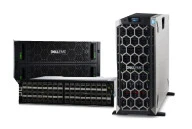
Hardware Requirements HPE Aruba Networking Private 5G Hardware is a set of qualified HPE hardware and networking configurations aimed to be used to run HPE Aruba Networking Private 5G SW in redundant production environments. The HPE Aruba Networking Private 5G Hardware aims to be easily replicable, reproducible, and configurable, having at the same time the configuration best practices, scalability and security requirements needed for an Enterprise or Mission Critical network.
The HPE Aruba Networking Private 5G Hardware is built with redundancy in mind. Redundancy is approached at multiple layers, avoiding any possible Single-Point-Of-Failure: - Infrastructure Redundancy: the different physical components are fully redundant (servers, switches, connectivity), and the networking interconnections are designed for that. - Application Redundancy: the different Network Functions (LTE, 5G, IMS) are configured with standard 3GPP redundancy capabilities, or with clustering models.
When needed, HPE Aruba Networking Private 5G Core can also be deployed on different HW. |
|
|
|
Licensing Options For production deployment, HPE Aruba Networking Private 5G Core is mainly offered as perpetual licenses with yearly support fees but also as yearly subscription licenses.
When purchasing perpetual licenses, the customer will need to choose from the following attributes: - Baseline - Capacity - High availability level: none, local or geo-redundancy - Number of edge nodes - Support level
Perpetual licensing From version 1.25.1 It is necessary to purchase one of the technology-related baselines (Private 5G Core or Private 5G EPC) and to dimension the capacity license according to the customer desired number of Provisioned Devices filling in the capacity bands (Tier1-first 100, Tier2-from 101 to 1000, Tier3-from 1001 to 10000, Tier4-from 10001 to 100000, Tier5-more than 100000).
In case of local HA you need to add High Availability (HA) license.
In case a Geo-Redundant solution is needed, the baseline license and the HA license are doubled. There is also the option to extend the User Plane adding as many Node Extension licenses as required by the customer case.
Local HA and Geo-Redundancy licenses follow the same logic as above. Services are quoted separately.
Subscription licensing No technology selection is needed in this case. We are always offering Combo Core. The subscription selection is driven firstly by local High Availability and the service level desired by the customer and the services are included in the subscription; the second selection driver is the duration of the subscription.
From version 1.25.1 The new subscription model requires: - A baseline license defining the redundancy and support model - The related capacity license, according to the customer desired number of Provisioned Devices filling in the capacity bands (Tier1-first 100, Tier2-from 101 to 1000, Tier3-from 1001 to 10000, Tier4-from 10001 to 100000, Tier5-more than 100000). Options are available for Geo-Redundancy and Node Extension (extra user plane).
Customers can purchase and use HPE Aruba Networking Private 5G Core with existing qualifying HPE servers they may already own, or purchase and use with a new qualifying server purchase through HPE or through an authorized HPE Partner.
For evaluation purposes, HPE Aruba Networking Private 5G Core solution is available as a 12-month subscription. |
|
HPE Aruba Networking Private 5g Core |
|
|
Description |
SKU |
|
HPE Aruba Networking Private 5G Core Baseline E-LTU |
R7Y86AAE |
|
HPE Aruba Networking Private 5G Core 1-100 Provisioned Devices (Unit of 1 Device) E-LTU |
R7Y87AAE |
|
HPE Aruba Networking Private 5G Core 101-1K Provisioned Devices (Unit of 1 Device) E-LTU |
R7Y88AAE |
|
HPE Aruba Networking Private 5G Core 1001-10K Provisioned Devices (Unit of 1 Device) E-LTU |
R7Y89AAE |
|
HPE Aruba Networking Private 5G Core 10001-100K Provisioned Devices (Unit of 1 Device) E-LTU |
R7Y90AAE |
|
HPE Aruba Networking Private 5G Core above 100K Provisioned Devices (Unit of 1 Device) E-LTU |
R7Y91AAE |
|
HPE Aruba Networking Private 5G Core EPC Baseline E-LTU |
R7Y92AAE |
|
HPE Aruba Networking Private 5G Core EPC 1-100 Provisioned Devices (Unit of 1 Device) E-LTU |
R7Y93AAE |
|
HPE Aruba Networking Private 5G Core EPC 101-1K Provisioned Devices (Unit of 1 Device) E-LTU |
R7Y94AAE |
|
HPE Aruba Networking Private 5G Core EPC 1001-10K Provisioned Devices (Unit of 1 Device) E-LTU |
R7Y95AAE |
|
HPE Aruba Networking Private 5G Core EPC 10001-100K Provisioned Devices (Unit of 1 Device) E-LTU |
R7Y96AAE |
|
HPE Aruba Networking Private 5G Core EPC above 100K Provisioned Devices (Unit of 1 Device) E-LTU |
R7Y97AAE |
|
HPE Aruba Networking Private 5G Core High Availability E-LTU |
R7Y98AAE |
|
HPE Aruba Networking Private 5G Core Node Extension E-LTU |
R7Y99AAE |
|
HPE Aruba Networking Private 5G Software Migration Fee E-LTU |
R7Y82AAE |
|
HPE Aruba Networking Private 5G Core Evaluation max 25 Provisioned Devices 1-year 9x5 Support E-LTU |
R7X70AAE |
|
HPE Aruba Networking Private 5G Core Baseline 1yr including 9x5 Support E-LTU |
R7Z11AAE |
|
HPE Aruba Networking Private 5G Core 1-100 Provisioned Device (Unit of 1 Dev) 1yr 9x5 Support E-LTU |
R7Z12AAE |
|
HPE Aruba Networking Private 5G Core 101-1K Provisioned Dev (Unit of 1 Dev) 1yr 9x5 Support E-LTU |
R7Z13AAE |
|
HPE Aruba Networking Private 5G Core 1001-10K Provisioned Dev (Unit of 1 Dev) 1yr 9x5 Support E-LTU |
R7Z14AAE |
|
HPE Aruba Networking Private 5G Core 10001-100K Prov Dev (Unit of 1 Dev) 1yr 9x5 Support E-LTU |
R7Z15AAE |
|
HPE Aruba Networking Private 5G Core above 100K Provisioned Dev (Unit of 1 Dev) 1yr 9x5 Sup E-LTU |
R7Z16AAE |
|
HPE Aruba Networking Private 5G Core Baseline Local Redundancy 1yr including 24x7 BC Support E-LTU |
R7Z17AAE |
|
HPE Aruba Networking Private 5G Core LR 1-100 Provisioned Dev (Unit of 1 Dev) 1yr 24x7 BC Sup E-LTU |
R7Z18AAE |
|
HPE Aruba Networking Private 5G Core LR 101-1K Provisioned Dev (Unit of 1 Dev) 1yr 24x7 BC Sup E-LTU |
R7Z19AAE |
|
HPE Aruba Networking Private 5G Core LR 1001-10K Prov Dev (Unit of 1 Dev) 1yr 24x7 BC Sup E-LTU |
R7Z20AAE |
|
HPE Aruba Networking Private 5G Core LR 10001-100K Prv Dev (Unit of 1 Dev) 1yr 24x7 BC Sup E-LTU |
R7Z21AAE |
|
HPE Aruba Networking Private 5G Core LR above 100K Prv Dev (Unit of 1 Dev) 1yr 24x7 BC Sup E-LTU |
R7Z22AAE |
|
HPE Aruba Networking Private 5G Core Node Extension 1yr including 9x5 Support E-LTU |
R7Z23AAE |
|
HPE Aruba Networking Private 5G Core Node Extension Local Redundancy 1yr 24x7 BC Support E-LTU |
R7Z24AAE |
|
HPE Aruba Networking Private 5G Core Geo Redundancy 1yr incl 24x7 Business Critical Support E-LTU |
R7Z25AAE |
|
HPE Aruba Networking Private 5G Core max 25 Provisioned Devices 3yr 24x7 BU Critical Sup E-LTU |
R7Y70AAE |
|
HPE Aruba Networking Private 5G Core max 100 Provisioned Devices 3yr 24x7 BU Critical Sup E-LTU |
R7Y71AAE |
|
HPE Aruba Networking Private 5G Core max 1000 Provisioned Devices 3yr 24x7 BU Critical Sup E-LTU |
R7Y72AAE |
|
HPE Aruba Networking Private 5G Core max 10000 Provisioned Devices 3yr 24x7 BU Critical Sup E-LTU |
R7Y73AAE |
|
HPE Aruba Networking Private 5G Core Baseline 3yr including 9x5 Support E-LTU |
R7Z44AAE |
|
HPE Aruba Networking Private 5G Core 1-100 Provisioned Devices (Unit of 1 Dev) 3yr 9x5 Support E-LTU |
R7Z45AAE |
|
HPE Aruba Networking Private 5G Core 101-1K Provisioned Dev (Unit of 1 Dev) 3yr 9x5 Support E-LTU |
R7Z46AAE |
|
HPE Aruba Networking Private 5G Core 1001-10K Provisioned Dev (Unit of 1 Dev) 3yr 9x5 Support E-LTU |
R7Z47AAE |
|
HPE Aruba Networking Private 5G Core 10001-100K Prov Dev (Unit of 1 Dev) 3yr 9x5 Support E-LTU |
R7Z48AAE |
|
HPE Aruba Networking Private 5G Core above 100K Provisioned Dev (Unit of 1 Dev) 3yr 9x5 Sup E-LTU |
R7Z49AAE |
|
HPE Aruba Networking Private 5G Core Baseline Local Redundancy 3yr incl 24x7 BC Support E-LTU |
R7Z50AAE |
|
HPE Aruba Networking Private 5G Core LR 1-100 Provisioned Dev (Unit of 1 Dev) 3yr 24x7 BC Sup E-LTU |
R7Z51AAE |
|
HPE Aruba Networking Private 5G Core LR 101-1K Provisioned Dev (Unit of 1 Dev) 3yr 24x7 BC Sup E-LTU |
R7Z52AAE |
|
HPE Aruba Networking Private 5G Core LR 1001-10K Prov Dev (Unit of 1 Dev) 3yr 24x7 BC Sup E-LTU |
R7Z53AAE |
|
HPE Aruba Networking Private 5G Core LR 10001-100K Prov Dev (Unit of 1 Dev) 3yr 24x7 BC Sup E-LTU |
R7Z54AAE |
|
HPE Aruba Networking Private 5G Core LR above 100K Prov Dev (Unit of 1 Dev) 3yr 24x7 BC Sup E-LTU |
R7Z55AAE |
|
HPE Aruba Networking Private 5G Core Node Extension 3yr including 9x5 Support E-LTU |
R7Z56AAE |
|
HPE Aruba Networking Private 5G Core Node Extension Local Redundancy 3yr 24x7 BC Support E-LTU |
R7Z57AAE |
|
HPE Aruba Networking Private 5G Core Geo Redundancy 3yr incl 24x7 Business Critical Support E-LTU |
R7Z58AAE |
|
HPE Aruba Networking Private 5G Core Baseline 5yr including 9x5 Support E-LTU |
R7Z77AAE |
|
HPE Aruba Networking Private 5G Core 1-100 Provisioned Dev (Unit of 1 Dev) 5yr 9x5 Support E-LTU |
R7Z78AAE |
|
HPE Aruba Networking Private 5G Core 101-1K Provisioned Dev (Unit of 1 Dev) 5yr 9x5 Support E-LTU |
R7Z79AAE |
|
HPE Aruba Networking Private 5G Core 1001-10K Provisioned Dev (Unit of 1 Dev) 5yr 9x5 Support E-LTU |
R7Z80AAE |
|
HPE Aruba Networking Private 5G Core 10001-100K Prov Dev (Unit of 1 Dev) 5yr 9x5 Support E-LTU |
R7Z81AAE |
|
HPE Aruba Networking Private 5G Core above 100K Provisioned Dev (Unit of 1 Dev) 5yr 9x5 Sup E-LTU |
R7Z82AAE |
|
HPE Aruba Networking Private 5G Core Baseline Local Redundancy 5yr including 24x7 BC Support E-LTU |
R7Z83AAE |
|
HPE Aruba Networking Private 5G Core LR 1-100 Prov Dev (Unit of 1 Dev) 5yr 24x7 BC Support E-LTU |
R7Z84AAE |
|
HPE Aruba Networking Private 5G Core LR 101-1K Prov Dev (Unit of 1 Dev) 5yr 24x7 BC Support E-LTU |
R7Z85AAE |
|
HPE Aruba Networking Private 5G Core LR 1001-10K Prov Dev (Unit of 1 Dev) 5yr 24x7 BC Sup E-LTU |
R7Z86AAE |
|
HPE Aruba Networking Private 5G Core LR 10001-100K Prov Dev (Unit of 1 Dev) 5yr 24x7 BC Sup E-LTU |
R7Z87AAE |
|
HPE Aruba Networking Private 5G Core LR above 100K Prov Dev (Unit of 1 Dev) 5yr 24x7 BC Sup E-LTU |
R7Z88AAE |
|
HPE Aruba Networking Private 5G Core Node Extension 5yr including 9x5 Support E-LTU |
R7Z89AAE |
|
HPE Aruba Networking Private 5G Core Node Extension Local Redundancy 5yr 24x7 BC Support E-LTU |
R7Z90AAE |
|
HPE Aruba Networking Private 5G Core Geo Redundancy 5yr incl 24x7 Business Critical Support E-LTU |
R7Z91AAE |
|
| |
|
| |
|
Deployment options All the products run as multiple Linux virtual appliance installed in a VM, with VMWare and ProxMox as the recommended hypervisors in a Linux environment. The final product can be delivered as SW only or pre-installed on HPE HW. |
|
|
|
Reference capacities These reference values have to be considered for distributed deployments in a mixed 4G/5G wireless scenario, featuring a control plane signaling due to UEs mobility and they might subject to change depending on the traffic and signaling profile.
The suggested disk space for a classic deployment is 50GB but it might vary depending on the deployment model, the traffic profile and particularly on the CDRs retention policy.
The Control Plane and User Plane scale independently to each other, and the following are for reference:i |
|
|
|
Throughput |
Resources (per instance) |
|
1.125 Mpps (11Gbps with 1300 byte packets) |
4 vCPUs, 8GB RAM |
|
2.250 Mpps (22Gbps with 1300 byte packets) |
8 vCPUs, 8GB RAM |
|
4.5 Mpps (44Gbps with 1300 byte packets) |
16 vCPUs, 8GB RAM |
|
|
|
Simultaneous Sessions |
Resources (per instance) |
|
13k |
8 vCPUs, 8GB RAM |
|
26k |
16 vCPUs, 16GBRAM |
|
52k |
32 vCPUs, 32GB RAM |
|
|
|
Date |
Version History |
Action |
Description of Change |
|
06-Jul-2026 |
Version 8 |
Changed |
Internal QS Updates: Survey Text link and portrait brand format update. |
|
02-Feb-2026 |
Version 7 |
Changed |
Standard Features and Configuration Information sections were updated. SKU list update. |
|
28-Jul-2025 |
Version 6 |
Changed |
Update survey link. |
|
05-May-2025 |
Version 5 |
Changed |
Standard Features, Configuration Information and Technical Specifications sections were updated. |
|
01-Oct-2024 |
Version 4 |
Changed |
Series name was updated. |
|
06-May-2024 |
Version 3 |
Changed |
Overview, Standard Features, Configuration Information and Technical Specifications sections were updated. |
|
18-Dec-2023 |
Version 2 |
Changed |
HPE Services Rebranding |
|
05-Sep-2023 |
Version 1 |
New |
New QuickSpecs |
|
|
|
Have feedback on QuickSpecs? We're listening | |
|
|
|
| |
|
|
|
Chat now | |
|
|
|
© Copyright 2026 Hewlett Packard Enterprise Development LP. The information contained herein is subject to change without notice. The only warranties for Hewlett Packard Enterprise products and services are set forth in the express warranty statements accompanying such products and services. Nothing herein should be construed as constituting an additional warranty. Hewlett Packard Enterprise shall not be liable for technical or editorial errors or omissions contained herein.
a50007012enw - 17122 - Worldwide - V8 - 06-July-2026 | |
|
|
|
HEWLETT PACKARD ENTERPRISE HPE.com |
|